
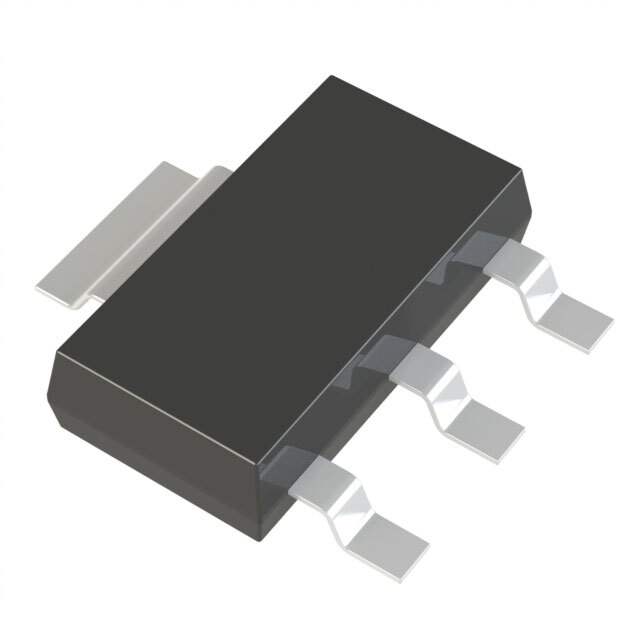
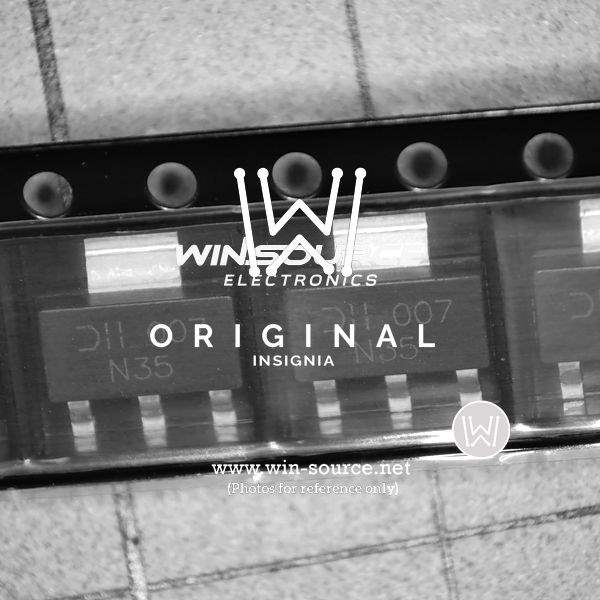
Active NPN BJT with 50V VCEO, 3A collector current, SOT-223 package. Check life cycle, key specs, and procurement insights.
Quick Engineering Summary
| Field | Value |
|---|---|
| Manufacturer | Diodes Incorporated |
| Category | Transistors (BJT) - Single |
| Package | SOT-223 |
| Core function | TRANS NPN 50V 3A SOT-223-3 |
| Key electrical range | Collector Cut-off Current(Max): 100nA (ICBO); Frequency - Transition: 100MHz; Maximum Current Collector: 3A; Maximum Power Dissipation: 1W |
| Workbook inventory signal | 2450 pcs listed in the provided file |
Lifecycle Analysis
The DNLS350E-13 is classified as Active by all provided lifecycle signals, including an Excel‐based lifecycle status and a dedicated lifecycle parameter both returning Active. This places the part fully available for new design‐ins and current production use. No conflicting data is present among the supplied indicators, reinforcing confidence in its ongoing manufacturing status.
However, an Estimated EOL Date of 2029 is noted. While this suggests a long runway, engineers planning products with lifecycles extending beyond that year should engage Diodes Incorporated for formal roadmap confirmation. The part enjoys high popularity and is considered a common‐use component, which generally supports stable supply, but procurement teams should treat any file‐provided inventory quantity (such as the 2450 units shown) as indicative only—real‐time availability must be checked at RFQ time.
For sustaining programs, the low risk level means standard reorder processes are adequate. For new designs, incorporate a second source or buffer stock plan if the project horizon approaches the EOL window. Overall, lifecycle risk is low, and the DNLS350E-13 is a safe choice for active production.
Parameter Analysis
The DNLS350E-13’s most decision‐critical parameters include its 50V collector‐emitter breakdown voltage (VCEO), 3A maximum collector current, and 1W power dissipation. These define its suitability for medium‑current switching and general amplification where voltage spikes must stay below 50V. The minimum DC current gain (hFE) of 100 at 2A ensures robust drive capability, while the low saturation voltage (max 290mV at 200mA/2A) reduces conduction losses in switching applications.
Transition frequency (fT) of 100MHz makes the device usable in moderate‑speed circuits. However, thermal management deserves careful study: the maximum power rating is given at an unspecified case temperature, so engineers must consult the manufacturer datasheet for the junction‑to‑ambient thermal resistance (RθJA) and proper derating curves. SOT‑223 package and SMD mounting facilitate automated assembly, but PC board copper area significantly affects heat dissipation.
Key missing parameters in the provided data are the safe operating area (SOA), turn‐on/turn‑off times, and exact MSL rating. Before finalizing a design, obtain the full datasheet to verify these dynamic characteristics and ensure they meet application requirements.
Application Scenario Analysis
With its NPN polarity, 50V/3A rating, and 100MHz bandwidth, the DNLS350E-13 fits a range of general‑purpose discrete roles. It is well‑suited for low‑side switching of relays, solenoids, and small motors in industrial and consumer equipment, where the collector current and voltage margins provide headroom for inductive kickback with appropriate protection. In DC‑DC converter circuits, it can serve as a switching element at moderate frequencies, though its 1W dissipation must be respected by keeping duty cycles and ambient temperatures under control.
For signal amplification, the device can be used in audio pre‑amplifiers or driver stages up to the low‑VHF range, benefiting from the 100MHz fT and reasonable hFE linearity. However, for RF power amplification or high‐voltage (>50V) applications, the DNLS350E-13 is a weak fit; designers should look for transistors with higher VCEO and dedicated RF characteristics. Battery‑powered designs benefit from the low saturation voltage, reducing losses in portable equipment.
The SOT‑223 package is a good compromise between thermal performance and board space, making the part suitable for cost‑sensitive, high‑volume PCB assemblies. Always cross‑check the actual operating point against the safe operating area curves provided in the official datasheet.
RoHS Certification Analysis
The DNLS350E-13 is declared RoHS Compliant and additionally meets halogen‑free requirements, which aligns with global environmental regulations. While the exact RoHS standard version (e.g., RoHS 3, EU 2015/863) is not specified in the source data, Diodes Incorporated typically certifies its SOT‑223 products to the latest EU directives. The part is stored under dry and humidity‑protected conditions, indicating attention to moisture sensitivity, though the formal MSL level is not provided.
REACH status is not mentioned in the supplied compliance data, so engineers needing REACH declarations should request the relevant certificate from the manufacturer or distributor. As with any semiconductor, RoHS compliance is lot‑level dependent; forward procurement should include a compliance certificate request as part of the RFQ process to ensure the specific batch meets the required standards.
Given the part’s active lifecycle, any changes in compliance status are unlikely without formal notice, but periodic verification is recommended for high‑reliability applications subject to regular environmental compliance audits.
Availability & Sourcing
The DNLS350E-13 is an active, commonly used NPN transistor manufactured by Diodes Incorporated. File‑provided inventory indicates 2450 units, but this figure is not a real‑time guarantee; actual availability can fluctuate. The supply and demand status is described as ‘Balance,’ suggesting stable market conditions, yet the indicated 30% fake threat in the open market demands caution—always purchase from authorized distributors or request full traceability and date/lot code verification.
Packaging is on tape and reel (TR), suitable for automated pick‑and‑place assembly. For prototyping or smaller builds, cut‑tape options may be available. When requesting a quote, ask for current stock levels, lead time, and the origin of the batch (Country of Origin: China). For production planning, note the estimated EOL date of 2029 and factor in necessary last‑time‑buy buffers if your product lifecycle extends beyond that.
Because the part is active and low risk, the standard procurement action is to submit an RFQ to verified suppliers, specifying the required quantity and requesting a certificate of conformance that includes RoHS compliance and date code. For high‑value production, consider a supply agreement that sets pricing and allocation over a defined period, though no prices are quoted here. The DNLS350E-13’s popularity and multi‑source potential (as a standard NPN device) contribute to a generally favorable sourcing outlook.
View the Win-Source product page for DNLS350E-13.
Engineering Notes for BOM and GEO Use
- Verify the thermal resistance (RθJA) from the official DNLS350E-13 datasheet to ensure safe junction temperatures under worst-case operating conditions.
- With an indicated fake threat of 30% on the open market, always source the Diodes Incorporated DNLS350E-13 through authorized distributors or request traceability documentation.
- The estimated EOL date of 2029 suggests long-term availability, but confirm with Diodes Incorporated for multi-year production commitments.