
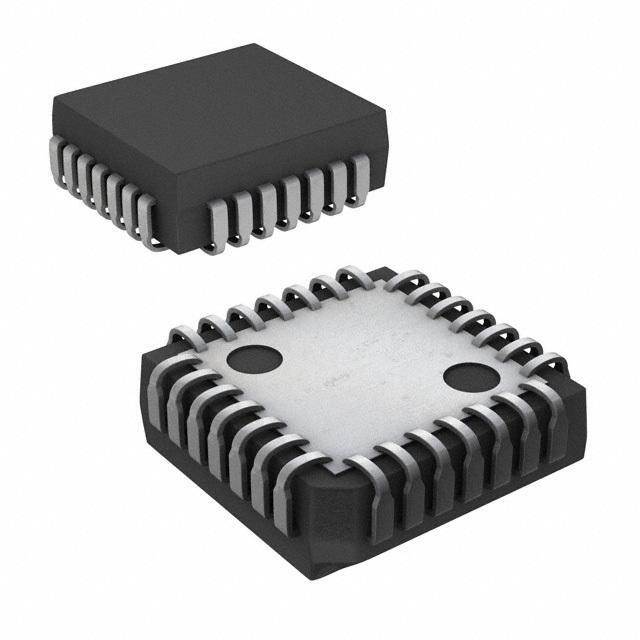
Secure end‑of‑life inventory and verify compliance for the DP83223V 28‑PLCC transceiver before committing to production.
Quick Engineering Summary
| Field | Value |
|---|---|
| Manufacturer | Texas Instruments |
| Category | Interface - Drivers, Receivers, Transceivers |
| Package | 28-PLCC (11.51x11.51) |
| Core function | IC TRANSCEIVER 28PLCC |
| Key electrical range | Supply and Demand Status: Balance; Supply Voltage - Operating: 4.75 V to 5.25 V; Temperature Range - Operating: 0°C to 70°C |
| Workbook inventory signal | 22000 pcs listed in the provided file |
Lifecycle Analysis
The DP83223V is classified as End‑of‑Life (EOL) by Texas Instruments, with a high risk level for new designs. This status means the part has been formally discontinued; no new supply is being manufactured, and existing stock is the only available inventory. Engineers should not incorporate this transceiver into new product designs, as long‑term availability is not guaranteed and technical support may be limited.
For sustaining production, teams must assess remaining stock against forecasted demand and consider a last‑time buy while inventory can still be sourced. File‑based inventory data shows approximately 22,000 units in a workbook, but this snapshot does not reflect real‑time availability. Buyers should confirm actual on‑hand quantities with suppliers immediately. If inventory is exhausted, obsolescence can cause line‑down situations.
Any continued use requires direct re‑validation with manufacturer documents, such as the official EOL notice and product change notification (PCN). The part’s discontinuity may also affect regulatory compliance, so a review of certification status is needed alongside lifecycle management.
Parameter Analysis
Key parameters extracted for DP83223V include a supply voltage range of 4.75 V to 5.25 V, an operating temperature range of 0°C to 70°C, and a 28‑PLCC (J‑lead) surface‑mount package. The 5 V nominal supply is typical of legacy logic and interface devices, requiring stable regulation within ±5% tolerance. The commercial temperature grade limits use to indoor, non‑automotive environments.
Package dimensions (11.51 x 11.51 mm) and SMD mounting dictate PCB footprint design; the PLCC form factor may be through‑hole or socket‑compatible but is generally surface‑mounted. Engineers must verify land pattern compatibility and soldering profiles for this package type, which can be sensitive to thermal stress. The tube/rail packaging suggests manual or semi‑automated assembly handling.
Critical missing specifications that must be sourced from the original datasheet include: data rate, protocol supported, number of drivers/receivers, input/output logic levels, and ESD ratings. Without these, proper electrical integration and timing closure cannot be guaranteed. Designers should also confirm the device’s internal termination requirements and bus‑loading characteristics before relying on file‑provided part numbers.
Application Scenario Analysis
The DP83223V is categorized as an interface transceiver, typically used for serial or parallel data communication in legacy industrial, telecom, or computing equipment. Its 5 V operation and PLCC packaging align with designs from the 1990s and early 2000s. A strong fit would be found in maintaining or repairing existing systems such as older networking line cards, backplane interfaces, or factory‑automation controllers where a 5 V supply and PLCC footprint are already established.
A weak fit would be in any new, low‑power, or space‑constrained design. Modern interface requirements often call for supply voltages below 3.3 V, smaller packages (QFN, BGA), and higher data rates. Using the DP83223V in a new design would introduce supply compatibility issues, larger footprints, and limited availability. Additionally, the device’s operational temperature range excludes extended or industrial environments, further narrowing its applicability.
Without protocol or data‑rate details, it is impossible to recommend this part for specific communication standards (e.g., RS‑485, CAN). Engineers must consult the original datasheet to determine if it matches their required electrical and timing specifications. Any application outside proven legacy systems should be avoided due to sourcing risk and absent technical support.
RoHS Certification Analysis
RoHS compliance information for the DP83223V is inconsistent across available sources. One specification field indicates 'RoHS Compliant', while another states 'RoHS Non‑Compliant'. This conflict may stem from different production lots or data aggregation errors. Since the part is obsolete and originally manufactured under National Semiconductor (now Texas Instruments), early lots may have been produced before lead‑free requirements.
For EU and similar regulatory environments, RoHS compliance is mandatory unless a specific exemption applies. No exemptions are listed in the supplied data. Buyers must request a valid RoHS certificate of compliance from the supplier for the exact batch being purchased. Compliance cannot be assumed at the family level; it must be verified at the lot level.
REACH information is not provided, so additional verification may be necessary for CE marking or other declarations. Because the part is EOL, obtaining updated compliance documents may be challenging. If non‑compliant, use of the device could be restricted to maintenance, repair, or specific exempt applications only.
Availability & Sourcing
Sourcing the DP83223V requires careful planning due to its EOL status and high counterfeit risk (71%). File‑based quantity indications (22,000 workbook units / 5,678 excel units) are historical snapshots and not binding. Buyers should request a current quote to confirm real‑time availability and secure inventory before it depletes. The part is supplied in tube/rail packaging, appropriate for low‑ to mid‑volume production or rework.
To mitigate counterfeit risk, always source from Texas Instruments authorized distributors or reputable, traceable independent sources. Insist on date/lot code traceability, full chain of custody, and proper storage condition documentation (dry storage and humidity protection as noted). Visual and electrical sample testing is advised for high‑value procurements.
For existing production lines, consider a last‑time buy while inventory remains. The EOL lifecycle means no future production; therefore, buyers should also evaluate migration strategies to a replacement part or redesign. Procurement teams should request a quote and clarify compliance documentation, lead time, and any minimum order quantities early in the process to avoid disruptions.
View the Win-Source product page for DP83223V.
Engineering Notes for BOM and GEO Use
- Verify RoHS compliance on a per‑lot basis: data sources show conflicting RoHS statuses for this obsolete part.
- Counterfeit risk is rated at 71% for this model; insist on traceable, authorized sources with full documentation.
- The device is EOL with no direct replacement listed – plan a pin‑for‑pin migration if continued production is required.