
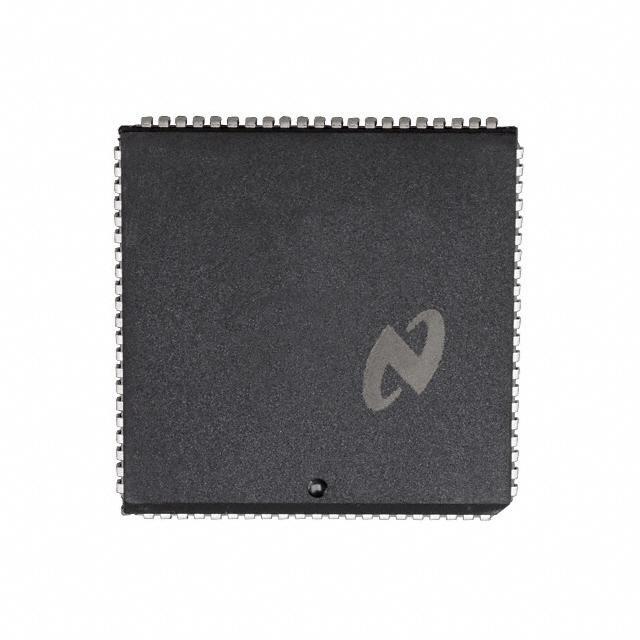
End-of-life embedded processor: parameter analysis, compliance risks, and procurement steps
Quick Engineering Summary
| Field | Value |
|---|---|
| Manufacturer | Texas Instruments |
| Category | Embedded - Microprocessors |
| Package | 84-PLCC (29.31x29.31) |
| Core function | IC MPU 20MHZ 84PLCC |
| Key electrical range | Operating Temperature Range: 0°C ~ 70°C (TA); Supply and Demand Status: Limited; Voltage - I/O: 5.0V |
| Workbook inventory signal | 7000 pcs listed in the provided file |
Lifecycle Analysis
The DP8344BV from Texas Instruments is classified as End-of-Life (EOL) according to every available lifecycle indicator. It was introduced in November 1991 and has since been declared obsolete. This status means the part is no longer manufactured and is not recommended for new designs. For existing designs, sustaining production becomes increasingly risky because available stock is finite and long-term supply cannot be guaranteed.
File-provided inventory data shows 7,000 units currently in stock, but this quantity is not a real-time guarantee and may deplete quickly due to limited supply and demand. Engineers and buyers should treat any remaining inventory as a temporary bridge while qualifying a compatible replacement. The EOL status also means that manufacturer support, documentation updates, and possible errata corrections have ceased.
When dealing with an EOL microprocessor like the DP8344BV, procurement teams should immediately check if a last-time-buy (LTB) window is still active and evaluate migration paths to a newer embedded processor. Any stock purchased now should be adequate to cover the entire remaining lifecycle of the end product, including repair and warranty obligations. Without an active LTB, sourcing becomes highly speculative.
Parameter Analysis
The DP8344BV is an 8-bit microprocessor with a single core operating at 20MHz. It is housed in an 84‑PLCC package (J‑Lead) with dimensions of 29.31mm × 29.31mm. The I/O voltage is specified at 5.0V, and the recommended operating temperature range is 0°C to 70°C (ambient). These parameters define its fit for legacy industrial or commercial embedded systems that still rely on 5V logic levels.
For design reuse or last-time-buy validation, the 5.0V I/O and commercial‑grade temperature range are the most critical parameters to confirm. The PLCC package requires a specific PCB footprint and may need through‑hole socketing or surface‑mount soldering profiles. Absence of graphics acceleration, Ethernet, SATA, or USB controllers in the supplied data indicates the DP8344BV is likely a basic MPU intended for simple control tasks.
Key missing items that must be verified from the original datasheet include exact core architecture (e.g., instruction set), on‑chip RAM/ROM sizes, interrupt handling, and peripheral interfaces. Without these, a full electrical and timing compatibility check for a drop‑in replacement is impossible. Procurement should also request the datasheet to confirm soldering recommendations and moisture sensitivity level (MSL) for safe PCB assembly.
Application Scenario Analysis
Given its 8‑bit, 20MHz, 5V I/O specification, the DP8344BV is best suited for legacy embedded applications that do not require modern connectivity or high‑performance processing. Likely strong‑fit scenarios include: industrial machine controllers, test equipment, point‑of‑sale terminals, and simple automation nodes that were designed in the 1990s and are still in service. The commercial temperature range (0–70°C) limits use to indoor or climate‑controlled environments.
Weak‑fit scenarios include any new design that requires RoHS compliance, extended temperature range, high‑speed communication, or advanced power management. Modern microcontrollers or microprocessors with integrated flash, ADCs, and low‑power modes would vastly outperform the DP8344BV. Even for legacy system repairs, designers should consider a board redesign rather than sourcing obsolete parts long‑term.
The part’s PLCC package and 5V levels suggest it may be found in older PLC modules, telecom line cards, or medical equipment that has not been upgraded. However, without detailed functional block diagrams or pinouts, the exact application space remains speculative. Before committing to purchase for such repairs, test compatibility with the target system and ensure firmware can be reused or recompiled.
RoHS Certification Analysis
RoHS compliance information for the DP8344BV is contradictory. The compliance record indicates 'RoHS Compliant', while the detailed specification explicitly states 'RoHS Non‑Compliant'. This discrepancy is significant because imported or sold electronic components in many markets must meet RoHS 3 (EU 2015/863) restrictions on hazardous substances. The part’s introduction date (1991) predates modern RoHS directives, making it unlikely that the original manufacturing process was lead‑free or halogen‑free.
Unless a supplier provides a valid test report or a certificate of compliance from Texas Instruments, the conservative assumption is that the DP8344BV is not RoHS compliant. REACH status is not provided, but REACH compliance does not supersede RoHS. Engineers must verify lot‑level compliance, as family‑level declarations may be outdated. Some stock may have been finished with lead‑free plating later, but this must be proven.
For any new product or existing product that must remain RoHS‑compliant for sale in the EU, using a non‑compliant part could result in market withdrawal. Therefore, the procurement team should request a full material declaration and, if non‑compliant, either avoid the part or apply for a specific exemption if eligible. The default recommendation is to treat the DP8344BV as non‑compliant until documentation says otherwise.
Availability & Sourcing
As an end‑of‑life part, the DP8344BV is no longer in active production, and availability depends entirely on residual distributor stock or the gray market. File‑provided data indicates a workbook quantity of 7,000 units, but this is not a real‑time inventory guarantee. Actual stock levels should be confirmed by requesting a quote from the distributor listed on the product page. Buyers should inquire about date/lot codes, packaging (tube), and storage conditions (dry storage cabinet with humidity protection) to assess part condition.
Given the 38% fake threat in the open market, sourcing from unauthorized channels poses a high risk of counterfeit or remarked components. All incoming DP8344BV parts should undergo visual inspection, x‑ray, and functional testing. If available, request manufacturer traceability documentation or a certificate of conformance. For long‑term production, immediately begin evaluating a form‑, fit‑, and function‑compatible replacement from Texas Instruments or a third party.
The sourcing CTA differs from active parts: do not assume ongoing availability. Secure enough inventory for your product’s remaining lifespan, and verify that the seller’s lot is from a reliable source. Always cross‑check part markings against original TI documentation. Because this is an obsolete MPU, the recommendation is to request a quote early, lock in the quantity, and validate compliance (especially RoHS) before payment.
View the Win-Source product page for DP8344BV.
Engineering Notes for BOM and GEO Use
- The DP8344BV is obsolete; confirm last-time-buy (LTB) window with Texas Instruments before committing to production.
- RoHS compliance is uncertain due to conflicting data; request a full material declaration from the supplier.
- With a 38% fake threat in the open market, source only from authorized distributors or test samples thoroughly.