
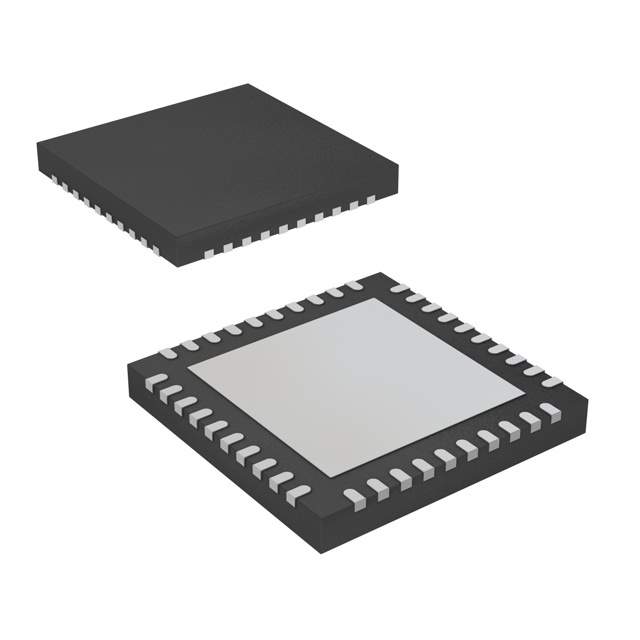
Active lifecycle, AEC-Q100, RoHS-compliant Ethernet transceiver from Texas Instruments
Quick Engineering Summary
| Field | Value |
|---|---|
| Manufacturer | Texas Instruments |
| Category | Interface - Drivers, Receivers, Transceivers |
| Package | 40-WQFN (6x6) |
| Core function | IC TRANSCEIVER 1/1 40WQFN |
| Key electrical range | Supply and Demand Status: Balance; Supply Voltage - Operating: 3 V to 3.6 V; Temperature Range - Operating: -40°C to 105°C |
| Workbook inventory signal | 12150 pcs listed in the provided file |
Lifecycle Analysis
Texas Instruments DP83848QSQE/NOPB is listed as Active with low risk according to supplied lifecycle data. All available signals – including the manufacturer’s lifecycle status and Excel lifecycle parameter – confirm an Active status with no conflicts. This indicates the part is fully in production and supported for new designs without immediate concern for obsolescence. However, engineers should still register for manufacturer product change notifications (PCNs) and monitor any end-of-life announcements, as lifecycle statuses can change. The provided workbook inventory quantity of 12150 units is a file-based snapshot and does not reflect real-time stock; it should be verified through a quote request. For sustaining production, this active status supports standard procurement lead times, but given the 42% fake threat in the open market, sourcing from authorized channels is critical to ensure authenticity and traceability.
Parameter Analysis
The DP83848QSQE/NOPB is a single-channel Ethernet transceiver, denoted as 1/1 driver/receiver, housed in a 40-WQFN (6x6) surface-mount package. Key parameters include a supply voltage range of 3V to 3.6V and an extended operating temperature range of -40°C to 105°C, which are crucial for industrial and automotive environments where wide temperature tolerance and voltage stability are required. The part carries an AEC-Q100 qualification, indicating it meets automotive reliability standards, making it suitable for in-vehicle networking. The Ethernet protocol suggests it is a physical layer (PHY) device for 10/100 Mbps Fast Ethernet, though this should be confirmed in the official datasheet. Missing specifications from the supplied data include data rate, interface type (e.g., MII, RMII), receiver hysteresis, ESD ratings, and power consumption. Engineers should consult the full Texas Instruments datasheet to verify these parameters for proper system integration, signal integrity analysis, and thermal management.
Application Scenario Analysis
Given its Ethernet protocol and AEC-Q100 automotive qualification, the DP83848QSQE/NOPB is well suited for automotive Ethernet applications such as infotainment networks, advanced driver-assistance systems (ADAS), and gateway modules. The -40°C to 105°C temperature range also supports industrial automation, factory floor networking, and outdoor embedded systems where wide-temperature operation is essential. In these scenarios, the 40-WQFN package allows compact PCB footprints, aligning with space-constrained designs. Conversely, this transceiver may be less suitable for applications demanding Gigabit Ethernet speeds or ultra-low power consumption, as typical Fast Ethernet PHYs consume more current than modern energy-harvesting IoT nodes. Additionally, the lack of integrated magnetics means that external transformers are required, adding to BOM cost and board area. Designers should evaluate whether the device’s data rate and MAC interface match their specific microcontroller or SoC requirements before committing to this part.
RoHS Certification Analysis
The DP83848QSQE/NOPB is listed as RoHS Compliant, indicating that it meets the requirements of the EU RoHS Directive regarding the restriction of hazardous substances such as lead, mercury, and cadmium. However, the supplied data does not specify the exact RoHS standard version or whether the compliance is at the device or family level. While the RoHS status is a positive indicator, engineers should request the manufacturer’s certificate of conformity for the specific lot to ensure continuous compliance, especially when procuring from non-authorized sources where counterfeit risks are elevated. No REACH or halogen-free declarations were provided in the source data, so additional verification with Texas Instruments may be necessary if those compliance aspects are required for the end application. For high-reliability sectors like automotive, full material declaration reports are advisable to confirm absence of substances beyond the RoHS scope.
Availability & Sourcing
The Texas Instruments DP83848QSQE/NOPB is currently in active production with a supply and demand status of Balance, suggesting relatively stable availability. The file-provided workbook quantity of 12150 units offers a reference point but is not a real-time guarantee; actual stock levels must be confirmed by requesting a quote. Sourcing should be approached with vigilance: the supplied data indicates a 42% fake threat in the open market, underscoring the importance of purchasing from authorized distributors or directly from Texas Instruments to ensure authentic, traceable components. For this active component, the recommended workflow includes requesting a quote for current pricing and lead times, specifying date/lot code requirements for traceability, and verifying all compliance documentation (RoHS, AEC-Q100 qualification certificates). Buyers should also request moisture-sensitive level (MSL) information and observe the recommended storage conditions (dry cabinet, humidity protection) to preserve component integrity before assembly.
View the Win-Source product page for DP83848QSQE/NOPB.
Engineering Notes for BOM and GEO Use
- Verify AEC-Q100 qualification and request PPAP documentation if using this part in automotive safety-related applications.
- Given the 42% open-market counterfeit risk, source exclusively through Texas Instruments authorized channels with full lot traceability.
- Confirm the PHY data rate and MAC interface type (MII/RMII) in the datasheet before finalizing BOM selection.