
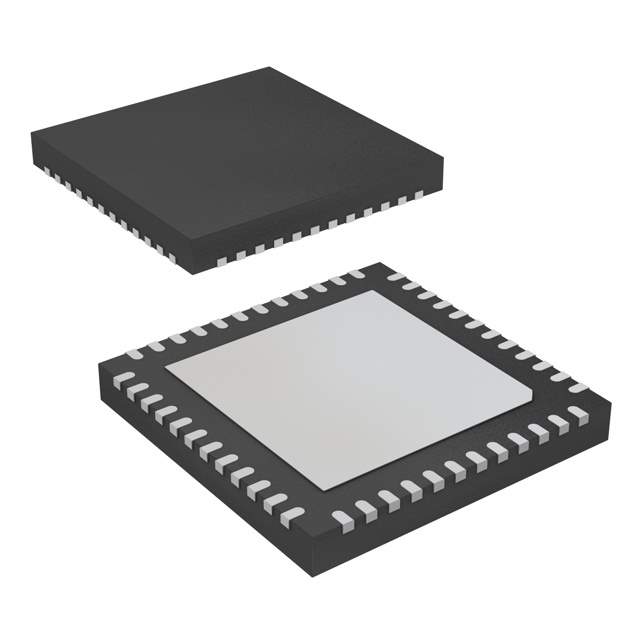

Active Gigabit Ethernet Physical Layer Controller in 48-VQFN with RGMII/SGMII interfaces.
Quick Engineering Summary
| Field | Value |
|---|---|
| Manufacturer | Texas Instruments |
| Category | Interface - Controllers |
| Package | 48-VQFN (7x7) |
| Core function | IC ETHERNET PHY 48VQFN |
| Key electrical range | Operating Supply Current: 157mA; Supply and Demand Status: Balance; Supply Voltage - Operating: 1.1V, 2.5V; Temperature Range - Operating: 0°C to 70°C |
| Workbook inventory signal | 47590 pcs listed in the provided file |
Lifecycle Analysis
Texas Instruments lists the DP83867CRRGZT as an Active lifecycle part. All available lifecycle signals from the supplied data align with this classification. For new designs, an Active status means the part is in full production with no announced discontinuation, and it remains recommended for new projects without near-term obsolescence concerns. For sustaining production, buyers can expect continued availability and manufacturer support, though standard lead-time validation is advised.
The supplied inventory quantity of 47,590 units is a file-based snapshot and does not represent a guaranteed real-time stock level. Design teams should revalidate lifecycle status directly through Texas Instruments’ product page or authorized distributors before committing production volumes, particularly for applications requiring long-term supply continuity. No conflicts were observed among lifecycle indicators in this dataset.
Parameter Analysis
The DP83867CRRGZT is a Gigabit Ethernet Physical Layer Controller housed in a 48-VQFN (7 mm x 7 mm) package. It supports 10/100/1000 Base-TX standards and provides RGMII and SGMII interfaces, giving designers flexibility in MAC-side connectivity. The operating supply current is specified at 157 mA, with dual supply voltages of 1.1 V and 2.5 V. These voltages are typical for the core and I/O rails in modern Ethernet PHYs and require careful power sequencing according to the datasheet. The commercial temperature range of 0 °C to 70 °C limits usage to indoor or climate-controlled environments.
Key parameters that will drive PCB layout include the 48-VQFN package with exposed pad, which necessitates proper thermal via design and soldering profile validation. Interface mode selection between RGMII and SGMII must align with the system MAC; verify the required timing and I/O voltage levels. Missing datasheet items that design teams should confirm include detailed electrical characteristics, ESD ratings, jitter tolerance, and power sequencing requirements, as the source data only provides top-level parameters.
Application Scenario Analysis
This Gigabit Ethernet PHY is well-suited for embedded applications requiring reliable network connectivity in commercial environments. Typical strong-fit scenarios include industrial controllers, building automation, network interface cards, routers, and switches operating within a 0 °C to 70 °C range. Its RGMII/SGMII flexibility allows integration with a wide variety of processors and SoCs. The 10/100/1000 auto-negotiation support simplifies deployment in mixed-speed networks.
Weak-fit scenarios include outdoor or harsh industrial settings where extended temperature ranges are needed, as this part is only rated for commercial temperature. Applications requiring Energy Efficient Ethernet (EEE) or advanced cable diagnostics should verify those features are present, as they are not explicitly covered in the supplied data. Designers should also ensure the PHY’s voltage regulators and clocking requirements are compatible with their system’s power architecture before committing to production.
RoHS Certification Analysis
The DP83867CRRGZT presents a compliance discrepancy in the supplied data. The top-level compliance field indicates RoHS Compliant, but one of the specification entries lists RoHS Status as RoHS Non-Compliant. This conflict requires immediate clarification. It is possible that the part has multiple variants or that one data source is outdated. Texas Instruments’ official material composition declarations should be consulted for the exact orderable part number to determine the correct RoHS status under EU directive 2015/863.
Until confirmed, procurement teams should treat the part as potentially non-compliant and request a valid compliance certificate or test report from the supplier. Lot-level verification is particularly important because RoHS exemptions can vary by date code. No REACH, halogen-free, or MSL ratings are provided in the source data, so those should also be verified if required by your application. In applications where regulatory conformity is mandatory, do not rely solely on a spreadsheet-level compliance flag; obtain documentation before releasing the BOM.
Availability & Sourcing
As an Active product from Texas Instruments, the DP83867CRRGZT is generally procurable through authorized distribution. The supplied inventory quantity of 47,590 units is a file-based reference and not a live stock guarantee. Buyers should request a quote for current pricing and lead time, as supply and demand conditions can shift. The data indicates a medium popularity and a balanced supply/demand status, suggesting typical lead times.
The open market fake threat is noted at 41 percent, which is significant; sourcing from authorized channels is strongly recommended to avoid counterfeit risks. When ordering, specify packaging type (Reel TR), request date/lot code traceability, and confirm lifecycle status with the distributor. Compliance documentation, including a RoHS certificate and material declarations, should be provided with the shipment. For production planning, secure inventory based on your forecast and consider longer-term agreements if the part is critical to your design. Direct readers to request a quote for current availability and to verify all compliance data before placing an order.
View the Win-Source product page for DP83867CRRGZT.
Engineering Notes for BOM and GEO Use
- Resolve conflicting RoHS data points by obtaining manufacturer’s compliance certificate before design-in.
- Validate interface mode compatibility (RGMII or SGMII) with host MAC and ensure correct I/O voltage levels.
- Plan power sequencing per datasheet, and design for 48‑VQFN thermal pad with sufficient PCB copper for heat dissipation.