
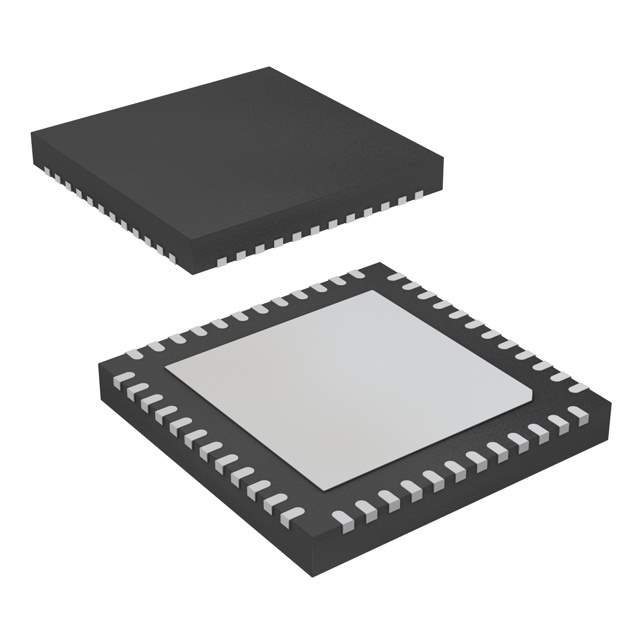
Active 10/100/1000 Base-TX PHY with RGMII/SGMII, 48-VQFN, -40 to 85°C, RoHS compliance should be verified.
Quick Engineering Summary
| Field | Value |
|---|---|
| Manufacturer | Texas Instruments |
| Category | Interface - Controllers |
| Package | Not available in supplied data |
| Core function | IC ETHERNET PHY 48VQFN |
| Key electrical range | Supply and Demand Status: Limited |
| Workbook inventory signal | 27310 pcs listed in the provided file |
Lifecycle Analysis
Lifecycle analysis for the Texas Instruments DP83867ISRGZT indicates an Active status with a low risk level. All available lifecycle signals, including the manufacturer’s status and the Excel lifecycle parameter, align on Active. An estimated end-of-life date of 2031 suggests long-term availability, making this part suitable for new designs with a multi-year production horizon. However, the supplied data also notes a Limited supply and demand status, which may affect lead times. Engineers should confirm current lead times with authorized distributors before committing the part to new designs.
The part was introduced in November 2015 and has achieved high popularity, indicating a mature product with wide adoption. For sustaining production, no immediate action is required beyond standard lifecycle monitoring. Procurement teams should periodically re-validate the lifecycle status directly with Texas Instruments, as the estimated EOL date is not a manufacturer guarantee.
Parameter Analysis
The Texas Instruments DP83867ISRGZT is a triple-supply Gigabit Ethernet PHY with key parameters that directly impact board-level design. The device operates from three voltage rails: 2.5V, 1.8V, and 1.0V nominal, each with tight tolerances as specified in the data. Total supply current is rated at 157 mA typical, which must be factored into power budget and thermal design. The industrial temperature range of -40°C to 85°C qualifies the part for harsh environments but demands careful derating at temperature extremes.
The PHY supports both RGMII and SGMII interfaces, providing flexibility for connecting to various MACs or switch fabrics. The 48-VQFN (7x7 mm) package with exposed pad requires proper thermal via design for heat dissipation. Several critical parameters are not supplied in the source data, including ESD ratings, timing margins for RGMII, and jitter tolerance. Designers must consult the full TI datasheet to obtain these values and to verify compliance with IEEE 802.3 standards for 1000BASE-T operation. Additionally, the 60% counterfeit threat score underscores the need for parameter verification on incoming lots.
Application Scenario Analysis
The DP83867ISRGZT from Texas Instruments is optimized for robust Gigabit Ethernet connectivity in embedded systems. Strong-fit applications include industrial Ethernet switches, factory automation controllers, and network interface cards where reliable gigabit speed and the industrial temperature range are mandatory. Its RGMII/SGMII support and triple supply architecture make it suitable for space-constrained designs that require low-power operation without sacrificing performance.
This part may be a weak fit for ultra-low-power battery-operated IoT devices that demand single-rail operation, as the three-rail supply adds complexity. It is also less suited for cost-sensitive consumer products that can tolerate commercial-grade temperature ranges, where lower-cost PHYs with fewer features might suffice. In automotive or medical applications, additional qualification and compliance documentation beyond the standard industrial rating would be required, as those industries typically demand AEC-Q100 or similar certifications not evident in the provided data.
RoHS Certification Analysis
A conflict exists in the RoHS compliance data for the Texas Instruments DP83867ISRGZT. The primary compliance field indicates 'RoHS Compliant,' but a separate specifications entry lists the RoHS Status as 'RoHS Non-Compliant.' This discrepancy must be resolved before procurement. Texas Instruments typically designates its active products as RoHS compliant under EU Directive 2015/863 (RoHS 3); however, the conflicting entry may stem from an outdated data source or a specific lot condition.
The part is also noted as Halogen Free Compliant, which is consistent with modern environmental standards but does not replace RoHS compliance. Given the inconsistency, buyers should request the manufacturer’s certificate of compliance (CoC) for the exact date and lot code before finalizing an order. For new designs, assume RoHS compliance can be met, but verify with official documentation to avoid re-remediation costs later. No REACH statements are provided; this is a separate regulation that may need separate verification.
Availability & Sourcing
The DP83867ISRGZT is listed as Active with a file-provided inventory quantity of 27,310 units, but this figure is not a real-time stock guarantee. The supply and demand status is noted as Limited, and a 60% fake threat in the open market underscores the need for secure sourcing channels. Procurement teams should issue RFQs to authorized Texas Instruments distributors and request full traceability documentation, including date/lot code verification and certificates of conformance.
Packaging is tape and reel (TR), which suits automated assembly. Storage conditions require dry storage cabinets and humidity protection, as specified. Because the part is active and has an estimated EOL of 2031, buyers can confidently place production orders but should secure lead times and consider buffer stock given the Limited supply note. For any inventory purchased from non-franchised sources, rigorous authenticity testing is recommended to mitigate counterfeit risk.
View the Win-Source product page for DP83867ISRGZT.
Engineering Notes for BOM and GEO Use
- Resolve RoHS compliance conflict by obtaining a manufacturer CoC for the specific lot before committing to production.
- Verify all timing and electrical parameters from the full Texas Instruments datasheet before finalizing PCB layout.
- Implement counterfeit mitigation measures, including visual inspection and X-ray, given the 60% open-market fake threat.