
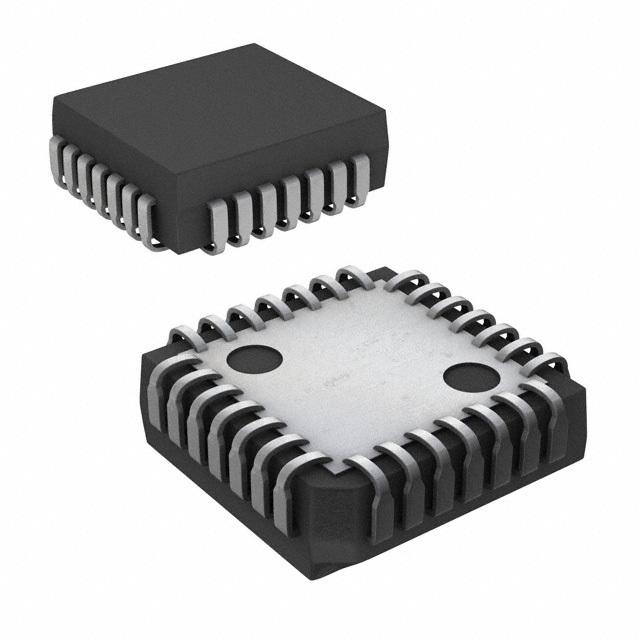
Texas Instruments EOL Ethernet Transceiver – 28-PLCC, IEEE 802.3
Quick Engineering Summary
| Field | Value |
|---|---|
| Manufacturer | Texas Instruments |
| Category | Interface - Drivers, Receivers, Transceivers |
| Package | 28-PLCC (11.51x11.51) |
| Core function | IC TRANSCEIVER 28PLCC |
| Key electrical range | Supply and Demand Status: Limited; Supply Voltage - Operating: -9V; Temperature Range - Operating: 0°C to 70°C |
| Workbook inventory signal | 1600 pcs listed in the provided file |
Lifecycle Analysis
The DP8392CV-1 is in the End-of-Life (EOL) phase, confirmed by multiple lifecycle signals including an explicit ‘EOL’ status from the manufacturer, Texas Instruments. This high-risk classification means the part is no longer recommended for new designs and procurement should focus on last-time-buy opportunities.
For existing designs, the priority is to secure sufficient inventory to cover production and maintenance needs. The provided sourcing file lists 1600 units as stock quantity, but this is not a live inventory guarantee; always request a quote to confirm availability. As an obsolete IC, lead times may be unreliable and alternate sources may carry risk of counterfeits.
Engineers should immediately evaluate migration to an active Ethernet transceiver. Without an active replacement, product lifecycles may be compromised. Texas Instruments may have issued a formal discontinuation notice; verify directly with the manufacturer to understand support timelines and any final purchase windows.
Parameter Analysis
The most critical parameter for the DP8392CV-1 is its protocol compliance: IEEE 802.3. This defines its role as a 10BASE‑T transceiver, typically for 10 Mbps Ethernet links. The part operates from a -9V supply, which is unusual in modern designs and demands careful voltage regulation and polarity. The operating temperature range of 0°C to 70°C limits use to commercial environments; ensure your application does not exceed these limits.
The 28‑PLCC surface‑mount package (11.51×11.51 mm) is a legacy footprint; PCB layout must accommodate it, and thermal considerations are minimal given the low‑speed nature. Missing datasheet details include data rate, driver/receiver count, duplex mode, and link integrity functions. These must be verified from the original Texas Instruments datasheet before qualification.
For procurement, pay close attention to the supply voltage specification: the negative 9V rail is unusual and may require dedicated power sequencing. Verify that your board supports this or that you have an appropriate regulator. Without full parametric data, design-in risk increases; request the complete datasheet from the manufacturer if possible.
Application Scenario Analysis
The DP8392CV-1 was designed for 10BASE‑T Ethernet connectivity in legacy systems. Strong‑fit scenarios include industrial controls, older test equipment, embedded networking, and retrofitting approved designs that already use this exact part. In such cases, exact form‑fit‑function replacement is critical, and no drop‑in alternative is provided here.
Weak‑fit scenarios include modern Gigabit Ethernet or Power‑over‑Ethernet (PoE) designs, which demand higher data rates and different voltage rails. The DP8392CV-1 cannot meet these requirements. Similarly, low‑power or battery‑operated designs may struggle with the negative 9V supply and the 0°C minimum temperature.
For new designs, even legacy 10 Mbps Ethernet can be served by more modern and active devices such as single‑chip Ethernet controllers with integrated PHYs, which eliminate the need for a discrete transceiver like the DP8392CV-1. Consult Texas Instruments’ active portfolio for replacement candidates that fit your protocol and voltage needs.
RoHS Certification Analysis
RoHS compliance for the DP8392CV-1 is ambiguous due to conflicting data sources. The high‑level compliance field states “RoHS Compliant,” but the detailed specifications list “RoHS Non‑Compliant.” This inconsistency must be resolved before any purchase decision.
If the part is truly non‑compliant, it cannot be used in products shipped to the EU without an applicable exemption. Even if compliant, the age of this EOL part means that original compliance documentation may be difficult to obtain. Always request a valid RoHS certificate for the specific lot or date code from the distributor.
Additionally, REACH status is not provided and should be confirmed. For high‑reliability or regulated industries, consider lot‑level XRF testing or additional documentation. Without clear evidence, treat the part as potentially non‑compliant and plan accordingly. Texas Instruments should be contacted directly for official compliance statements.
Availability & Sourcing
The DP8392CV-1 is an EOL component with limited availability. A file‑provided quantity of 1600 units exists, but this is not a live inventory number. To obtain current stock, request a quote from your distributor, specifying the exact part number and any required date/lot codes.
Because of the part’s obsolete status, anti‑counterfeiting measures are essential. Source only from authorized or trusted distributors. Request traceability documentation, and verify packaging is original Tube/Rail to prevent shipping damage. The storage condition (dry cabinet and humidity protection) should be maintained until assembly.
For new purchases, prioritize verifying RoHS compliance and authenticity. If the available quantity is insufficient for your needs, begin migration immediately. For last‑time buy, coordinate with your supply chain to secure enough parts for the entire remaining product lifecycle. Always confirm manufacturer notices before committing to any large purchase.
View the Win-Source product page for DP8392CV-1.
Engineering Notes for BOM and GEO Use
- Verify RoHS compliance lot-by-lot due to conflicting supplier data.
- Plan migration from this EOL part to an active replacement to avoid production gaps.
- Check supply voltage polarity and operating temperature range match system requirements.