
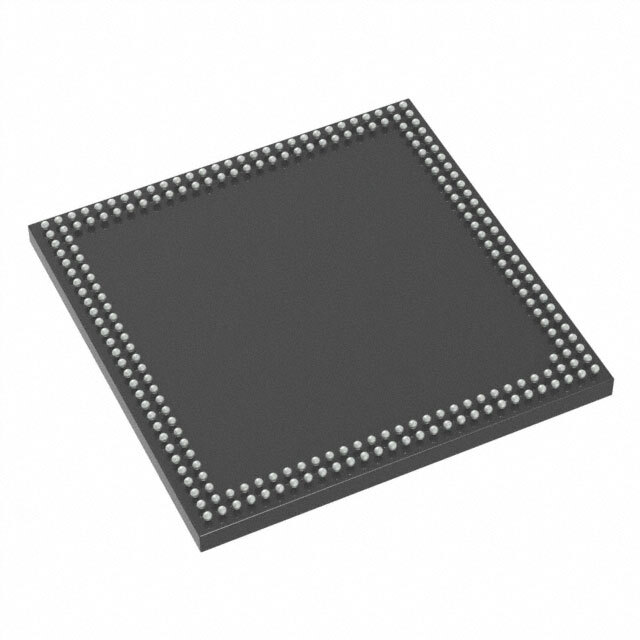
Memory Controller for DRAM Systems – Specifications, Lifecycle & Procurement Insights
Quick Engineering Summary
| Field | Value |
|---|---|
| Manufacturer | National Semiconductor (TI) |
| Category | Memory - Controllers |
| Package | 48-CDIP (0.600", 15.24mm) Window |
| Core function | IC MEM CTLR DRAM 48-CDIP |
| Key electrical range | Supply and Demand Status: Shortage; Temperature Range - Operating: 0°C ~ 70°C (TA); Voltage - Supply: 4.75V ~ 5.25V |
| Workbook inventory signal | 2169 pcs listed in the provided file |
Lifecycle Analysis
The DP8409AD is reported as Active with a low risk level. All available signals (Excel lifecycle parameter, product status, and lifecycle status field) align on this status, indicating the part is in production and supported for new designs as well as sustaining production. However, the manufacturer is identified as National Semiconductor, a company acquired by Texas Instruments. This acquisition means the part’s lifecycle may eventually be subject to TI’s product roadmap, and the Active label should be confirmed through official TI channels. The windowed CDIP package and through‑hole mounting style point to a mature, possibly niche device that may not be recommended for high‑volume new designs. For existing designs, the Active status supports continued procurement, but engineers should monitor for NRND or EOL notifications. The file‑provided inventory snapshot of 2,169 pieces is a static figure and does not guarantee real‑time availability. When planning production, request a current lifecycle confirmation from TI and consider building buffer stock if the design has long product life.
Parameter Analysis
Key supplied parameters include controller type (Dynamic RAM – DRAM), supply voltage range of 4.75V to 5.25V, operating temperature from 0°C to 70°C (TA), through‑hole mounting, and a 48‑CDIP window package. The 5V supply and commercial temperature range are typical for legacy logic and require proper decoupling and thermal margin for industrial environments. The windowed ceramic package suggests a high‑reliability or possibly UV‑erasable variant, though DRAM controllers are not normally erasable; this may be a specialty inspection window. Critical parameters missing from the provided data include supported DRAM types (e.g., bare DRAM, SIMM), access timing, data path width, clock speed, and interface protocol. Without these, exact fit into a memory subsystem cannot be confirmed. Engineers must obtain the full datasheet from TI to verify timing diagrams, setup/hold requirements, pin assignments, and loading characteristics. The package dimensions (0.600″ row spacing) are standard for through‑hole CDIP, simplifying PCB layout for prototyping but not for dense surface‑mount designs. Electrical characteristics like input/output voltage levels and output drive strength are also absent; derating and board‑level simulation cannot be performed without them.
Application Scenario Analysis
The DP8409AD is a DRAM controller, making it well‑suited for older computing platforms, retro computing restoration, industrial control systems using asynchronous DRAM, test equipment, and embedded designs where 5V logic and through‑hole mounting are acceptable. The windowed 48‑CDIP package implies possible use in prototyping or applications requiring visual inspection, though the exact purpose of the window is unusual for a controller. Strong‑fit scenarios include legacy system repair, low‑volume industrial automation with DRAM memory, and educational/hobbyist projects. Weak‑fit scenarios cover modern high‑speed memory architectures (SDRAM/DDR), battery‑powered devices requiring lower voltage, and space‑constrained designs that demand surface‑mount technology. The commercial temperature range (0–70°C) limits use in extended‑temperature or outdoor environments without additional thermal management. Designers should weigh the 5V supply requirement against modern low‑voltage logic trends. For any application, verify that the controller’s timing and supported DRAM configurations match the target memory devices.
RoHS Certification Analysis
The RoHS status for DP8409AD is ambiguous. The compliance section indicates “RoHS Compliant,” while the specifications list states “RoHS Non‑Compliant.” This conflict may arise from different sources: a family‑level declaration versus a specific lot assessment. Windowed ceramic packages often contain leaded glass, which can trigger RoHS concerns, though certain exemptions (e.g., Annex III for lead in glass) may apply. Without a full material declaration, it is impossible to definitively classify this part as RoHS compliant. Engineers and buyers must request lot‑specific RoHS certificates from the supplier and verify with the manufacturer (TI). REACH information is not available here and is not a substitute for RoHS compliance. For EU market entry or other RoHS‑regulated regions, non‑compliance would require a valid exemption or rework. If the part is genuinely non‑compliant, it may only be suitable for repair, non‑EU, or exempted applications. Always confirm compliance status before placing production orders.
Availability & Sourcing
File‑provided inventory for DP8409AD totals around 2,169 units, with a static workbook quantity of 2,169 and an Excel‑reported quantity of 1,735. The supply and demand status is marked as “Shortage,” indicating that market availability may be tight despite the listed figures. Packaging is bulk, which is typical for through‑hole devices in distribution. Since the lifecycle is Active, procurement can follow standard RFQ channels. Request quotes that include date/lot codes, RoHS compliance documentation (due to the conflicting status), and confirmed lifecycle status from TI. Because the manufacturer is legacy National Semiconductor, verify with authorized distributors that the part is fully supported under TI. Pay attention to minimum order quantities, lead times, and shipping conditions. For critical production, consider sourcing from multiple approved suppliers or evaluating a pin‑compatible alternative if long‑term availability is a concern. Remember that reported inventory is not guaranteed real‑time; always obtain a current quote before design commitments.
View the Win-Source product page for DP8409AD.
Engineering Notes for BOM and GEO Use
- Confirm DRAM type, speed grade, and interface protocol from the manufacturer datasheet; the supplied specifications omit critical timing parameters.
- Request lot‑specific RoHS compliance documentation from the distributor due to conflicting compliance signals between sources.
- Monitor lifecycle status with Texas Instruments; the device originates from National Semiconductor and long‑term active status should be validated.