
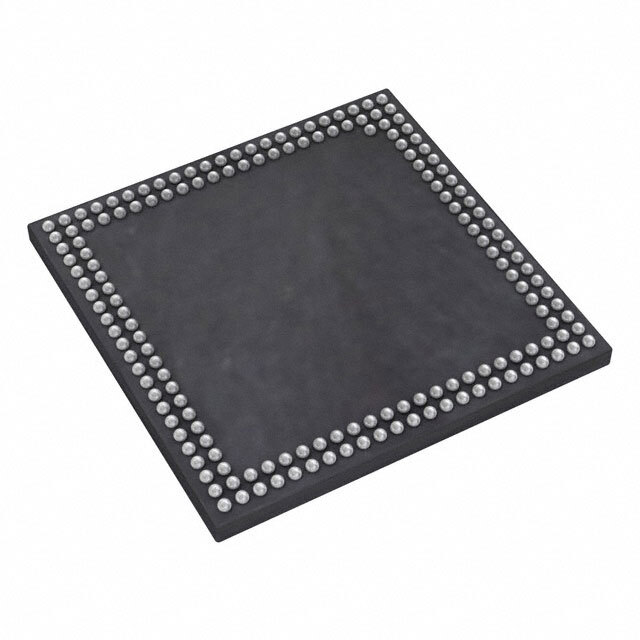
DRAM Controller, 68-PLCC Package, Active Lifecycle, Verify RoHS Compliance
Quick Engineering Summary
| Field | Value |
|---|---|
| Manufacturer | National Semiconductor (TI) |
| Category | Memory - Controllers |
| Package | 68-LCC (J-Lead) |
| Core function | IC MEM CTLR DRAM 68-PLCC |
| Key electrical range | Supply and Demand Status: Shortage; Temperature Range - Operating: 0°C ~ 70°C (TA); Voltage - Supply: 4.5V ~ 5.5V |
| Workbook inventory signal | 854 pcs listed in the provided file |
Lifecycle Analysis
The DP8419V-70 is listed as Active according to all supplied lifecycle signals from National Semiconductor (TI). For new designs, an Active status generally indicates ongoing production and support, allowing engineers to incorporate the part with low risk of premature obsolescence. However, the component also carries a 'Shortage' supply-and-demand status, suggesting constrained market availability. While the lifecycle itself does not indicate any phase-out, procurement teams should factor lead times and potential allocation into their planning.
Given that the part is in a mature memory controller category and operates with a 5V supply typical of legacy DRAM systems, long-term availability may still be influenced by broader industry shifts away from 5V memory architectures. Although no lifecycle conflicts exist in the data, it is prudent to re-validate the manufacturer’s official lifecycle documentation before committing to high-volume production, especially when RoHS compliance is critical.
Parameter Analysis
The DP8419V-70 is a dynamic RAM (DRAM) controller housed in a 68-pin PLCC surface-mount package. Key electrical parameters include a supply voltage range of 4.5V to 5.5V and an operating temperature range of 0°C to 70°C, indicating commercial-grade operation. The 68-PLCC package measures 25.13x25.13 mm and uses J-lead terminations, suitable for standard reflow soldering processes.
For design integration, the 5V supply voltage is consistent with older DRAM modules and may not be directly compatible with modern low-voltage memory devices. Engineers must verify that the controller’s timing, supported DRAM densities, and bank management features match the target memory array; these critical parameters are not included in the provided data and should be confirmed from the manufacturer’s datasheet. Additionally, the commercial temperature range restricts use to controlled environments; extended-temperature variants are not indicated. The surface-mount footprint requires adequate board space and thermal consideration, though power dissipation figures are absent and must be verified for proper thermal design.
Application Scenario Analysis
As a DRAM controller, the DP8419V-70 is intended for memory subsystems in computing, industrial control, and embedded applications that interface with asynchronous or synchronous DRAM arrays. Its 5V operation and commercial temperature range make it well-suited for legacy system maintenance, retrofits, or cost-sensitive new designs where 5V memory is still in use. Typical strong-fit scenarios include single-board computers, industrial motherboards, and memory expansion cards that still rely on 5V DRAM ICs.
Weaker-fit applications include battery-powered or low-power embedded systems, where the 5V supply may be inefficient, and automotive or outdoor equipment that demands extended temperature operation. The absence of ECC or other advanced features in the available data suggests a basic DRAM controller function, so high-reliability or safety-critical designs should verify error detection capability if required. Overall, the part is best positioned for sustaining existing 5V DRAM-based products and may not be optimal for new designs migrating to DDR or low-power memory technologies.
RoHS Certification Analysis
The RoHS compliance status for DP8419V-70 is inconsistent in the supplied data. A high-level compliance field indicates 'RoHS Compliant', but the detailed specification parameter 'RoHS Status' explicitly states 'RoHS Non-Compliant'. This contradiction creates uncertainty for procurement, particularly for European Union import where RoHS 3 (EU 2015/863) adherence is mandatory. Without third-party certification or a full material declaration from the manufacturer, the part should be treated as potentially non-compliant.
Engineers and buyers should contact National Semiconductor (TI) or authorized distributors to obtain the latest RoHS certificate or test reports. If the component is confirmed non-compliant, it may still be usable in exempt applications or markets without RoHS requirements, but this must be documented. Lot-level verification is recommended because a manufacturer may transition a part to lead-free finish without changing the part number, leading to mixed inventory. REACH compliance is not stated and would need separate assessment.
Availability & Sourcing
The DP8419V-70 shows a workbook inventory quantity of 854 units, but this figure is file-provided and does not reflect real-time stock. The market status is marked as 'Shortage', indicating that demand may exceed supply. For current availability, request a quote from distributors and specify part number, required quantity, and target date.
When procuring this active-listed component, verify lifecycle status directly with National Semiconductor (TI) to ensure no unannounced changes have occurred. Request date and lot code traceability, especially for RoHS compliance verification. Packaging is bulk, so plan for handling and storage accordingly. Given the shortage, evaluate alternative sources and consider securing inventory ahead of production needs. For new designs, confirm that the part will remain available over the product life cycle.
View the Win-Source product page for DP8419V-70.
Engineering Notes for BOM and GEO Use
- Conflicting RoHS data demands manufacturer verification; treat as non-compliant until confirmed to avoid EU import issues.
- Incomplete datasheet parameters (timing, supported DRAM types) require cross-checking with original datasheet before design-in.
- Shortage status and 5V legacy positioning advise early procurement and migration planning for high-volume needs.