
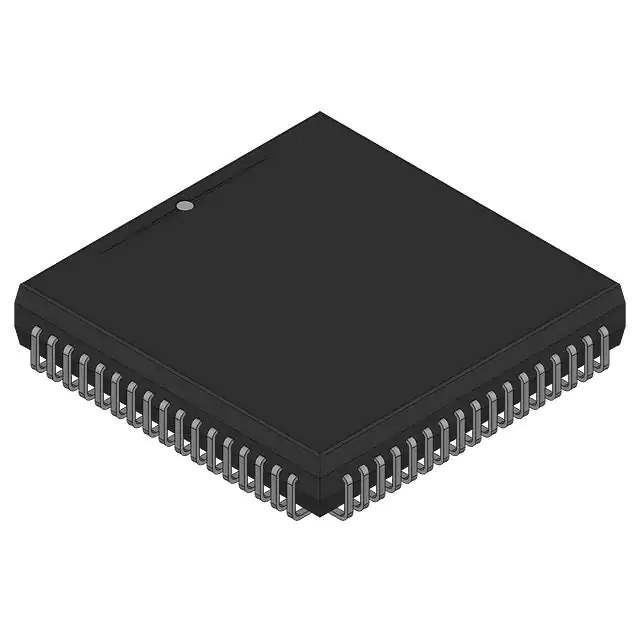
Lifecycle, compliance, parameters, and procurement guidance for the DP8420AV-20 from National Semiconductor (TI).
Quick Engineering Summary
| Field | Value |
|---|---|
| Manufacturer | National Semiconductor (TI) |
| Category | Memory - Controllers |
| Package | Bulk |
| Core function | IC MEM CTLR DRAM 68-PLCC |
| Key electrical range | Temperature Range - Operating: 0°C ~ 70°C (TA); Voltage - Supply: 4.5V ~ 5.5V |
| Workbook inventory signal | 3370 pcs listed in the provided file |
Lifecycle Analysis
The DP8420AV-20 is designated as Active by National Semiconductor, now part of Texas Instruments. All supplied lifecycle signals—including the Excel lifecycle parameter, Lifecycle Status, and Product Status—consistently indicate Active. This suggests the part remains in production and is theoretically available for new designs and ongoing purchases. However, because the device originates from the legacy National Semiconductor portfolio, long-term continuity should be confirmed directly with Texas Instruments. A formal product lifecycle statement can help engineers validate supply stability over an intended program duration.
For sustaining production, Active status generally means that there is no immediate requirement to redesign or last-time buy. Yet, the age of the process technology and the category as a DRAM controller—a class of devices often superseded by integrated memory interface solutions—encourage a conservative approach. Procurement teams should monitor any updates from TI that could reclassify the part as NRND (Not Recommended for New Designs) with little notice. In new designs, if a more modern controller is available from TI or other suppliers, it may be worth evaluating to avoid future obsolescence.
Inventory data from the source file shows approximately 3370 units, but this is a snapshot and does not represent guaranteed real-time stock. For production quantities, lead times should be verified with authorized distributors. As a precaution, especially for long lead items, ensure buffer stock or second-source options are evaluated.
Parameter Analysis
The DP8420AV-20 is a Dynamic RAM (DRAM) controller designed to interface with standard DRAM devices in a 5V environment. Its supply voltage range of 4.5V to 5.5V mandates a well-regulated 5V rail on the host board, with adequate decoupling to handle transient loads typical of memory controllers. The commercial operating temperature range of 0°C to 70°C (ambient) confines its use to indoor, non-extreme environments. For applications with wider thermal requirements, such as outdoor or automotive-grade, this part would be unsuitable. The 68-PLCC (J-Lead) package is a surface-mount type with a 25.13 mm square body, offering reasonable density and solder-joint reliability. The MSL (Moisture Sensitivity Level) rating of 3 (168 hours) means the component must be handled with appropriate moisture-control procedures, including baking before reflow if the floor life is exceeded.
Critical missing parameters from the available data include access times, maximum clock frequency, refresh timing granularity, and supported DRAM capacity. Without these, the exact performance envelope and compatibility with specific DRAM chips cannot be confirmed. Additionally, pin assignment details and any configuration registers are absent. Designers must obtain the full manufacturer datasheet to review these parameters before committing to a schematic. Power consumption and thermal resistance values are also needed for derating analysis. The part is rated EAR99 for export, which generally simplifies international logistics, but the 48% fake threat in the open market underscores the need for parametric verification, especially from non-authorized sources.
Given the 5V-only operation and PLCC package, this controller is best suited for legacy designs or retrofits where a 5V DRAM subsystem is already established. New designs might consider more modern controllers that support lower voltages and higher data rates unless backward compatibility is essential.
Application Scenario Analysis
The DP8420AV-20 finds its strongest fit in legacy industrial control systems, telecommunication infrastructure, and instrumentation that still employ standard DRAM modules and operate from a 5V rail. Many medical or test-equipment devices manufactured in the 1990s and early 2000s used similar controllers; this part can serve as a drop-in replacement or incremental upgrade when the exact pinout and timing characteristics align. The 68-PLCC package also allows for socketed deployment, which can be useful in systems requiring field-replaceable memory controllers. The commercial temperature range is acceptable for indoor, climate-controlled environments, such as server rooms or laboratory instruments.
Conversely, weak-fit scenarios include modern computing platforms that have migrated to DDR, LPDDR, or entirely serial memory architectures. These systems operate at lower voltages (typically 1.2V–1.5V) and provide integrated memory controllers within SoCs or CPUs, making an external DRAM controller like the DP8420AV-20 unnecessary. Designs targeting extended industrial (-40°C to +85°C) or automotive temperature ranges would also find the 0°C–70°C rating insufficient, and the lack of AEC-Q100 qualification disqualifies it from automotive use. Portable or battery-powered devices would be poorly served by the 5V supply requirement and the relatively large package size.
For applications that are re-using legacy circuit blocks, the DP8420AV-20 can extend product life, but procurement must consider the conflicting RoHS data. If a commercial system must meet modern environmental regulations, a non-compliant part could block market access. In such cases, a redesigned memory interface using a more recent, RoHS-compliant controller may be a better long-term strategy.
RoHS Certification Analysis
RoHS compliance data for the DP8420AV-20 presents a direct conflict: while the top-level compliance object reports the part as RoHS Compliant, the detailed specification attribute explicitly lists it as RoHS Non-Compliant. This discrepancy could arise from multiple reasons, such as an older, non-compliant variant still in circulation, or outdated records in one of the data feeds. Given that National Semiconductor was acquired by TI and many parts were transitioned to lead-free status, it is plausible that both compliant and non-compliant populations exist in the supply chain. REACH status is noted as vendor undefined, which adds further ambiguity regarding the presence of SVHCs beyond lead.
The standard referenced in such cases is typically RoHS 3 (EU 2015/863), which restricts lead, mercury, cadmium, hexavalent chromium, PBBs, PBDEs, and four phthalates. If the device contains lead as a terminal finish or die-attach material, it would indeed be non-compliant unless a valid exemption applies. No exemptions are identified in the supplied data. For procurement, lot-level certification is essential: request the supplier provide an IPC-1752 Class 3 declaration, a full material composition report, or a certificate of conformance that explicitly states RoHS status for the specific stock being purchased.
Until compliant documentation is obtained, treat the part as high-risk for EU RoHS compliance. If the end product must bear CE marking and fall within RoHS scope, the use of a non-compliant component could lead to market rejection. As an alternative, engineers may explore pin-compatible RoHS-compliant versions from TI or other manufacturers, or plan for a future redesign that eliminates reliance on this controller. For non-EU markets, compliance requirements may be less stringent, but global trends increasingly favor RoHS compliance regardless of destination.
Availability & Sourcing
Since the DP8420AV-20 is listed as Active, procurement should follow a standard Request for Quote (RFQ) process with authorized Texas Instruments distributors or vetted independent suppliers. The source workbook indicates approximately 3370 units in stock, but this figure is file-reported and not a real-time guarantee. Contact the supplier for current availability, exact lot quantities, and date codes. The packaging type is listed as Bulk with a standard package quantity of 1 piece, which may imply loose parts; clarify whether factory-sealed trays or tubes are used to ensure ESD protection and moisture control. For production runs, ensure that the parts meet the required MSL storage conditions, and request that they be shipped in sealed moisture-barrier bags with a fresh bake and desiccant.
Given the high open-market counterfeit threat (48%), sourcing directly from TI or their franchised partners is the safest route. If alternate channels must be used, insist on full traceability documentation, including manufacturer’s certificate of origin, and perform thorough incoming inspection including x-ray and decapsulation sampling. The part’s lifecycle is Active, so lead times should be consistent with TI’s standard for mature products; however, always verify lead times at the time of quotation, as older semiconductor nodes can experience supply fluctuations. For the conflicting RoHS status, specify in the RFQ that only RoHS-compliant stock is acceptable if required, and request compliance evidence before shipment.
To obtain a current quote and secure inventory, reach out to the supplier platform or an authorized TI distributor. Note that this guide does not provide pricing or tier information; all commercial terms must be negotiated directly. For any production commitment, confirm the lifecycle status and ongoing factory support with TI to avoid gaps.
View the Win-Source product page for DP8420AV-20.
Engineering Notes for BOM and GEO Use
- Verify RoHS compliance and obtain lot-specific test reports to resolve conflicting certification data before committing to production.
- Design for MSL 3 handling: this part requires baking and strict moisture control after floor-life expiry of 168 hours.
- Mitigate counterfeit risk by sourcing only through authorized TI distributors or performing comprehensive visual and electrical inspection.