
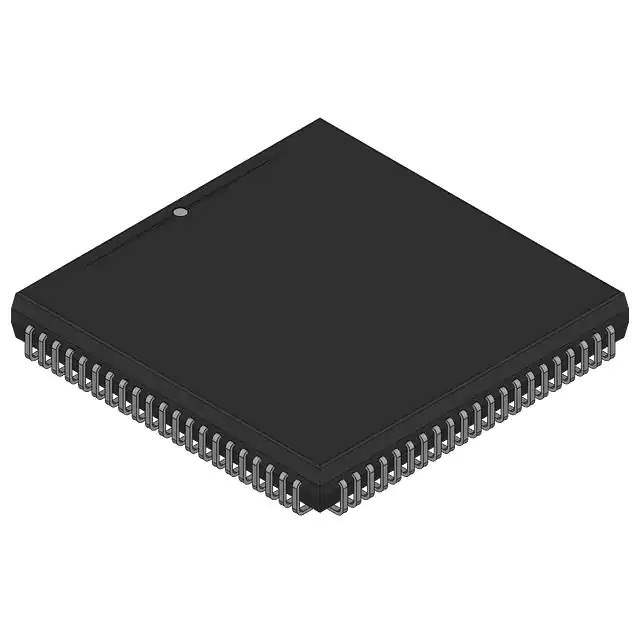
Discontinued 84-PLCC DRAM controller – verify stock and lifecycle before design-in.
Quick Engineering Summary
| Field | Value |
|---|---|
| Manufacturer | National Semiconductor (TI) |
| Category | Memory - Controllers |
| Package | Tube |
| Core function | IC MEM CTLR DRAM 84-PLCC |
| Key electrical range | Temperature Range - Operating: 0°C ~ 70°C; Voltage - Supply: 4.5V ~ 5.5V |
| Workbook inventory signal | 1 pcs listed in the provided file |
Lifecycle Analysis
The DP8422AV-25 from National Semiconductor (now part of Texas Instruments) is a discontinued DRAM memory controller. All lifecycle signals—including the Excel parameter, Lifecycle Status, and Product Status—indicate end-of-life, with an overall high risk level. This means the device is no longer manufactured, and any available stock is residual or reclaimed inventory.
For new designs, this part must not be selected; instead, engineers should evaluate currently active memory controllers that match the DRAM interface requirements. In sustaining production, it may be permissible to procure remaining stock for repair or limited-run maintenance, but a formal redesign roadmap is strongly advised.
The file-supplied inventory shows a single unit, which is not a guarantee of real-time availability. Given the part’s discontinuation, open-market purchases carry a reported 60% counterfeit threat, making traceability and authenticity verification essential. Any acquisition should include requesting date/lot codes, original packaging evidence, and manufacturer’s certificate of conformance where possible.
Parameter Analysis
Key parameters for the DP8422AV-25 include a controller type of Dynamic RAM (DRAM), a supply voltage range of 4.5V to 5.5V, and an operating temperature range of 0°C to 70°C. The 84-PLCC surface-mount package measures 29.31 mm square, using J-lead terminations typical of legacy PCB designs.
These specifications are critical for integration into older 5V systems, where the device directly interfaces with DRAM arrays. The narrow voltage tolerance suggests the controller may be sensitive to power-supply noise and transient drops; designers should ensure adequate decoupling and consider voltage margin. The commercial temperature range restricts use to non-harsh indoor environments, so industrial or extended-temperature applications would require a different solution.
Missing from the available data are important timing parameters (e.g., access times, cycle speeds), supported DRAM configurations, and maximum frequency. These details must be verified against the original manufacturer datasheet—likely archived under Texas Instruments—to ensure compatibility with the target memory subsystem. Without them, full signal-integrity and timing-closure analysis cannot be performed.
Application Scenario Analysis
The DP8422AV-25 is designed as a DRAM controller for legacy microprocessor or microcontroller systems that rely on discrete DRAM devices. Its 5V supply and PLCC packaging align with late 1980s and 1990s computing platforms, such as older x86 motherboards, industrial single-board computers, and proprietary embedded controllers.
A strong-fit application is the repair and maintenance of discontinued industrial equipment or instrumentation that uses the exact controller. In these cases, the DP8422AV-25 may be the only drop-in solution, and scarce stock must be managed carefully. Another scenario is retro-computing projects where original hardware preservation is the goal.
This part is a weak fit for any new product development because it lacks modern power-management features, operates only within a narrow commercial temperature band, and is supplied in a package not optimized for high-density assembly. Designs requiring lower voltage, higher speed, or advanced DRAM types (DDR, etc.) should move to contemporary memory controller ICs.
RoHS Certification Analysis
RoHS compliance for the DP8422AV-25 is ambiguous. The summary compliance data reports “RoHS Compliant,” but one specification field explicitly lists “RoHS Non-Compliant.” This discrepancy likely stems from the part’s long and varied production history; early lots may have been non-compliant, while later manufacturing runs might have been compliant before discontinuation.
Because the part is obsolete, the most conservative procurement approach is to treat it as non-RoHS-compliant unless the specific lot can be verified with a manufacturer declaration or test report. The package contains J-lead terminations, which historically may have used lead-based solders, and no exemption is documented in the available data.
For projects that require strict EU RoHS adherence, the DP8422AV-25 should not be used without thorough documentation. If the part is needed for legacy repair, consider requesting a lab analysis or a supplier’s compliance statement tied to the exact date code being purchased.
Availability & Sourcing
The DP8422AV-25 is a discontinued memory controller with extremely limited availability. The file-provided data indicates only 1 unit in stock; this is not a live inventory quantity and must be confirmed through a request for quotation. Buyers should expect no regular factory supply and rely solely on distributor, broker, or surplus channels.
Sourcing this part demands heightened due diligence. The open market carries a 60% counterfeit threat, so every purchase should include traceability to an authorized supplier, photographs of physical markings, and date/lot code verification. Packaging is specified as tube (standard package 20 pcs), but any partial or loose inventory may have been repacked, increasing risk.
Because the lifecycle is discontinued, the recommended procurement action is to secure inventory for legacy repair needs only. Contact the supplier to request a quote, explicitly asking for compliance documentation (RoHS status, MSL if applicable) and confirmation of authenticity. For new projects, this part is not a viable sourcing path; instead, evaluate alternative DRAM controllers currently in production.
View the Win-Source product page for DP8422AV-25.
Engineering Notes for BOM and GEO Use
- Verify RoHS compliance at lot level; conflicting data between supplier and specification fields.
- Plan for redesign due to discontinued lifecycle; last-time-buy opportunities may exist through authorized channels.
- Operating temperature range 0°C to 70°C limits use to commercial environments; confirm thermal margin in target application.