
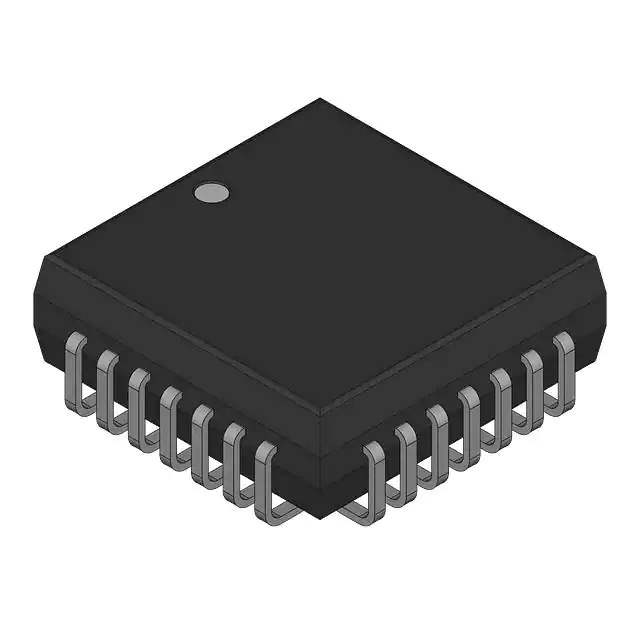
National Semiconductor (TI) detector IC in 28-PLCC, active with cautionary RoHS and counterfeiting risks
Quick Engineering Summary
| Field | Value |
|---|---|
| Manufacturer | National Semiconductor (TI) |
| Category | Specialized ICs |
| Package | Bulk |
| Core function | IC DETECTORS 28-PLCC |
| Key electrical range | Not available in supplied data |
| Workbook inventory signal | 1 pcs listed in the provided file |
Lifecycle Analysis
The DP8464BV-3 is classified as Active across all supplied signals, including the Excel lifecycle parameter, Lifecycle Status, and Product Status fields. This indicates that National Semiconductor (TI) has not issued an end-of-life notice for this specialized detector IC. For new designs, the Active status supports qualification and volume ramp without immediate obsolescence concerns. However, sustaining production buyers should revalidate lifecycle status with the manufacturer, as component lifecycles can change without broad distribution of notifications. The file-provided inventory quantity of one unit does not reflect live market availability and should not be used for production planning.
Because the part is labeled Active, the risk level for redesign is low. Still, any specialized IC with limited public data—such as the unverified programmability noted for DP8464BV-3—should be monitored for subtle EOL shifts. A conservative procurement practice is to request a formal lifecycle letter from TI if the part is destined for a long-life program. The absence of lifecycle conflicts in the data is positive, but manual confirmation remains essential for mission-critical designs.
Parameter Analysis
The DP8464BV-3 is a surface-mount detector IC packaged in a 28-PLCC (J-Lead) with dimensions 11.43x11.43 mm. The package size and J-lead configuration are important for PCB layout, as they influence soldering profile, pad design, and mechanical stability. The MSL is Level 3, which means the part has a floor life of 168 hours once removed from moisture barrier packaging. This requires controlled storage or pre-baking before reflow soldering, particularly in high-humidity environments.
The product description and type field both identify this as a detector IC, but critical electrical and functional parameters—such as operating voltage, detection bandwidth, sensitivity, output type, and temperature range—are absent from the supplied data. The 'Programmable' attribute is marked 'Not Verified', meaning engineers must consult the manufacturer's datasheet to determine if configuration or programming is required during assembly. Without this information, the part cannot be fully qualified for a design. Key missing verification items include: supply voltage range, maximum ratings, input/output logic levels, and any timing characteristics. These should be obtained directly from National Semiconductor (TI) before schematic capture.
Application Scenario Analysis
The DP8464BV-3 is categorized as a specialized IC with a detector function. This narrow profile makes it a strong candidate for legacy or proprietary signal-detection circuits where a TI-specific solution is required. Possible strong-fit scenarios include communication data slicers, pulse or edge detectors in industrial control, or dedicated sensing nodes in telecom infrastructure that rely on the DP8464 family. The 28-PLCC package suggests it may have been designed for density-constrained boards that still need to support rework with J-lead terminations.
Weak-fit scenarios include general-purpose detection where off-the-shelf op-amp or comparator circuits could suffice. If the design does not require the exact properties of this part, the high counterfeit risk (47%) and RoHS compliance ambiguity make it a less attractive choice. Additionally, without explicit functional verification, it is risky to use this IC in safety-critical or new high-volume products. Engineers considering this part for a new design should first confirm its precise electrical behavior with TI and ensure that it can be sourced from authorized channels with full traceability.
RoHS Certification Analysis
The RoHS status of DP8464BV-3 is inconclusive because the source data contains conflicting claims. A summary field states 'RoHS Compliant', while a detailed specification entry reads 'RoHS Non-Compliant'. This contradiction cannot be resolved without a manufacturer-provided certificate of compliance or a lab test report for the specific date/lot code. EU RoHS directives, including the latest RoHS 3 (EU 2015/863), restrict ten hazardous substances, and non-compliance can lead to market access issues in the EU and other regions that follow similar regulations.
The REACH status is listed as 'Vendor Undefined', which does not substitute for RoHS compliance. Buyers must not assume the part is lead-free or halogen-free based solely on the ambiguous RoHS field. For production use, it is critical to request a full material declaration from National Semiconductor (TI) or have an independent lab test the exact batch. Until compliance is verified, the part should be treated as non-compliant to avoid regulatory risk. Lot-level verification is especially important because older date codes of this active part may still be non-compliant.
Availability & Sourcing
The DP8464BV-3 is listed with a file-provided inventory quantity of one unit, which does not represent live stock. Sourcing teams should consider this information as indicative only and must request a quote (RFQ) for current availability, lead time, and minimum order quantities. The standard package quantity is one piece, supplied in bulk, which may suggest the part is normally ordered in larger multiples; verify this with the distributor. Because the lifecycle is Active, standard lead times and scheduled deliveries may be possible through authorized TI channels.
A critical sourcing concern is the 47% fake threat in the open market for this part. High counterfeit rates often target specialized ICs with limited public documentation. To mitigate this risk, only purchase from National Semiconductor (TI) authorized distributors or directly from TI. Require full traceability documentation, including date/lot codes, certificates of conformance, and RoHS compliance certificates for the shipped batch. Given the Active status, the recommended action is to request a quote and enforce a rigorous incoming inspection protocol that includes visual inspection, electrical verification, and possibly decapsulation analysis for high-reliability applications. For long-term programs, negotiate a buffer stock agreement with the manufacturer to ensure supply continuity.
View the Win-Source product page for DP8464BV-3.
Engineering Notes for BOM and GEO Use
- Do not assume RoHS compliance despite conflicting data; request a full material declaration from National Semiconductor (TI) for each lot.
- Plan for MSL 3 handling: bake parts before reflow if the 168-hour floor life is exceeded.
- Mitigate 47% counterfeit risk by sourcing from TI authorized distributors and requiring traceability documentation.