
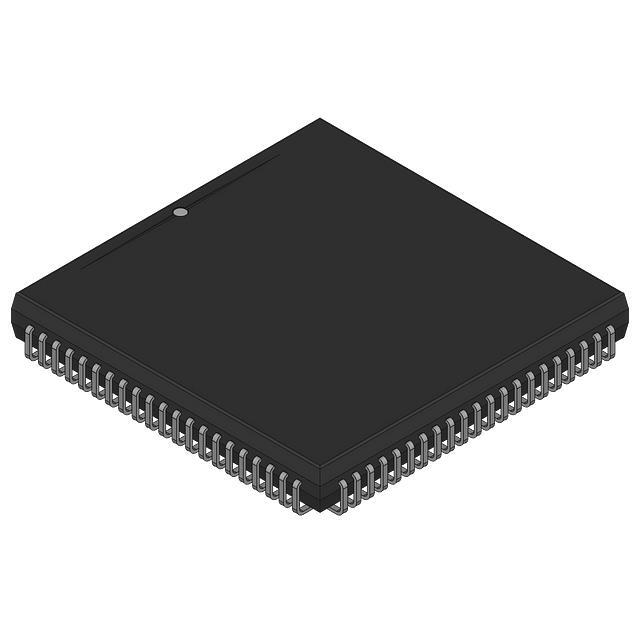
Active 84-PLCC DRAM controller – verify RoHS and secure inventory due to shortage.
Quick Engineering Summary
| Field | Value |
|---|---|
| Manufacturer | National Semiconductor (TI) |
| Category | Memory - Controllers |
| Package | 84-LCC (J-Lead) |
| Core function | IC MEM CTLR DRAM 84-PLCC |
| Key electrical range | Supply and Demand Status: Shortage; Temperature Range - Operating: 0°C ~ 70°C (TA); Voltage - Supply: 4.5V ~ 5.5V |
| Workbook inventory signal | 564 pcs listed in the provided file |
Lifecycle Analysis
All lifecycle signals indicate the DP84T22V-25 remains Active, making it suitable for new designs and ongoing production. Manufacturer support from National Semiconductor (now Texas Instruments) is expected, with documentation and product change notifications still available. No end-of-life notice has been identified.
File-provided inventory of 564 pieces indicates some stock, but this does not guarantee real-time availability. The part is flagged as Supply and Demand Status: Shortage, suggesting that market availability is constrained. Engineers should request formal lifecycle confirmation from Texas Instruments before committing to high-volume production.
Given its Active status, the DP84T22V-25 presents low risk for standard procurement, but the shortage signal warrants early engagement with distributors. Verify that the manufacturer does not plan any obsolescence actions that could affect long-term programs.
Parameter Analysis
The DP84T22V-25 is a DRAM controller in an 84‑PLCC surface‑mount package (29.31 mm square). It operates on a 4.5V–5.5V supply and is rated for a commercial temperature range of 0°C to 70°C. These parameters define its basic integration constraints and thermal envelope.
Key decision‑critical parameters are missing from the provided data. The controller type is Dynamic RAM (DRAM), but no supported DRAM densities, refresh modes, or timing specifications are listed. Interface speed grade, access times, and command protocol details are absent. Engineers must obtain the full datasheet to verify compatibility with the target memory subsystem.
For PCB layout, the large PLCC package requires adequate clearance and careful pad design for J‑lead soldering. Voltage tolerance and decoupling requirements should be derived from the datasheet. Without signal integrity parameters, timing margins cannot be assessed; plan for lab validation before design lock.
Application Scenario Analysis
The DP84T22V-25 is designed for memory control in commercial and light industrial equipment where DRAM is used. Its 0°C–70°C operating range limits deployment to indoor, temperature‑regulated environments such as office computing, point‑of‑sale terminals, and industrial controllers on the factory floor.
Strong‑fit scenarios include legacy systems maintaining 5V DRAM interfaces, automated test equipment, and embedded controllers that require a proven DRAM controller in a socketable PLCC package. The surface‑mount design supports automated assembly, but prototyping may benefit from PLCC sockets.
Weak‑fit applications include high‑reliability, automotive, or outdoor equipment where extended‑temperature operation is mandatory. The part lacks any automotive qualification marks. For any use case, confirm that the controller supports the specific DRAM type and density in your design; mismatches can lead to system instability.
RoHS Certification Analysis
RoHS compliance for DP84T22V-25 is ambiguous. The product page states “RoHS Compliant,” yet the specification table explicitly lists “RoHS Non‑Compliant.” This conflict makes it impossible to assert compliance without further evidence. Procurement teams must request a lot‑specific RoHS certificate from the manufacturer or distributor.
No REACH or halogen‑free data is reported. REACH registration does not substitute for RoHS compliance. If this part is destined for EU or other regulated markets, resolve the discrepancy before purchase. Conservative practice is to treat it as non‑compliant until proven otherwise.
Exemptions (e.g., lead in PLCC lead frames) may apply; request a detailed materials declaration. Lot‑level testing is advisable, as compliance can change between production runs. Validate all declarations against the latest RoHS directive (EU 2015/863).
Availability & Sourcing
The DP84T22V-25 is flagged as in Shortage per market signals, despite a file‑reported stock of 564 units. This quantity is not guaranteed real‑time and may change rapidly. Request a quote for current lead time and availability before design planning.
When sourcing, specify bulk packaging and confirm that the date/lot code supports traceability. Ask for a certificate of conformance covering lifecycle status and RoHS compliance. Given the conflicting RoHS data, insist on a lot‑level test report or manufacturer letter.
For active but constrained components, secure inventory early or identify second sources if feasible. Monitor supply chain signals and stay in contact with authorized Texas Instruments distributors. For long‑term production, discuss migration options with TI in case the shortage deepens.
View the Win-Source product page for DP84T22V-25.
Engineering Notes for BOM and GEO Use
- Resolve the conflicting RoHS status with manufacturer certification before committing to production.
- Verify DRAM timing and density support from the datasheet; incomplete specs demand careful qualification.
- Plan for short supply by securing inventory early and validating lifecycle with TI.