
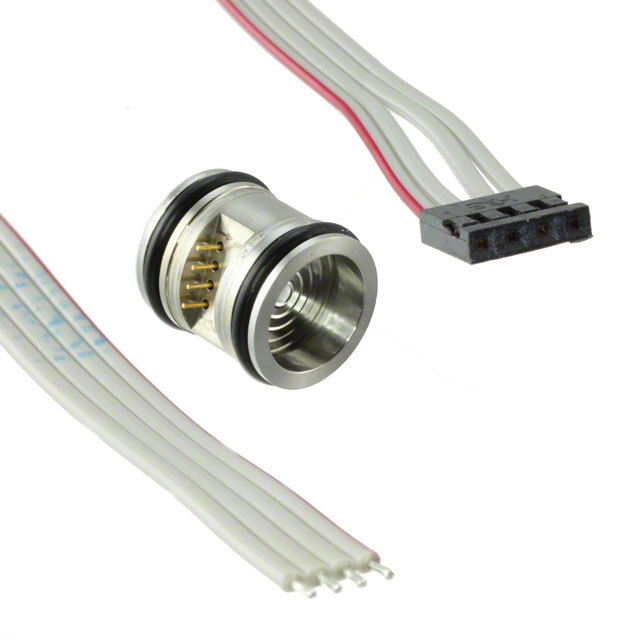
TE Connectivity differential pressure sensor for industrial automation – specifications, lifecycle, and sourcing guidance.
Quick Engineering Summary
| Field | Value |
|---|---|
| Manufacturer | TE Connectivity |
| Category | Pressure Sensors, Transducers |
| Package | Module |
| Core function | SENSOR PRESSURE |
| Key electrical range | Output: 0 mV ~ 100 mV (5V); Output Type: Wheatstone Bridge; Supply and Demand Status: Shortage; Temperature Range - Operating: -40°C ~ 125°C |
| Workbook inventory signal | 1 pcs listed in the provided file |
Lifecycle Analysis
The DP86-030D is listed as Active by TE Connectivity, with no conflicting lifecycle signals appearing in the supplied data. This status indicates the component is in full production and can be used in both new designs and current manufacturing programs.
However, independent inventory reports mention a supply‑and‑demand status of “Shortage” and a workbook quantity of only one unit. While the lifecycle is low‑risk, the spot‑market scarcity warns buyers that lead times may be extended. Design teams should therefore not assume unlimited availability and should confirm lead‑time commitments from authorized distribution.
For new design wins, it is prudent to request an up‑to‑date manufacturer product notification and inquire about any planned process changes. If the DP86-030D is being evaluated for a long‑lifecycle product, consider adding a second‑source validation to the qualification plan to hedge against future supply constraints.
Parameter Analysis
The most decision‑relevant specifications include pressure type, range, accuracy, output, and supply voltage. The DP86-030D measures differential pressure with an operating range of 30 PSI (206.84 kPa) and a maximum pressure of 90 PSI (620.53 kPa). The ±0.1 % accuracy band (likely full‑scale) makes it suitable for precise industrial automation loops. Its output is a Wheatstone bridge delivering 0 mV to 100 mV when powered with a 5 V supply; the part accepts 5 V to 9.5 V, giving flexibility for either 5 V or higher‑voltage analog front‑ends.
The wire‑lead termination and “No Port” style mean the sensor element is exposed; the designer must integrate it into a sealed housing or manifold. The wide operating temperature range of –40 °C to +125 °C allows use in harsh environments. However, the provided data omits several design‑critical parameters: transfer function linearity error, thermal zero/sensitivity shift, overpressure rating (beyond 90 PSI), response time, and long‑term stability. These values must be obtained from the official TE Connectivity datasheet before completing the circuit design, especially for safety‑related or high‑reliability systems.
Other missing specifics, such as input resistance, insulation resistance, and humidity limits, should also be confirmed. The tube packaging and module‑style case suggest through‑hole or panel mounting; verify dimensional drawings for correct fit.
Application Scenario Analysis
The stated application for the DP86-030D is industrial automation, and its differential pressure measurement capability aligns strongly with scenarios such as filter blockage monitoring, clean‑room pressure balancing, flow measurement across an orifice plate, and duct‑static‑pressure control. The ±0.1 % accuracy supports precision feedback loops, while the 0–100 mV output can be amplified and digitized by typical PLC analog input modules.
Good‑fit applications also include pneumatic system monitoring, where the 30 PSI operating range covers common compressed‑air circuits. The no‑port design gives engineers freedom to design custom pressure‑fitting interfaces, which is advantageous in embedded equipment but requires careful mechanical integration.
Weak‑fit or caution scenarios include absolute or gauge pressure measurements unless a stable reference is provided to one side of the differential element. High‑vibration machinery may need strain relief on the wire leads to prevent fatigue. Environments with frequent pressure transients above 90 PSI risk sensor damage; confirm overpressure tolerance with TE Connectivity before proceeding. Finally, battery‑powered devices must evaluate the power consumption and excitation trade‑offs, which are not specified here.
RoHS Certification Analysis
The DP86-030D is flagged as RoHS Compliant in the supplied data, indicating it meets EU hazardous substance restrictions under directives such as 2011/65/EU and the 2015/863 amendment. No specific exemptions are mentioned, which suggests the sensor materials likely do not require any listed exemptions.
Nevertheless, RoHS compliance is declared at the part‑number level; manufacturing batch variations could theoretically introduce non‑compliant process materials. Buyers for regulated industries should request a formal Certificate of Compliance (CoC) or a full material declaration from the distributor. The absence of REACH statements in the provided data means REACH compliance should be separately confirmed if required for EU market access.
Additionally, because the DP86-030D is shipped in tubes, moisture sensitivity is generally not a critical concern, but no MSL rating is supplied. If the sensor will undergo reflow soldering (unusual for wire‑lead modules), seek clarification from TE Connectivity.
Availability & Sourcing
The supplied workbook data indicates a quantity of one unit, and the supply‑and‑demand flag is set to “Shortage.” This file‑based snapshot is not a real‑time inventory guarantee; it signals that spot availability may be tight and that lead times could be unpredictable.
Because the DP86-030D has an Active lifecycle status, authorized distributors should be able to provide quotes for larger volumes. Engineers and buyers are advised to request a quote (RFQ) that includes current stock, packaging (tube), factory lead time, and lot‑specific compliance documents. Verify the part’s date code and lot code to ensure it is recent production and that RoHS certification corresponds to that lot.
For production planning, factor in the shortage signal and consider placing safety‑stock orders while validating TE Connectivity’s capacity. If the DP86-030D is critical for a design, initiate discussions with TE or their franchised distribution network to understand any allocation constraints. Always confirm the lifecycle status directly with the manufacturer when placing high‑volume orders to avoid last‑minute obsolescence surprises.
View the Win-Source product page for DP86-030D.
Engineering Notes for BOM and GEO Use
- Verify the supply voltage (5V–9.5V) matches your conditioning circuit; a Wheatstone bridge output requires amplification and ratiometric analog-to-digital conversion for most controllers.
- This is a differential sensor without a port; plan your manifold or tubing connection to avoid leakage and ensure both pressure inputs are referenced correctly.
- Request current lot‑specific RoHS and REACH declarations from the distributor because compliance documentation may not be universal across production years.