
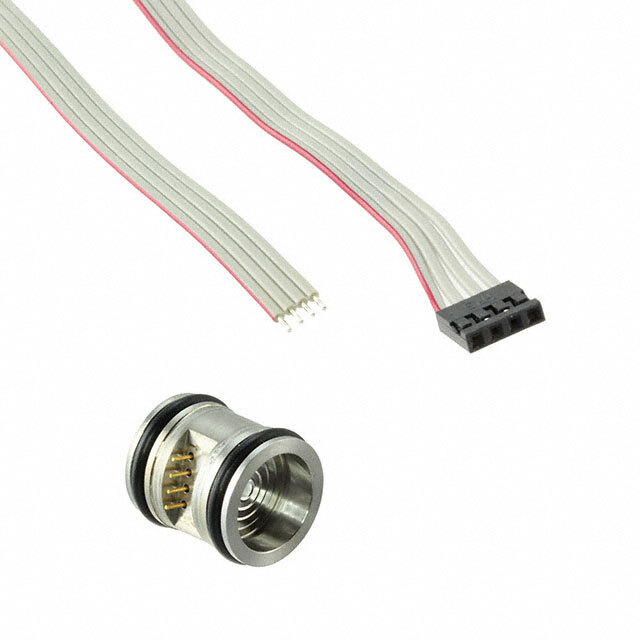
Key specifications, lifecycle status, compliance, and sourcing considerations for engineers and procurement teams.
Quick Engineering Summary
| Field | Value |
|---|---|
| Manufacturer | TE Connectivity |
| Category | Pressure Sensors, Transducers |
| Package | Module |
| Core function | SENSOR PRESSURE |
| Key electrical range | Output: 0 mV ~ 100 mV (5V); Output Type: Wheatstone Bridge; Supply and Demand Status: Shortage; Temperature Range - Operating: -40°C ~ 125°C |
| Workbook inventory signal | 13 pcs listed in the provided file |
Lifecycle Analysis
The DP86-300D is currently listed as Active by TE Connectivity, indicating that it is in full production and available for new designs. This status typically assures supply continuity and manufacturer support, making it a safe choice for projects with a multi-year lifecycle.
However, the supplementary supply and demand data flags a shortage condition, and file-provided inventory shows only 13 units. These signals suggest that real-time availability may be constrained. For new designs, it is essential to obtain a formal lifecycle confirmation and lead‑time estimate from TE Connectivity or authorized distributors before finalizing the bill of materials.
When planning production volumes, use this Active status as a starting point but incorporate a verification step to ensure that no NRND or EOL notice is pending. The low risk level assigned here assumes continued status, but conservative sourcing practices recommend double‑checking directly with the manufacturer.
Parameter Analysis
The DP86-300D is a differential pressure sensor with an operating range of 300 PSI and a maximum overload of 900 PSI. Designers must ensure that system pressures never exceed 900 PSI to avoid sensor damage. The ±0.1% accuracy is a key specification for applications requiring precise pressure measurement, but it should be confirmed over the full temperature range of -40°C to 125°C, as drift may affect performance.
The sensor outputs a ratiometric 0 mV to 100 mV Wheatstone bridge signal, necessitating external amplification and possibly temperature compensation circuitry. Supply voltage can range from 5V to 9.5V, so the excitation must be stable and clean to maintain accuracy. Termination is via wire leads, and the module package offers no pressure port, which affects mechanical integration. Engineers should verify the exact diaphragm material and media compatibility from the datasheet.
Notably absent from the available data are details on long‑term stability, response time, and output voltage span at full supply. These parameters should be requested from TE Connectivity to fully evaluate sensor suitability for critical control loops.
Application Scenario Analysis
With an industrial automation application designation, the DP86-300D is well suited for differential pressure measurement in factory automation, hydraulic systems, and pneumatic controls. Its wide temperature range and rugged module construction support use in harsh environments like engine test cells or HVAC pressure drop monitoring.
Strong-fit scenarios include any industrial setting where a differential pressure signal is needed for process control, filter monitoring, or leak detection. The high maximum pressure rating makes it viable for systems that experience occasional transients up to 900 PSI. However, the lack of a pressure port means that users must create a custom housing or manifold, so mechanical engineering effort is required.
Weak-fit scenarios involve applications requiring absolute or gauge pressure measurement, digital interfaces (I²C, SPI), or intrinsically safe certifications. For battery-powered devices, the sensor’s need for external bridge excitation and amplification could be a drawback compared to integrated amplified sensors. Always validate that the output span and sensitivity match your ADC input range in the end application.
RoHS Certification Analysis
The DP86-300D is listed as RoHS Compliant, which generally means it meets the requirements of the EU RoHS Directive (likely 2015/863). This status covers the restriction of hazardous substances such as lead, mercury, and cadmium. The compliance indication typically applies at the component family level, but lot‑specific certificates may be necessary for customers requiring full material declarations.
No information on REACH, halogen-free, or MSL (moisture sensitivity level) is provided in the source data. While RoHS compliance is a baseline for many markets, additional environmental regulations may apply. Procurement teams should request a compliance certificate from TE Connectivity that confirms both RoHS and any relevant substance-of-concern statuses.
If the end product must meet automotive or medical environmental standards, additional testing documentation beyond basic RoHS may be required. The wire leads and solderability of terminations should also be checked for any legacy tin‑lead finishes that might conflict with modern lead‑free assembly processes.
Availability & Sourcing
The DP86-300D is currently flagged with a shortage status, and the file-provided inventory quantity is 13 units. This should not be interpreted as a real‑time stock guarantee; it is a snapshot from a sourcing workbook. Engineers and buyers should request a quote through authorized channels to obtain current lead times and pricing trends.
For an Active part, the standard sourcing workflow involves RFQ to distributors, verification of date and lot codes, and a check of packaging – the DP86-300D ships in tubes, which is typical for small‑batch sensor modules. Compliance documentation such as RoHS certificates and counter‑feiting prevention measures should be part of the purchase order requirements.
Given the shortage indication, consider securing safety stock or identifying a second source for the DP86-300D early in the design phase. Although lifecycle risk is low, any unstable supply can disrupt production. A conservative approach is to monitor TE Connectivity’s product change notifications and maintain contact with multiple authorized distributors to ensure continuity.
View the Win-Source product page for DP86-300D.
Engineering Notes for BOM and GEO Use
- Verify the exact pressure port configuration and media compatibility with TE Connectivity documentation, as the sensor has no port and differential type.
- The Wheatstone bridge output requires external signal conditioning; confirm excitation voltage stability for rated accuracy.
- Due to short supply indication, obtain current lead times and consider alternate sourcing before committing to production volumes.