
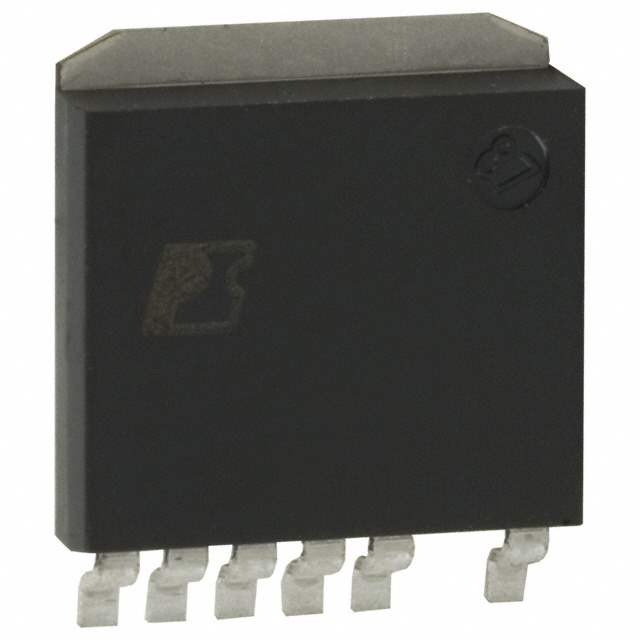
EOL Power Integrations PMIC for PoE/Telecom. Single output, S-PAK package; verify lifecycle & secure inventory.
Quick Engineering Summary
| Field | Value |
|---|---|
| Manufacturer | Power Integrations |
| Category | PMIC - Voltage Regulators - Special Purpose |
| Package | S-PAK |
| Core function | IC REG CONV POE TELECM 1OUT SPAK |
| Key electrical range | Number of Outputs: 1; Output Voltage: 220V; Supply and Demand Status: Balance; Temperature Range - Operating: -40°C to 125°C |
| Workbook inventory signal | 3270 pcs listed in the provided file |
Lifecycle Analysis
DPA424SN from Power Integrations has been designated End-of-Life (EOL) with a high risk for procurement. This status means the part is not recommended for new designs, and manufacturers typically limit or cease production. Last-time buy (LTB) orders may still be possible but require immediate action to secure remaining stock. EOL parts can face availability shortages and potential price escalations in the open market.
The file-provided inventory shows 3270 units, but this quantity is not guaranteed real-time and should be verified via RFQ. No alternative part numbers were supplied, so designs depending on the DPA424SN should be reviewed for migration paths. Contact Power Integrations to obtain a Product Discontinuance Notice (PDN) and to confirm any official replacement or upgrade options. Re-qualification will likely be necessary if a substitute is identified.
Parameter Analysis
The DPA424SN’s most critical parameters include its input voltage range of 16 V to 75 V and a single 220 V output, making it suitable for generating high-voltage rails from standard telecom or PoE power sources. The wide operating temperature of -40°C to 125°C supports industrial environments, and the S-PAK surface-mount package simplifies PCB layout and assembly with tube/rail packing.
However, several key specifications are absent from the provided data: output current capability, efficiency curves, switching frequency, and protection features (such as overcurrent or thermal shutdown). These details are essential for designing a reliable power stage, calculating thermal margins, and ensuring stable operation under load transients. Engineers must consult the full datasheet from Power Integrations to validate these parameters before proceeding with any design or replacement evaluation.
Additionally, with a 30% fake threat level noted in the open market, sourcing from authorized distributors is critical. Visual and electrical testing should be performed on incoming lots to guard against counterfeit devices that could compromise performance and safety.
Application Scenario Analysis
The DPA424SN is optimized for Power over Ethernet (PoE) and telecom systems, as indicated by its listed applications. In PoE midspans or endpoint PSE equipment, it can derive a stable 220 V rail from the 48 V nominal bus, powering downstream isolation or long-loop interfaces. Telecom rectifier or line-card designs similarly leverage its high output voltage capability for specialized analog or communication circuits.
Despite these strengths, the part is a poor fit for low-voltage consumer electronics or multi-output power management IC applications where simpler, more integrated solutions exist. The EOL status and single-output limitation further restrict its use to maintenance, repair, and legacy production. New designs should consider active alternatives with similar input range and output voltage from Power Integrations or other suppliers to avoid supply chain risk.
For existing platforms that rely on the DPA424SN, it remains a functional choice if adequate inventory can be qualified and secured for the product’s remaining lifecycle.
RoHS Certification Analysis
The DPA424SN is declared RoHS Compliant by Power Integrations, meaning it meets the restrictions on hazardous substances as defined by EU Directive 2011/65/EU (RoHS 2) or subsequent amendments. However, the specific standard version and any applicable exemptions are not detailed in the provided data. For a part used in telecom and PoE infrastructure, certain exemptions (e.g., for lead in solder used in high-temperature applications) might apply; these are not specified.
Compliance at the family level is common for Power Integrations, but lot-level variations can occur especially for legacy parts marked EOL. Therefore, request a full material declaration sheet and confirm RoHS compliance for the specific date code and lot before purchasing. REACH status is not included, so if SVHC declarations are required, contact the manufacturer directly.
Availability & Sourcing
With an EOL status and a high supply risk, sourcing the Power Integrations DPA424SN requires immediate and careful procurement actions. The file indicates 3270 units in stock, but this snapshot may not reflect real-time availability and should be confirmed through a formal RFQ process. The supply-demand balance is reported as neutral at present, yet this can shift quickly as remaining inventories deplete.
When requesting quotes, specify exact date code and lot code requirements, and insist on traceable documentation to verify authenticity—especially given the 30% counterfeit incidence flagged for this part in open markets. Compliance documents (RoHS certificate and material declarations) should accompany each shipment. The standard packaging is tube/rail, suitable for automated assembly; ensure storage conditions adhere to the dry storage and humidity protection guidelines to preserve solderability.
For production planning, if the DPA424SN is critical, consider placing a last-time buy order while inventory remains. Simultaneously engage with Power Integrations or distributor FAEs to identify a migration path to a recommended active replacement. Readers are encouraged to request a quote to check current availability and lead times.
View the Win-Source product page for DPA424SN.
Engineering Notes for BOM and GEO Use
- Verify end-of-life status and last-time buy window directly with Power Integrations before relying on DPA424SN for production.
- Given 30% fake threat risk, source only from authorized distributors and request traceable lot codes and RoHS certificates with each shipment.
- Obtain full datasheet to confirm missing parameters such as output current and efficiency—critical for thermal and electrical design margins.