
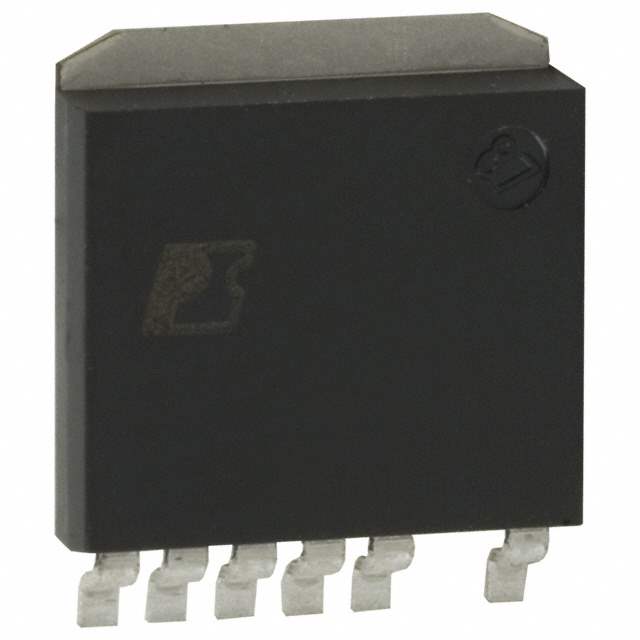
End-of-Life Power Over Ethernet & Telecom Converter IC from Power Integrations
Quick Engineering Summary
| Field | Value |
|---|---|
| Manufacturer | Power Integrations |
| Category | PMIC - Voltage Regulators - Special Purpose |
| Package | S-PAK |
| Core function | IC REG CONV POE TELECM 1OUT SPAK |
| Key electrical range | Number of Outputs: 1; Output Voltage: 220V; Supply and Demand Status: Limited; Temperature Range - Operating: -40°C to 125°C |
| Workbook inventory signal | 9397 pcs listed in the provided file |
Lifecycle Analysis
The DPA425SN is classified as End-of-Life (EOL) by Power Integrations, carrying a high procurement risk. This status indicates the manufacturer has discontinued production, and no further units will be manufactured. For new designs, the DPA425SN is not recommended; engineering teams should identify alternative solutions with active lifecycle status. Existing production lines relying on this part must evaluate last-time buy opportunities and secure sufficient inventory to bridge the transition to a replacement.
The supplied data shows no lifecycle conflicts—all signals confirm EOL. A workbook quantity of 9397 units is recorded, but this figure is file-provided and does not reflect real-time availability. Procurement must verify actual stock, date codes, and traceability directly with the distributor before committing to a purchase. Additionally, consult Power Integrations’ official product change notifications (PCN) or end-of-life notices for specific timelines and any recommended replacements.
Parameter Analysis
The DPA425SN’s most notable specification is its 220V output voltage, which is significantly higher than typical logic-level regulators and targets telecom or isolated power systems. The wide 16V to 75V input range accommodates various DC bus voltages, including standard 48V telecom rails and wide-range industrial supplies. The single output configuration simplifies integration but limits design flexibility for multi-rail systems. The S-PAK package with surface-mount mounting enables automated assembly, yet the high output voltage demands careful PCB layout to meet creepage and clearance requirements.
The operating temperature range of -40°C to 125°C supports industrial environments, but thermal impedance and power dissipation derating curves are absent from the provided data. Engineers must consult the full datasheet for critical missing parameters such as maximum output current, switching frequency, efficiency curves, protection features (e.g., overcurrent, thermal shutdown), and detailed pin function descriptions. Without these, a complete derating and qualification analysis is not possible.
Application Scenario Analysis
Based on its description as a converter for Power over Ethernet and telecom applications, the DPA425SN is suited for isolated DC-DC conversion in telecom infrastructure, such as line-powering remote equipment or generating high-voltage supply rails for line drivers. Its 220V output suggests use in line-feed or ring-generator circuits, while the PoE designation implies compatibility with powered device (PD) controllers requiring auxiliary high-voltage bias.
Strong-fit scenarios include industrial telecommunications equipment with centralized -48V rails and the need for high-voltage output to drive long-loop interfaces. Weak-fit applications include standard PoE PDs that operate at lower voltages (e.g., 5V, 12V), where the 220V output is over-engineered and inefficient. Given its EOL status, this part should only be considered for sustaining legacy designs, not new development. Designers must verify that the actual output capability aligns with load requirements under worst-case input and temperature conditions.
RoHS Certification Analysis
The DPA425SN is listed as RoHS Compliant according to the manufacturer’s declaration. However, the specific RoHS directive revision (e.g., EU 2015/863) is not provided. While the status suggests compliance with EU hazardous substance restrictions, lot-level variations can occur; therefore, a certificate of compliance for each shipment is advisable. No information on REACH, halogen-free, or MSL ratings is included in the available data.
For applications requiring specific RoHS exemptions, confirm with Power Integrations whether any apply to this part. In the context of EOL procurement, older date codes may have different compliance profiles, so verify manufacturing dates to ensure alignment with current environmental standards. If REACH compliance is needed, request a separate declaration from the supplier.
Availability & Sourcing
As an EOL part, the DPA425SN presents sourcing challenges. The recorded workbook quantity of 9397 may represent remaining distributor stock, but real-time availability must be confirmed via a request for quote (RFQ). The open-market fake threat for this part is noted at 34%, underscoring the importance of purchasing only from authorized or traceable sources to avoid counterfeit components. Packaging is tube/rail, and recommended storage conditions are dry cabinet with humidity protection, which should be maintained throughout handling.
Buyers should request documentation including date/lot codes, RoHS compliance certificates, and manufacturer original packaging labels. For production beyond current inventory, immediate evaluation of alternative parts is critical. Contact a distributor to check current stock, lifecycle verification, and migration support. Given the EOL status, do not commit to new production quantities without securing sufficient buffer stock and a validated replacement plan.
View the Win-Source product page for DPA425SN.
Engineering Notes for BOM and GEO Use
- Verify EOL status directly with Power Integrations and confirm last-time buy windows to avoid supply gaps.
- The 220V output voltage imposes stringent PCB isolation requirements; review IPC-2221 creepage tables for your pollution degree and material group.
- Given the 34% open-market fake threat risk, mandate full component authenticity testing (e.g., X-ray, decap) for any non-traceable lot.