
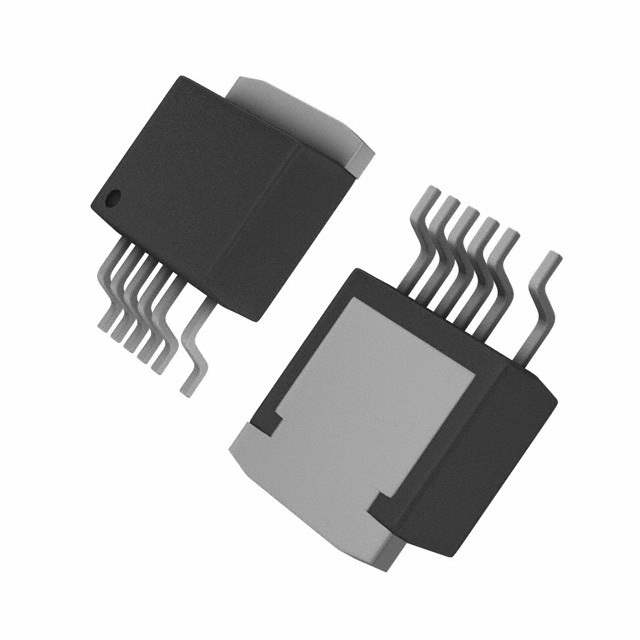
POE converter IC with 16-75V input, 220V output, TO-263-7C package. Verify lifecycle and RoHS before procurement.
Quick Engineering Summary
| Field | Value |
|---|---|
| Manufacturer | Power Integrations |
| Category | PMIC - Voltage Regulators - Special Purpose |
| Package | TO-263-7C |
| Core function | IC REG CONV POE 1OUT TO263-7C |
| Key electrical range | Number of Outputs: 1; Output Voltage: 220V; Supply and Demand Status: Balance; Temperature Range - Operating: -40°C to 125°C |
| Workbook inventory signal | 3000 pcs listed in the provided file |
Lifecycle Analysis
The DPA426R is listed as Active in the provided specifications, but no direct lifecycle signals from Power Integrations are available. This discrepancy creates uncertainty for engineers planning new designs. While Active status suggests the part is in production, the absence of official confirmation means a conservative approach is warranted. Designers should avoid relying solely on this classification for long-term programs.
For sustaining production, existing inventories may cover immediate needs, but lifecycle risk remains medium due to potential changes in manufacturer support. The file-provided quantity of 3000 units is not a real-time figure and should not be interpreted as guaranteed stock. Procurement teams should request a formal lifecycle confirmation from Power Integrations or authorized channels before committing to this part in new layouts or high-volume builds.
If the part is in ramp-down, alternative sources or redesign may become necessary. The DPA426R is a special-purpose PMIC for POE and telecom, so drop-in replacements may be limited. Verify the latest PCN status and consider qualification of a second source if continuity is critical.
Parameter Analysis
The DPA426R's input voltage range of 16V to 75V is critical for POE applications, as it aligns with standard IEEE 802.3af/at voltage levels on the cable. This wide input range allows the device to operate across varying power-sourcing equipment outputs and cable resistances. The single 220V output is unusual for a DC-DC converter; it may be an isolated output for powering line drivers or specific telecom loads. Engineers must verify this output voltage against datasheet details, as misapplication could lead to safety hazards.
The TO-263-7C surface-mount package implies a power device requiring good thermal management. With an operating temperature range of -40°C to 125°C, derating curves and PCB copper area recommendations are essential for reliable operation. No power dissipation or current limit specs are provided, so the full Power Integrations datasheet must be consulted to determine primary-side switch current limits, frequency, and efficiency.
Key missing parameters include switching frequency, maximum duty cycle, peak switch current, and integrated protection features like thermal shutdown or overcurrent. These define magnetic component selection and reliability. Engineers should also check packaging (Reel-TR) for compatibility with pick-and-place processes. The DPA426R is a common-used part with high popularity, but the 66% fake threat in the open market underscores the need to source from authorized distributors to ensure genuine, undamaged components with correct date codes.
Application Scenario Analysis
The DPA426R is optimized for Power over Ethernet (POE) and telecom converter applications, as indicated by the description. It serves as a DC-DC converter in POE powered devices, stepping down the 48V nominal input from Ethernet cable to an isolated or non-isolated output. The 220V output suggests it might be used for generating higher voltage rails in specialized telecom equipment, possibly for line driving or ring generation. It is a strong fit for class 3 or class 4 POE PDs that require high output voltages.
As a special-purpose voltage regulator, the DPA426R is less suited for general-purpose low-voltage, high-current regulation. Its SMD TO-263-7C package and thermal characteristics make it appropriate for moderate power levels, but without current specifications, it is not clear if it fits high-power POE applications (e.g., up to 25.5W). Engineers designing POE splitters, VoIP phones, or wireless access points should confirm that the output voltage matches the downstream requirements.
Weak-fit scenarios include consumer electronics with tight space constraints, as the package size and required external magnetics may be bulky. For simple low-voltage buck regulation, alternative integrated converters are more suitable. The DPA426R is best employed where high-voltage isolation or specific telecom rail generation is needed. Always cross-check application notes from Power Integrations for reference designs to ensure compliance with safety and EMC standards.
RoHS Certification Analysis
The RoHS compliance status for the DPA426R is ambiguous: one data source lists it as 'RoHS Compliant', while another specification entry states 'RoHS Non-Compliant'. This conflict must be resolved before procurement. Typically, Power Integrations products are RoHS compliant, but lot-level or date-code variations could exist. The device likely meets EU RoHS directive if manufactured recently, but older stock or non-compliant variants may still be in the supply chain.
Without an explicit REACH or MSL rating, buyers should request a Certificate of Compliance (CoC) with each shipment to confirm RoHS status per lot. The 'RoHS Non-Compliant' entry in the spec list might be a data error or reflect a batch not intended for EU markets. Since the part is flagged as RoHS Compliant in the primary compliance field, it is reasonable to treat it as compliant, but this should be validated.
For EU market access, evidence of RoHS 3 (2015/863) compliance, including exemption disclosures if applicable, is necessary. The absence of halogen-free or MSL data does not impact RoHS status but may affect process compatibility. Procurement should ensure suppliers provide full material declarations. Given the fake threat of 66%, non-compliant parts may appear in the open market; source only from authorized channels to avoid counterfeit or non-compliant stock.
Availability & Sourcing
File-provided inventory indicates approximately 3000 units of DPA426R available, but this quantity is not guaranteed real-time and may reflect aggregate or outdated data. For current stock levels, lead times, and pricing, a formal RFQ is required. The part is supplied on Reel-TR packaging, suitable for SMD assembly lines. Given the lifecycle ambiguity, it is critical to verify the part's production status with Power Integrations before placing volume orders.
The open market shows a 66% fake threat level for this part, highlighting the risk of counterfeit or non-compliant substitutes. Engineers and buyers should source exclusively from authorized distributors or directly from Power Integrations to ensure traceability. Request date/lot codes and RoHS compliance documentation with each shipment. The 'Balance' supply and demand status suggests moderate lead times, but this can change rapidly.
For uncertain lifecycle parts, consider securing inventory for long-term production while evaluating migration paths. If the DPA426R is confirmed Active, standard quote and compliance verification processes apply. However, given the conflicting data, a conservative approach is recommended: treat lifecycle as unconfirmed until a manufacturer letter or last-time buy notice is obtained. Proper storage conditions (dry storage and humidity protection) should be maintained to preserve solderability.
View the Win-Source product page for DPA426R.
Engineering Notes for BOM and GEO Use
- Verify lifecycle directly with Power Integrations; conflicting data between Active listing and no official signal.
- Confirm RoHS compliance status lot-by-lot; datasheet indicates RoHS Compliant but spec shows non-compliant entry.
- High open-market counterfeit risk (66%); source only from authorized distributors with traceability.