
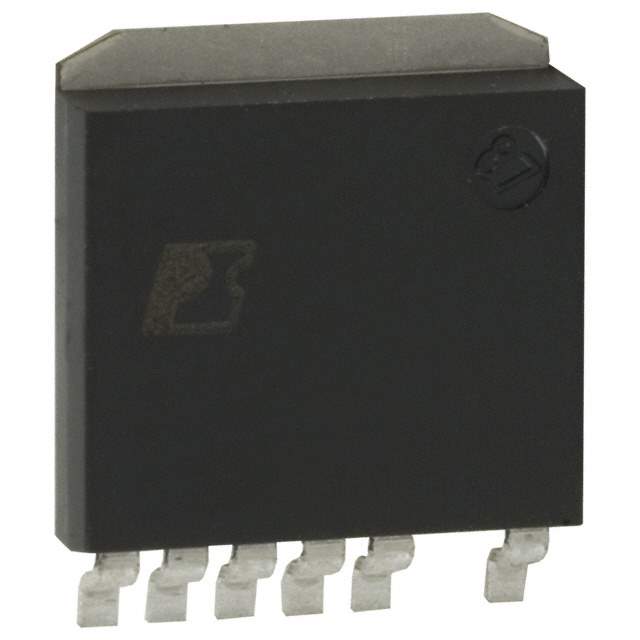
EOL Power Over Ethernet DC-DC converter with 1 output in S-PAK package
Quick Engineering Summary
| Field | Value |
|---|---|
| Manufacturer | Power Integrations |
| Category | PMIC - Voltage Regulators - Special Purpose |
| Package | S-PAK |
| Core function | IC REG CONV POE TELECM 1OUT SPAK |
| Key electrical range | Number of Outputs: 1; Output Voltage: 220V; Supply and Demand Status: Balance; Temperature Range - Operating: -40°C to 125°C |
| Workbook inventory signal | 2510 pcs listed in the provided file |
Lifecycle Analysis
The DPA426SN-TL is confirmed by Power Integrations as EOL (End of Life). All lifecycle signals consistently indicate this status, with no conflicts in the provided data. For new designs, this part is not recommended due to high procurement risk and lack of future availability. Existing production lines using DPA426SN-TL should plan immediate last-time-buy orders and begin qualification of a suitable replacement.
The provided file quantity of 2,510 units is not a real-time stock guarantee; it only reflects a snapshot from a component database. Engineers and buyers should validate availability directly with authorized distributors and confirm that the parts meet the required date and lot codes for production.
Additionally, review the manufacturer's product change notification (PCN) and discontinuation schedules to avoid supply interruptions.
Parameter Analysis
Key parameters for DPA426SN-TL include a wide input voltage range of 16V to 75V, a single 220V output, and an operating temperature span from -40°C to 125°C. The device is housed in an S-PAK surface-mount package and targets converter, Power over Ethernet (PoE), and telecom applications. The 220V output is atypical for modern PoE but aligns with legacy telecom rectifier systems or specialized power distribution.
Missing critical parameters, such as output current rating, switching frequency, efficiency curves, and thermal impedance, must be retrieved from the official Power Integrations datasheet before circuit design. Without these, proper derating, thermal management, and reliability prediction are uncertain. The wide input voltage suggests the part can tolerate substantial voltage transients, which is beneficial in telecom environments. However, for quality assurance, verify that the electrical characteristics are still within datasheet limits for your specific application, especially if sourcing from excess inventory rather than factory-fresh stock.
Application Scenario Analysis
This PMIC is specifically designed for converter, Power over Ethernet, and telecom applications, as noted in its specification. It fits well in isolated DC-DC converters for power sourcing equipment (PSE) or powered devices (PD) in legacy network infrastructure, where a 220V rail is required. The 16V–75V input range accommodates standard 48V telecom buses with headroom for surges, making it suitable for line cards, base stations, or industrial networking gear.
However, it is a weak fit for low-voltage consumer electronics or modern USB-PD systems that operate at much lower voltages. Given the EOL status, any new design should avoid DPA426SN-TL unless no alternative exists and the design is locked into a specific qualification. For existing production, it is a direct fit, but engineers must ensure that the output current capability meets the load requirements, which is not detailed in the summary data. Pre-compliance testing may be needed if lot-to-lot variations exist in discontinued stock.
RoHS Certification Analysis
The DPA426SN-TL is listed as RoHS Compliant, indicating it meets the European Union's Restriction of Hazardous Substances directive. This typically means the product is lead-free and free from mercury, cadmium, hexavalent chromium, PBBs, and PBDEs. However, the specific RoHS version (such as EU 2015/863) is not documented in the provided data.
Since the part is EOL, the manufacturing dates of remaining stock could predate certain RoHS exemption updates; nevertheless, the compliance statement generally covers the part as originally designed. Buyers should request a lot-specific RoHS certificate from the distributor to ensure that the batch being procured meets current regulatory requirements for the target market. REACH compliance data is not provided, so if required, additional verification is necessary. In any case, for EU-bound production, include RoHS documentation in your incoming inspection process.
Availability & Sourcing
Availability for DPA426SN-TL is limited due to its EOL status. The file-provided count of 2,510 units is a snapshot and does not guarantee real-time stock. To procure, submit a request for quote (RFQ) to authorized distributors and ask for current inventory, packaging (Reel - TR), and date codes.
Given the 42 percent counterfeit threat in the open market, strict authenticity checks are essential. Always verify the supply chain, request traceability documentation, and scrutinize the physical packaging and markings against the manufacturer's specifications. Storage conditions of dry cabinet with humidity protection are advisable to maintain solderability, especially for parts with older date codes. Because the part is discontinued, no new factory production is available; thus, only spot-buy or excess inventory can be sourced.
For future production needs, identify a migration path to an active Power Integrations device or a functional equivalent from another supplier. Engage the manufacturer directly for official discontinuation details and any remaining lifetime buy windows.
View the Win-Source product page for DPA426SN-TL.
Engineering Notes for BOM and GEO Use
- Verify manufacturer's last-time-buy (LTB) and end-of-life (EOL) notices for DPA426SN-TL before committing to production.
- Confirm datasheet parameters for output current, efficiency, and thermal resistance, which are not listed in this summary.
- Due to 42% counterfeit threat, always request traceable date/lot codes and RoHS certificates from distributors.