
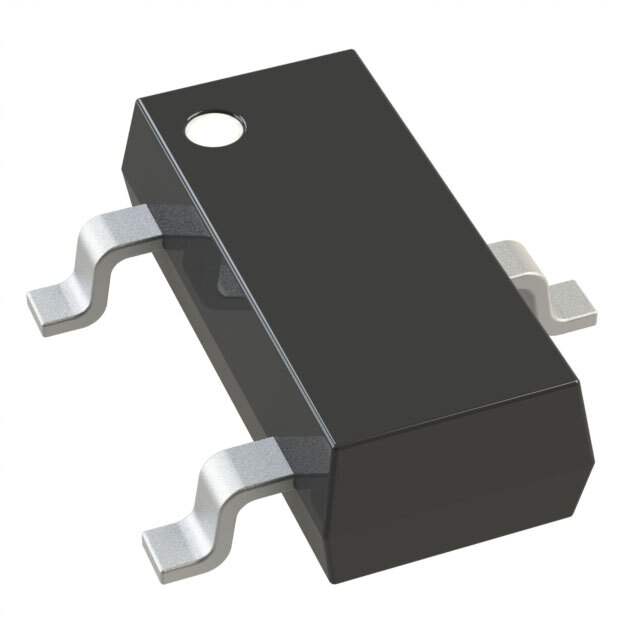
Reliable PNP transistor for space-constrained designs.
Quick Engineering Summary
| Field | Value |
|---|---|
| Manufacturer | Diodes Incorporated |
| Category | Transistors (BJT) - Single |
| Package | SOT-23-3 |
| Core function | TRANS PNP 60V 1A SOT-23-3 |
| Key electrical range | Collector Cut-off Current(Max): 100nA; Frequency - Transition: 220MHz; Maximum Current Collector: 1A; Maximum Power Dissipation: 300mW |
| Workbook inventory signal | 24000 pcs listed in the provided file |
Lifecycle Analysis
The DPLS160-7 is currently listed as Active, with all available lifecycle signals indicating stability for ongoing production. An Active status means the part is fully supported for both new designs and sustaining orders, and no discontinuation notices are anticipated in the near term. However, even with a low-risk Active classification, it is prudent to verify status directly with Diodes Incorporated or authorized distributors before finalizing high-volume BOM decisions, as manufacturer lifecycles can shift.
The file-provided inventory quantity of 24,000 units suggests current availability, but this figure is a snapshot and not guaranteed real-time. Buyers should confirm stock levels and lead times at the time of quotation. No lifecycle conflicts are present in the data, so the Active designation is consistent across manufacturer and distributor signals.
Parameter Analysis
Key parameters for the DPLS160-7 include a PNP polarity, a 60V collector-emitter breakdown voltage (VCEO), a 1A maximum collector current, and a 300mW power dissipation limit in SOT-23-3. These define the transistor’s safe operating area: the 60V rating supports moderate-voltage switching and linear regulation, while the 1A current fits solenoid drivers, relay coils, or LED arrays. However, the 300mW dissipation imposes tight thermal constraints—designers must derate power at elevated ambient temperatures and consider PCB copper area for heat sinking.
Dynamic performance is captured by a 220MHz transition frequency and a specified VCE(sat) of 330mV at 100mA / 1A. The DC current gain (hFE) is listed at a minimum of 150 at 500mA, 5V, though alternate data sources show a minimum of 200 at 1mA, 5V. This discrepancy highlights the need to consult the official datasheet for the specific hFE bin and test conditions. Missing parameters that should be verified include storage time, safe operating area curves, and maximum emitter-base voltage. These will influence switching speed and ruggedness in high-stress circuits.
Application Scenario Analysis
As a general-purpose PNP BJT, the DPLS160-7 is well-suited for low-side switching in battery-powered devices, level shifting, small motor or relay driving, and signal amplification. Its 60V VCEO enables it to interface with 12V, 24V, or 48V systems, while the SOT-23 package conserves board space in portable and IoT products. The 1A current rating is adequate for driving moderate loads directly, but for larger inductive loads, an external snubber or flyback diode may be required.
The part is less optimal for high-frequency power conversion above 100MHz where the gain begins to roll off, or for circuits demanding continuous dissipation above 200mW without aggressive thermal management. It also may not suit automotive or high-reliability applications unless additional qualification data is obtained, as no AEC-Q100 or similar certification is indicated in the supplied information. In summary, the DPLS160-7 fits most general-purpose switching and signal-chain roles where a small, surface-mount PNP is needed.
RoHS Certification Analysis
The DPLS160-7 is reported as RoHS Compliant. This typically means it meets the substance restrictions of the EU RoHS directive (2011/65/EU and its amendments, including 2015/863). However, the exact RoHS version is not specified, and no exemption details are provided. For full qualification, it is recommended to obtain the manufacturer’s RoHS certificate or test report to confirm compliance at the homogeneous material level.
Additionally, while REACH compliance is not mentioned, RoHS alone does not guarantee full EU chemical compliance. Engineers integrating the part into equipment sold in the EU should request REACH SVHC information separately. The SOT-23 package is generally lead-free and halogen-free, but lot-specific data should be confirmed to rule out any process changes. For safety, storage condition guidance of dry storage with humidity protection is provided, which aligns with typical MSL handling for surface mount devices.
Availability & Sourcing
The DPLS160-7 is available in tape-and-reel packaging, indicating volume production suitability. A file-provided inventory of 24,000 units is noted, but actual stock levels and lead times should be verified through a request for quote. Given the reported 48% counterfeit threat level in the open market, sourcing from unauthorized channels poses significant risk. Buyers should insist on full traceability, date-code verification, and authorized distributor proof.
For sustaining production, the Active lifecycle status supports standard purchase agreements, but price volatility or allocation may occur in tight market conditions—none are indicated here. To secure continuity, users may consider qualifying a second-source or alternative package if the design permits. The part is stored in dry-pack with humidity protection, so incoming inspection should check for proper moisture barrier integrity if parts are from non-factory sealed reels. Request a quote today to confirm current availability and gain access to compliance documents.
View the Win-Source product page for DPLS160-7.
Engineering Notes for BOM and GEO Use
- Confirm the hFE bin and VCE(sat) test conditions against your circuit requirements; the datasheet may list multiple gain grades.
- The SOT-23 package limits power to 300mW; use adequate PCB copper for heat sinking if operating near maximum current and voltage.
- Given the 48% counterfeit risk, only purchase from authorized Diodes Incorporated distributors and validate date codes and lot traceability.