
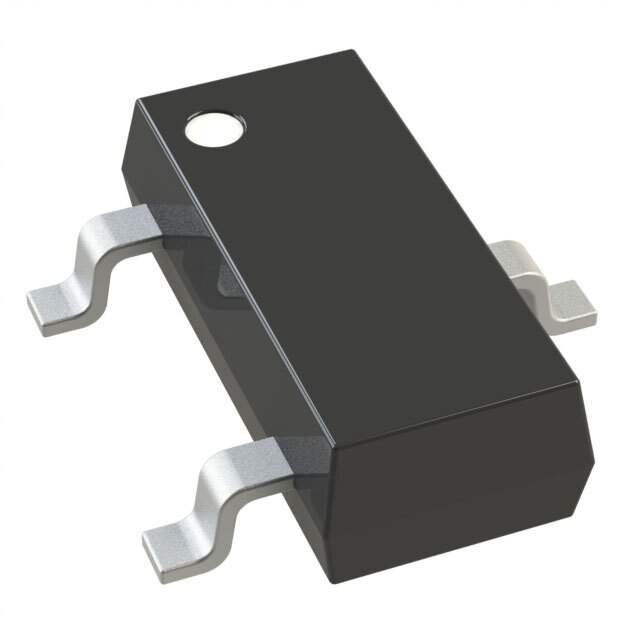
End-of-life Diodes Incorporated PNP transistor; ensure supply continuity for existing designs.
Quick Engineering Summary
| Field | Value |
|---|---|
| Manufacturer | Diodes Incorporated |
| Category | Transistors (BJT) - Single |
| Package | SOT-223 |
| Core function | TRANS PNP 15V 3A SOT-23-3 |
| Key electrical range | Collector Cut-off Current(Max): 100nA (ICBO); Frequency - Transition: 100MHz; Maximum Current Collector: 3A; Maximum Power Dissipation: 1W |
| Workbook inventory signal | 10800 pcs listed in the provided file |
Lifecycle Analysis
Diodes Incorporated DPLS315E-13 is officially End-of-Life (EOL). All lifecycle signals from the manufacturer indicate that production has been discontinued. This status means the part is not recommended for new designs, and procurement should be limited to sustaining existing production lines. Engineers planning new projects should immediately evaluate alternate active components to avoid costly redesigns later.
Despite the EOL status, the database shows a file-provided inventory of 10,800 units. This quantity is not a real-time guarantee and may be subject to prior sale or allocation. Buyers should contact suppliers directly to confirm on-hand stock and request a last-time buy (LTB) notice from Diodes Inc. before committing to procurement. Additionally, since the part is EOL, there is no assurance of future availability, and any remaining inventory should be secured promptly if needed for ongoing maintenance.
Given the high-risk lifecycle, thorough verification of manufacturer discontinuation announcements and authorized distributor status is critical. Counterfeit risks are elevated for EOL parts, so sourcing from verified channels with full traceability is strongly advised.
Parameter Analysis
The DPLS315E-13 is a PNP bipolar junction transistor with a maximum collector-emitter voltage (VCEO) of 15V and a continuous collector current (IC) rating of 3A. These ratings define the safe operating boundaries; designers must ensure that transient voltages do not exceed 15V, and that the average current stays within 3A with adequate derating. The maximum power dissipation is 1W, which, combined with the SOT-23-3 package’s limited thermal resistance, requires careful thermal management to keep junction temperature below 150°C.
The minimum DC current gain (hFE) is 500 at 10mA collector current and 2V VCE, indicating high gain at low currents. However, at higher currents approaching 3A, the gain may drop significantly; the datasheet should be consulted for gain curves. The saturation voltage VCE(sat) is specified as 500mV max at 50mA base current and 3A collector current, which is typical for this class. Transition frequency (fT) is 100MHz, suitable for moderate-speed switching and amplification below a few megahertz.
Key parameters missing from the provided data include the maximum base-emitter voltage (VEBO), thermal resistance from junction to ambient (RθJA), and safe operating area (SOA) curves. Engineers must obtain the full manufacturer datasheet to verify these limits and ensure reliable circuit design. The storage condition note indicates dry storage and humidity protection, suggesting MSL sensitivity that should be checked before reflow soldering.
Application Scenario Analysis
The DPLS315E-13 PNP transistor is well-suited for low-voltage switching applications where a small footprint and high current capability are needed. Its 3A collector current and low saturation voltage make it appropriate for load switching, relay drivers, and power management in portable devices. The high minimum gain at low currents also suggests it can be used in analog amplification stages, such as audio preamplifiers or sensor signal conditioning, provided the 15V breakdown voltage is sufficient.
Conversely, this part is a poor fit for applications requiring high collector-emitter voltages beyond 15V, such as automotive 24V systems or industrial control interfaces. Its transition frequency of 100MHz limits RF performance above VHF, and the 1W power dissipation in a small SOT-23-3 package restricts its use in continuous high-power designs without substantial copper area for heat sinking. For new designs, given the EOL status, even suitable applications should consider active alternatives to ensure long-term supply.
Engineers evaluating the DPLS315E-13 for legacy equipment should confirm that the original design’s thermal and voltage derating was adequate, especially if operating at elevated ambient temperatures. The part’s storage condition requirements (dry pack) indicate that moisture sensitivity may affect soldering reliability, so proper handling during prototype or rework is necessary.
RoHS Certification Analysis
The DPLS315E-13 is listed as RoHS Compliant according to the supplier data. This indicates that the component meets EU RoHS directive restrictions on hazardous substances, including lead, mercury, cadmium, and others. For most procurement purposes, this status is sufficient to satisfy environmental compliance requirements in European and many other global markets.
However, it is important to note that compliance is often declared at the family or date-code level, and specific production lots may vary. Buyers should request a certificate of compliance or test report from the distributor for the exact shipment to ensure that the parts are RoHS compliant as of their manufacture date. No explicit RoHS exemption, REACH status, or halogen-free declaration is provided in the database; these should be verified if required by your regulatory obligations.
The absence of a specific RoHS version (e.g., RoHS 3) in the supplied data means that compliance to the latest amendments (such as RoHS 3 EU 2015/863) cannot be guaranteed solely from this entry. Additionally, consider that EOL parts may have been manufactured before certain regulation updates, so lot-level verification is especially prudent.
Availability & Sourcing
Given the EOL status, immediate action is required to secure DPLS315E-13 inventory for any ongoing production needs. The database indicates a file-provided quantity of 10,800 units, but this is not guaranteed real-time. We strongly recommend requesting a quote to confirm current stock levels, date codes, and packaging condition (Reel – TR). Full traceability documentation should be requested to mitigate the elevated counterfeit risk, noted as a 64% fake threat in the open market.
Sourcing from authorized distributors or directly from Diodes Incorporated is critical for EOL parts to ensure authenticity. Verify the part’s exact date and lot codes, and cross-check with manufacturer records if possible. Additionally, request RoHS compliance certificates for the specific batch to avoid non-compliant inventory entering your production. Plan a last-time buy if sufficient stock is available, and immediately begin evaluating alternative active transistors to replace the DPLS315E-13 in future builds.
For new designs, do not specify this part; instead, consult Diodes Inc. or a sourcing partner for pin-compatible, active alternatives. If you must purchase the remaining stock, insist on countermeasures against the high fake threat: visual inspection, detailed electrical testing on samples, and secure supply chain documentation. Contact us for assistance in sourcing or to request a quote for current availability.
View the Win-Source product page for DPLS315E-13.
Engineering Notes for BOM and GEO Use
- Secure remaining EOL stock and validate date/lot codes with manufacturer to avoid counterfeit parts in sustaining production.
- Check and derate power dissipation carefully; SOT-23-3 packages often need PCB copper area for thermal relief beyond 1W.
- For replacement, evaluate active SOT-23-3 PNP transistors with >=15V VCEO and >=3A IC, and verify hFE and saturation at your operating point.