
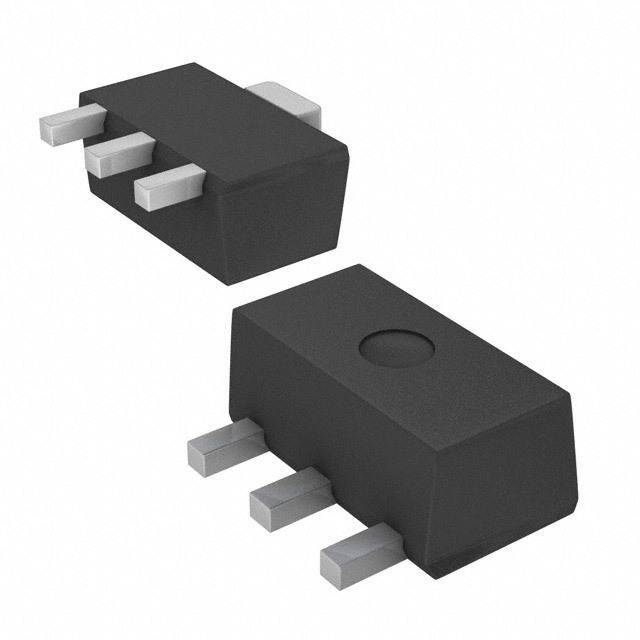
Technical sourcing overview for the DPLS350Y-13 PNP transistor, including lifecycle, parameters, and procurement advice.
Quick Engineering Summary
| Field | Value |
|---|---|
| Manufacturer | Diodes Incorporated |
| Category | Transistors (BJT) - Single |
| Package | SOT-89-3 |
| Core function | TRANS PNP 50V 3A SOT-89-3 |
| Key electrical range | Collector Cut-off Current(Max): 100nA; Frequency - Transition: 100MHz; Maximum Current Collector: 3A; Maximum Power Dissipation: 1W |
| Workbook inventory signal | 35000 pcs listed in the provided file |
Lifecycle Analysis
The DPLS350Y-13 is currently listed as Active by Diodes Incorporated, with no conflicting lifecycle signals across supplier databases. This status indicates that the part is in full production and supported for new designs. An estimated end-of-life date of 2029 suggests a multi-year horizon for availability, though such projections should be confirmed directly with the manufacturer for long-life programs.
The file-provided inventory snapshot shows 35,000 units, which aligns with the Active status and suggests no immediate scarcity. However, this is not a real-time guarantee, and procurement teams should verify stock levels at the time of quotation. The part enjoys high popularity and is flagged as common-use, further reducing supply interruption risk.
For engineers, this means the DPLS350Y-13 can be designed in with confidence, especially for production volumes that require stable sourcing. It remains advisable to monitor PCN (Product Change Notification) alerts from Diodes and to validate any last-time-buy notices as the estimated EOL year approaches.
Parameter Analysis
Key specifications for the DPLS350Y-13 include a 50V collector‑emitter breakdown voltage (VCEO) and a 3A continuous collector current, defining the safe operating limits for voltage and current. The 1W maximum power dissipation must be carefully considered in thermal design, especially because the tiny SOT‑89‑3 package relies on PCB copper for heat sinking.
Saturation behavior is characterized by a Vce(sat) of only 390mV at 300mA base drive and 3A collector current, offering low conduction loss in switching applications. Minimum DC current gain (hFE) of 200 at 1A/2V simplifies base drive circuitry, while a transition frequency of 100MHz supports moderate-speed switching. The 100nA collector cutoff current (ICBO) is negligibly low for most designs.
Missing from the provided dataset are thermal resistance (junction‑to‑ambient and junction‑to‑case) and safe operating area curves. Engineers must consult the official Diodes datasheet to verify these parameters, particularly when operating near the 150°C maximum junction temperature or in environments that demand derating.
Application Scenario Analysis
As a PNP BJT rated for 50V and 3A, the DPLS350Y-13 fits well in low‑side switching applications where a negative supply or ground‑referenced control is used, as well as in high‑side switches driven by an open‑collector output. Typical use cases include relay and solenoid drivers, small DC motor speed controllers, LED backlighting, and general‑purpose linear regulators.
The device can also serve as a complementary output stage in audio amplifiers, benefiting from its high gain and decent frequency response. In battery‑powered designs, its low saturation voltage helps maximize efficiency. The wide operating temperature range of −55°C to 150°C adds resilience for industrial and automotive under‑hood electronics.
Weak‑fit scenarios include high‑frequency switching above a few hundred kHz, where storage time may degrade efficiency, and applications requiring continuous power dissipation beyond 1W without adequate heatsinking. For high‑efficiency DC‑DC converters, a MOSFET might offer lower losses, but the DPLS350Y-13 remains cost‑effective for less demanding switching duties.
RoHS Certification Analysis
The DPLS350Y-13 is reported as RoHS Compliant by Diodes Incorporated, with an additional claim of halogen‑free compliance. This typically aligns with the EU RoHS Directive 2015/863 (RoHS 3), which restricts lead, mercury, cadmium, and other hazardous substances. No specific exemptions are noted for this part.
Compliance information provided here is based on manufacturer declarations, but end‑users should request a per‑lot RoHS certificate for high‑volume or EU‑bound shipments. REACH regulation compliance is not explicitly stated in the supplied data, and a separate inquiry may be needed if SVHC (Substances of Very High Concern) documentation is required.
Because the part is active, obtaining up‑to‑date environmental compliance documentation from Diodes or authorized distributors is straightforward. For designs requiring formal declarations, ensure that the CoC (Certificate of Compliance) references the exact part number and date/lot code.
Availability & Sourcing
The DPLS350Y-13 is an active, common‑use part with a balanced supply‑and‑demand status according to aggregated market data. A file‑provided inventory quantity of 35,000 units suggests healthy availability at the time of data retrieval, but this figure is not a live guarantee. Procurement professionals should request a current quote to confirm real‑time stock, lead times, and pricing structures.
Packaging is tape‑and‑reel (TR), consistent with automated assembly lines. Storage conditions recommend a dry cabinet and humidity‑protected packaging, underscoring the need for proper handling to avoid moisture‑related soldering defects. Traceability should be verified through date/lot codes, especially given a 33% open‑market counterfeit risk flagged for this part.
For Active lifecycle parts, standard sourcing practices apply: obtain quotes from authorized distributors, verify RoHS and lot certificates, and monitor EOL announcements. The extended production outlook justifies design‑in for new projects, but always cross‑check with the manufacturer’s latest lifecycle statements before committing large‑volume procurement.
View the Win-Source product page for DPLS350Y-13.
Engineering Notes for BOM and GEO Use
- Verify the maximum power dissipation (1W) and required PCB copper area for thermal management; consult Diodes’ datasheet for RθJA and recommended footprint.
- The minimum hFE of 200 at 1A ensures low base drive requirements, but gain may decrease at higher currents; check the gain curve for your operating point.
- Although the part is active and widely used, request date/lot codes and manufacturer certification to mitigate the 33% open-market counterfeit risk.