
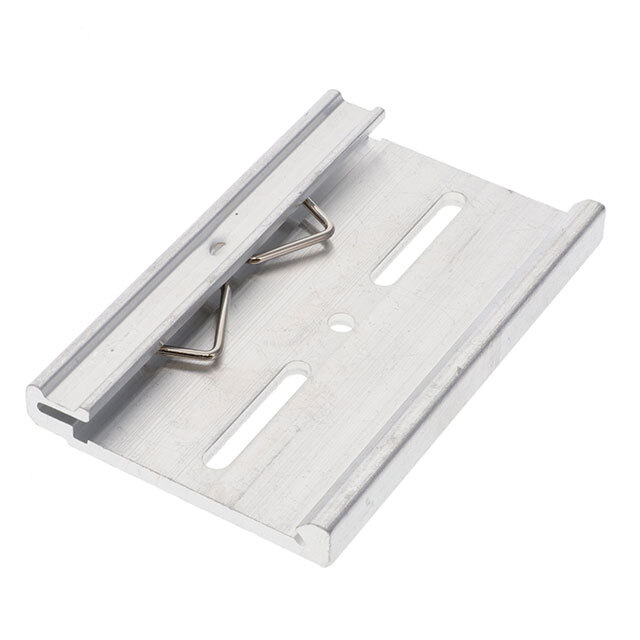
Specs, Lifecycle, and Sourcing Guide
Quick Engineering Summary
| Field | Value |
|---|---|
| Manufacturer | TDK-Lambda Americas Inc. |
| Category | Industrial, DIN Rail Power Supplies |
| Package | Bulk |
| Core function | AC/DC DIN RAIL SUPPLY 12V 30W |
| Key electrical range | AC Voltage - Input: 85 ~ 132 VAC, 176 ~ 264 VAC; Current - Output (Max): 2.5A; Input Type: AC; Number of Outputs: 1 |
| Workbook inventory signal | 27 pcs listed in the provided file |
Lifecycle Analysis
The DPP30-12 from TDK-Lambda Americas Inc. presents conflicting lifecycle signals. Manufacturer documentation (Excel parameter) and the official product status both state ‘Not For New Designs’, yet the generic lifecycle field returns ‘Active’. This contradiction forces a conservative interpretation that the part is effectively NRND (Not Recommended for New Designs). Engineers starting new designs should avoid BOM placement of DPP30-12 and seek a fully active alternative from TDK-Lambda or a cross-compatible supplier.
For existing production that already uses DPP30-12, the part may still be procurable through distributors who hold remaining inventory, but manufacturing continuity is not assured. Buyers must revalidate lifecycle status directly with TDK-Lambda before placing large or long-term orders. The file-provided inventory figure of 27 units should be treated as a snapshot rather than a real-time promise; actual available stock can fluctuate independently.
Risk escalates when the part is used in designs requiring long-term field support beyond the typical NRND transition window. In such cases, immediate migration qualification is advised. Monitoring manufacturer PCNs and authorized distributor stock levels becomes a critical part of the purchasing workflow.
Parameter Analysis
DPP30-12 delivers a single 12V output at up to 2.5A (30W) from a universal AC input that accepts 85–132VAC and 176–264VAC ranges, covering common North American, European, and Japanese mains. The efficiency is specified as 83%, which is typical for a convection-cooled DIN rail supply in this power class and dictates thermal dissipation to consider in enclosure design. Isolation voltage is 3 kV, providing a basic level of input-to-output separation suitable for ITE applications.
The 3.58″ x 1.77″ x 2.95″ (90.9 mm x 45.0 mm x 74.9 mm) footprint fits standard DIN rail mounting and consumes minimal panel space. Operating temperature is –10°C to +71°C with derating, so the usable full-power temperature range will be narrower. Designers must check the derating curve from the latest datasheet to ensure reliable operation at the expected ambient extremes. Features like adjustable output and load sharing allow parallel operation, but detailed current-sharing accuracy and maximum number of paralleled units are not provided here and must be verified.
Notably, several parameters vital for system integration are absent from the supplied data: no output ripple and noise figures, no hold-up time, no over-temperature, over-voltage, or short-circuit protection descriptions. Before committing DPP30-12 to a design, engineers should obtain the official TDK-Lambda datasheet to confirm these values and evaluate whether the unit meets the required immunity and emission standards beyond the listed CE mark.
Application Scenario Analysis
With its 12V 2.5A output, CE approval, and ITE (Commercial) rating, DPP30-12 fits well in industrial control cabinets, building automation panels, and small machine auxiliary supplies where a compact DIN rail footprint is needed. Typical strong-fit scenarios include powering sensors, relays, small PLCs, or communication modules inside factory-automation enclosures. Load sharing enables two units to support start-up inrush or redundant setups, provided the application can tolerate the necessary output isolation and current-sharing accuracy.
DPP30-12 is less suited for outdoor or harsh-environment use unless housed in a protected IP-rated enclosure. The operating temperature range (–10°C to +71°C) may limit installations inside unventilated or high-temperature cabinets; the specified “with derating” note implies that maximum current cannot be delivered across the full temperature span. No extended industrial temperature range (–40°C to +85°C) is claimed, so applications in cold outdoor or compressor-driven environments need a careful thermal review.
Although the input voltage range covers standard residential and commercial mains, the dual-range input (85–132VAC and 176–264VAC) can be a constraint in regions with nominal 208V or 220V single-phase where the lower range maximum may be surpassed. Engineers must confirm that the actual line voltage sits comfortably inside one of the specified bands. For medical, safety-critical, or railway applications, additional IEC standards compliance beyond CE would be required and is not indicated for DPP30-12.
RoHS Certification Analysis
DPP30-12 is flagged as RoHS Compliant, indicating that the manufacturer certifies conformance with EU directive 2011/65/EU and its amendments (including EU 2015/863, the so-called RoHS 3). This means the part should contain lead, mercury, cadmium, hexavalent chromium, PBBs, PBDEs, and the four phthalates (DEHP, BBP, DBP, DIBP) only within the specified maximum concentration limits.
Because no separate REACH, MSL, or lead-free soldering profile statements are supplied, the RoHS compliance should be considered a factory-level declaration. For end-product compliance documentation, procurement teams may need to request the full EU Declaration of Conformity or a certificate of RoHS compliance from TDK-Lambda. This is especially relevant if DPP30-12 is sourced from distribution rather than directly from TDK-Lambda, as lot-level traceability can vary.
While the component itself is RoHS Compliant, the “Not For New Designs” lifecycle status means that any future revisions or alternate sourcing could introduce RoHS deviations. Ongoing compliance should be monitored through the manufacturer’s regulatory updates and by verifying the RoHS status of each incoming batch if long-term production is planned.
Availability & Sourcing
Because DPP30-12 is actively marked as Not For New Designs, availability can be intermittent despite an active lifecycle flag. Distributor inventory, such as the file-provided quantity of 27 units, represents a snapshot and should be verified through a request for quote before placing orders. The listed supply and demand status shows “Shortage,” underscoring the need for immediate sourcing action if the part is still required for existing builds.
Sourcing best practices for an NRND part include confirming lifecycle status with TDK-Lambda (or authorized distributors) before committing to production quantities, verifying the date and lot codes of available inventory to ensure conformance to current datasheet revisions, and requesting full compliance documentation (RoHS, CE, and any batch-specific test reports). Bulk packaging may affect re-reeling costs for automated placement, so check packaging options when quoting.
For new designs, engineers are directed to request a quote on the manufacturer’s recommended replacement or to search for a pin-compatible, fully active alternative that meets the same mechanical and electrical requirements. For sustaining production, it is prudent to buy out remaining stock and concurrently begin migration evaluations to avoid potential line-down events. Request a quote from Win Source or authorized TDK-Lambda distributors to confirm current availability, lead time, and compliance status.
View the Win-Source product page for DPP30-12.
Engineering Notes for BOM and GEO Use
- Verify lifecycle status directly with TDK-Lambda before new design-in; current status is Not For New Designs despite Active lifecycle flag.
- Confirm missing datasheet parameters like ripple/noise, hold-up time, and protection features before integration.
- Ensure adequate thermal derating for the operating ambient, as the 30W rating requires derating at higher temperatures.