
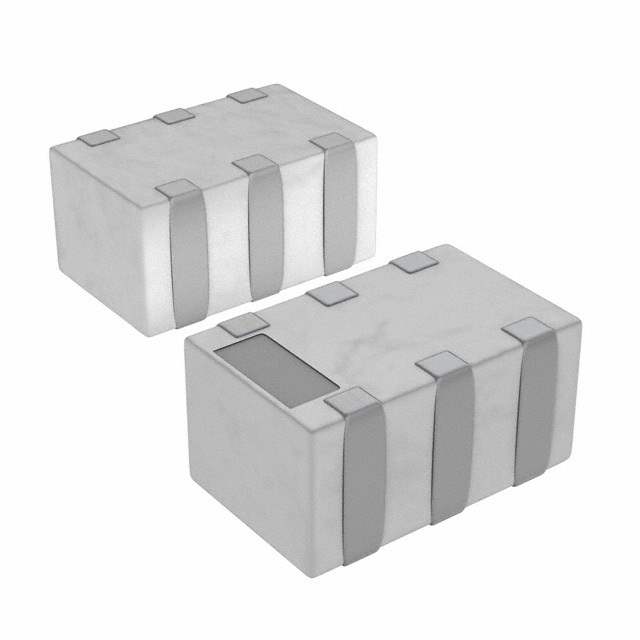
EOL component – Verify availability and parameters for sustaining production.
Quick Engineering Summary
| Field | Value |
|---|---|
| Manufacturer | TDK Corporation |
| Category | RF Diplexers |
| Package | Not available in supplied data |
| Core function | RF DIPLEXER 2. |
| Key electrical range | Frequency Bands (Low / High): 2.3GHz to 2.5GHz / 4.9GHz to 5.95GHz; Supply and Demand Status: Balance |
| Workbook inventory signal | 19000 pcs listed in the provided file |
Lifecycle Analysis
TDK Corporation has classified the DPX205950DT-9108A1 RF diplexer as End-of-Life (EOL). All available lifecycle signals align on this status, indicating the manufacturer has discontinued production. For new designs, this means the part should not be used; engineering teams must select an alternative or be prepared for limited availability. For existing production, a last-time buy or lifetime buy may be necessary, but this requires immediate action given the high risk profile.
A conflicting 'Status' field lists the part as Active, but the dominant lifecycle indicators override this, and conservative procurement practice treats the device as EOL. Any sustaining engineering effort must include a migration plan and qualification of a replacement.
File-provided inventory shows a quantity of 19,000 units, but this is not a guarantee of real-time stock. Buyers should verify actual availability with the supplier and request date/lot code information to ensure usable remaining shelf life.
Parameter Analysis
The DPX205950DT-9108A1 is a surface-mount RF diplexer in an 0805 (2012 metric) package with 6 PC pads, designed to separate 2.4 GHz and 5 GHz frequency bands. Its low band covers 2.3–2.5 GHz and high band 4.9–5.95 GHz, suiting common Wi-Fi and ISM applications. Both bands specify a minimum attenuation of 20 dB, providing basic rejection of out-of-band signals. Return loss is given as 20 dB for the low band and 11 dB for the high band, which influences signal integrity and matching network requirements.
Critical parameters not supplied include insertion loss, isolation between ports, and power handling capability. These directly affect system link budget, thermal margins, and reliability. Without them, a full performance evaluation is impossible. Engineers must consult the official TDK datasheet to obtain maximum ratings and typical performance curves before committing to a design. Additionally, verify the specified attenuation and return loss are measured under the intended operating temperature range and with the recommended PCB layout, as SMD diplexer performance is layout-dependent.
Application Scenario Analysis
This diplexer targets dual-band wireless systems that require simultaneous operation at 2.4 GHz and 5 GHz, such as Wi-Fi routers, access points, gateways, and IoT hubs. Its compact 0805 footprint makes it suitable for space-constrained designs where board area is at a premium. The DPX205950DT-9108A1 is a good fit for legacy products that were designed around this specific TDK device and still need sustaining production.
However, given its EOL status, the part is a weak fit for any new design or platform upgrade. New projects should consider currently active alternatives that offer similar or better performance with guaranteed long-term availability. Additionally, applications requiring very low insertion loss, high isolation, or extended temperature ranges may find this diplexer marginal, especially if the missing datasheet parameters reveal performance limitations. Therefore, its use should be restricted to maintenance of existing equipment until a suitable replacement is qualified.
RoHS Certification Analysis
The DPX205950DT-9108A1 is listed as RoHS Compliant, meeting the European Union’s Restriction of Hazardous Substances directive. The provided data does not specify the exact version, but compliance typically aligns with RoHS 3 (EU 2015/863), which covers ten restricted substances including lead, mercury, and certain phthalates. No exemptions are noted, suggesting full compliance without reliance on specific exceptions.
Nevertheless, RoHS certification may be at the family or series level; lot-specific compliance should be confirmed with the manufacturer or through valid certificates of compliance (CoC). The absence of REACH or halogen-free information from the source data does not imply non-compliance, but procurement should request these documents if required by the end application. For EU marketability, ensure that the supplied documentation is current and that any last-time-buy stock is from RoHS-compliant batches.
Availability & Sourcing
As an EOL device from TDK, the DPX205950DT-9108A1 requires careful sourcing strategy. The file-provided inventory figure of 19,000 units is a snapshot and not real-time; actual stock must be confirmed through a quote request. Given the part’s high popularity and common usage, demand may quickly deplete remaining inventory. Buyers should act promptly to secure needed quantities while also planning a transition to a replacement part.
The open market for this diplexer carries a high counterfeit risk, flagged at 76%. To mitigate this, source only through authorized channels or trusted distributors, and insist on traceability documentation, including date codes and lot numbers. Storage conditions (dry cabinet, humidity protection) are critical for maintaining solderability; verify packaging integrity. For any new production use, first obtain manufacturer’s EOL notice and perform a thorough compliance check, including RoHS and export control. Request a quote to assess current availability and lead time, but do not rely on this part for long-term manufacturing without a last-time buy agreement.
View the Win-Source product page for DPX205950DT-9108A1.
Engineering Notes for BOM and GEO Use
- Immediate lifecycle review needed: EOL status requires qualification of a replacement and last-time buy planning.
- Verify missing critical specifications—insertion loss, isolation, and power handling—from the official TDK datasheet before integration.
- Counterfeit risk is high at 76%; use authorized sources and rigorous incoming inspection to ensure component authenticity.