
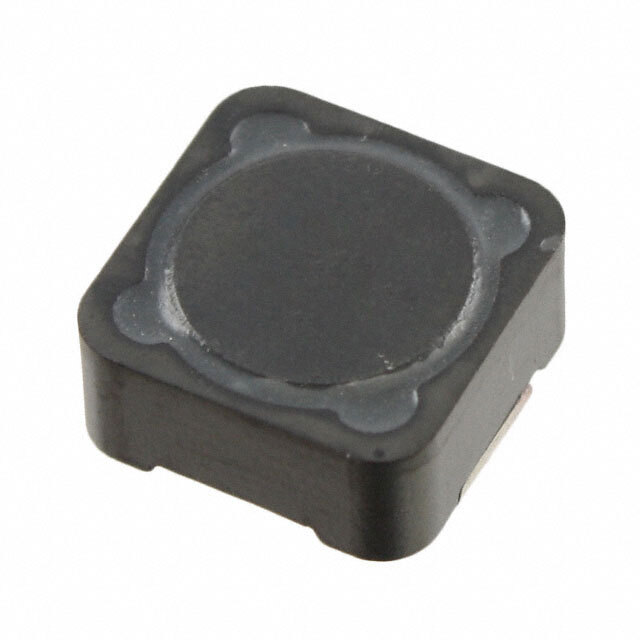
Shielded drum core wirewound SMD inductor, 820µH, 530mA, RoHS compliant.
Quick Engineering Summary
| Field | Value |
|---|---|
| Manufacturer | Eaton Bussmann |
| Category | Fixed Inductors |
| Package | Nonstandard |
| Core function | FIXED IND 820UH 530MA 2. |
| Key electrical range | Current - Saturation (Isat): 620mA; Current Rating (Amps): 530 mA; DC Resistance (DCR): 2.351Ohm Max; Inductance Frequency - Test: 100 kHz |
| Workbook inventory signal | 923 pcs listed in the provided file |
Lifecycle Analysis
The lifecycle status of the DR124-821-R is unknown based on the supplied data. No manufacturer signals, such as active, NRND, or EOL, were included. This lack of clarity creates a medium risk for new designs, as procurement teams cannot plan for long‑term availability without direct confirmation.
File‑based inventory indicates 923 units at the time of export, but this figure is not a real‑time guarantee. The supply and demand status is reported as shortage, which may signal constrained availability. Engineers should contact Eaton Bussmann or authorized distributors to obtain a current lifecycle statement and any product change notifications (PCNs).
For production programs, treat this part as unconfirmed until the manufacturer provides documentation. If this is a sustaining purchase, validate the lot date codes and verify that the part has not been superseded. This conservative approach prevents unexpected gaps in the bill of materials.
Parameter Analysis
The DR124-821-R is a shielded, drum‑core, wirewound inductor with an inductance of 820 µH ±20% measured at 100 kHz. Its rated current is 530 mA, with a slightly higher saturation current of 620 mA, meaning that the inductance may drop significantly beyond 620 mA. Designers must ensure peak operating currents do not approach the saturation knee, especially under transient loads.
The maximum DC resistance (DCR) is 2.351 Ω—a relatively high value that will cause notable I²R losses. At the rated current, power dissipation can exceed 660 mW, requiring careful thermal management. The operating temperature range spans -40°C to +125°C, but self‑heating must be considered in derating calculations. The non‑standard SMD footprint (12.5 mm × 12.5 mm) and maximum height of 0.177 inches guide PCB layout, and the tape‑and‑reel package supports automated assembly.
Key missing parameters include self‑resonant frequency (SRF), quality factor (Q), and inductance vs. DC bias curves. These should be obtained from the manufacturer’s datasheet to fully evaluate high‑frequency performance and suitability for noise‑sensitive circuits.
Application Scenario Analysis
With its high inductance and moderate current capability, the DR124-821-R is a strong fit for low‑power DC‑DC converter topologies—such as boost, buck, or SEPIC converters—where a large inductance value helps reduce output ripple current. The shielded construction minimizes radiated EMI, making it suitable for noise‑sensitive power rails in industrial controls, sensor interfaces, and battery‑powered devices.
It is less appropriate for high‑frequency switching (>1 MHz) because the drum‑core wirewound design typically exhibits higher core losses and a lower SRF than multilayer chip inductors. Similarly, applications demanding currents above 500 mA continuous should consider the high DCR and the resulting thermal load. The wide temperature range supports industrial environments, but designers must verify that the part’s temperature rise remains within safe limits under worst‑case ambient and load conditions.
Overall, this inductor serves well in output filtering and energy storage roles where its inductance helps maintain regulation with minimal external components, provided the trade‑offs in size, DCR, and current are acceptable.
RoHS Certification Analysis
The DR124-821-R is reported as RoHS Compliant. This typically indicates conformance to EU Directive 2011/65/EU and its amendment 2015/863, restricting lead, mercury, cadmium, hexavalent chromium, PBBs, PBDEs, and the four phthalates. However, the supplied data does not specify the exact directive version or provide a supporting certificate.
No exemptions are listed, which suggests that the product meets the standard without relying on materials‑specific exceptions. Nevertheless, end‑product manufacturers should request the full RoHS compliance documentation for the specific lot being purchased, as well as any REACH or halogen‑free declarations if relevant. For high‑reliability markets, third‑party lab testing may still be advisable to verify trace substance levels.
Compliance is attributed at the part‑level, but supply‑chain changes can affect conformity over time. Regular recertification with Eaton Bussmann or authorized distributors is recommended, especially for long‑lifecycle programs.
Availability & Sourcing
Sourcing the DR124-821-R requires careful attention due to its unknown lifecycle status. A file‑export shows 923 units in stock, but this quantity is not real‑time and may have changed. The supply‑and‑demand indicator suggests a shortage, so lead times could be extended. Buyers should submit an RFQ to authorized distributors to confirm current pricing, available inventory, and expected restock dates.
When procuring, specify date or lot codes to ensure traceability, and request full compliance certificates (RoHS, REACH, and conflict minerals). Because the lifecycle is unverified, consider securing buffer stock if the part is critical to production. For new designs, do not finalize the BOM until Eaton Bussmann officially confirms active production and provides a roadmap.
Use the Win Source platform to initiate a quote for this product, but always cross‑check with the manufacturer for lifecycle authenticity and to avoid counterfeit risks. Vigilant sourcing practices are essential when lifecycle information is missing or ambiguous.
View the Win-Source product page for DR124-821-R.
Engineering Notes for BOM and GEO Use
- Confirm inductance drop at peak current; saturation current is 620mA, providing limited headroom above the 530mA rating—verify in your circuit.
- High DCR of 2.351Ω max demands thermal derating, especially at elevated ambient temperatures; plan for power dissipation and board cooling.
- Verify lifecycle status with Eaton before design‑in to avoid future obsolescence risk and secure a reliable supply chain.