
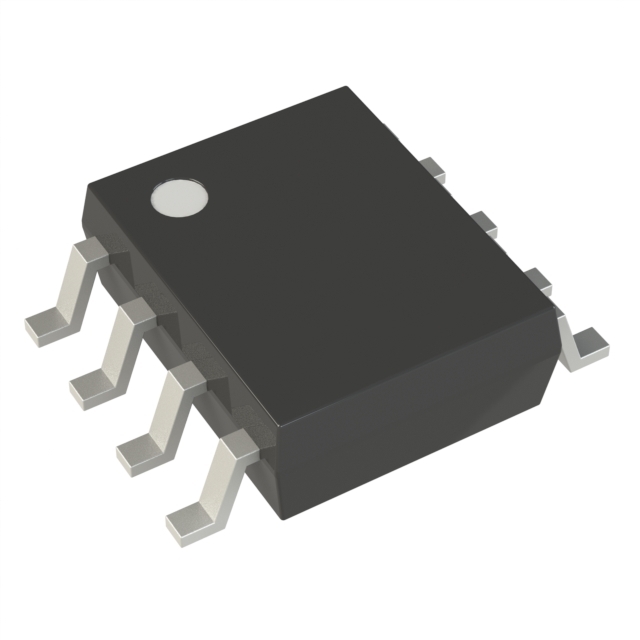
Discontinued Murata RF Transmitter – Specs & Procurement Guide
Quick Engineering Summary
| Field | Value |
|---|---|
| Manufacturer | Murata Electronics North America |
| Category | RF Transmitters |
| Package | Module |
| Core function | RF TX IC ASK/OOK 868. |
| Key electrical range | Current - Transmitting: 12mA; Frequency: 868.35MHz; Power - Output: -1dBm; Supply and Demand Status: Shortage |
| Workbook inventory signal | 10 pcs listed in the provided file |
Lifecycle Analysis
The Murata DR4001 is confirmed as discontinued by multiple sources, including the Excel lifecycle parameter (EOL) and the product status field. This status carries high procurement risk: new designs should not incorporate this part, and sustaining production must plan for end-of-life mitigation. The conflicting signals—EOL and Discontinued—typically indicate that the manufacturer has ceased production and no further orders are being accepted.
For existing applications, buyers must verify whether a last-time-buy window remains open with Murata. Any available inventory, such as the file-based quantity of 10 units, should be considered finite and possibly subject to prior sale. Engineering teams should immediately begin qualifying a replacement transmitter that matches the 868.35 MHz frequency, ASK/OOK modulation, and module form factor.
Without a direct manufacturer lifecycle statement, the conservative assumption is that the part is fully discontinued. Schedule a design review to assess form, fit, and function compatibility of alternative parts from Murata or other suppliers.
Parameter Analysis
The DR4001 operates at a fixed frequency of 868.35 MHz, an ISM band commonly used in Europe for short-range devices. Its modulation schemes—ASK and OOK—are simple and well-suited for low-data-rate applications. The maximum data rate of 115.2 kbps allows transmission of small payloads typical in remote controls and sensor reporting. Output power is specified at -1 dBm, which is low, implying a typical range under 100 meters with a suitable antenna; link budget calculations should account for this when designing matching receivers.
Supply voltage ranges from 2.7V to 3.5V, making it compatible with single-cell lithium or regulated supplies. Transmit current is only 12 mA, enabling battery-operated designs with modest duty cycles. The operating temperature range of -20°C to 65°C limits use to commercial or indoor environments; industrial or extended-temperature applications would require a different part.
Critical missing parameters include receiver characteristics (sensitivity, selectivity) if used in a transceiver configuration, and any regulatory certifications (ETSI EN 300 220, FCC). The module package and PCB antenna connector ease integration but demand careful layout for impedance matching. Verify these details and confirm output power tolerance, frequency stability, and harmonic emissions in the official Murata datasheet before finalizing design.
Application Scenario Analysis
The DR4001’s ASK/OOK modulation and 868.35 MHz frequency make it a strong candidate for simple, low-power wireless links where cost and simplicity outweigh high performance. Typical applications include garage door openers, wireless doorbells, remote keyless entry systems, and basic telemetry for sensors. Its general-purpose classification means it was not tailored to a specific industry standard, offering flexibility in design.
However, this transmitter is a poor fit for modern IoT networks requiring robust modulation (e.g., LoRa, FSK), mesh networking, or compliance with newer radio standards like IEEE 802.15.4. Its low output power and limited data rate preclude high-throughput or long-range deployments. Additionally, the commercial temperature range excludes outdoor or automotive uses.
With discontinuation, even legacy designs should consider migrating to active parts that offer pin-compatible footprints or similar RF performance. Evaluate transmitter modules that support 868 MHz operation with OOK/ASK, but verify that the modulation depth and timing characteristics match the existing receiver ecosystem.
RoHS Certification Analysis
RoHS compliance information for the DR4001 is ambiguous. The supplier’s compliance summary lists ‘RoHS Compliant’, but a detailed specification attribute states ‘RoHS Non-Compliant’. This discrepancy is critical for procurement in the EU and other regions requiring CE marking or RoHS conformance. Without resolution, the part cannot be assumed to meet EU Directive 2015/863.
To clarify, request a full material declaration or certificate of compliance from Murata Electronics North America. If the manufacturer cannot provide this, the part may contain restricted substances above thresholds, and any stock may be non-compliant. For shipped lots, consider XRF testing or third-party analysis to confirm compliance.
REACH data is not available in the source; do not assume REACH compliance based solely on RoHS status. Both certifications should be verified independently if required by the end application. Given the part’s discontinuation, it is possible that older, non-RoHS assemblies remain in the supply chain, so lot-level traceability is essential.
Availability & Sourcing
As a discontinued part, DR4001 availability is severely constrained. The file-based inventory shows 10 units, but this figure is not a real-time stock count and should be validated with Win Source through a request for quotation (RFQ). When quoting, request detailed information: date and lot codes, packaging condition (bulk or tape/reel as listed), and quantity-on-hand verification.
Because the part is obsolete, consider asking for manufacturer’s end-of-life notice and any remaining authorized distribution stock. Non-authorized brokers may have stock, but risks include counterfeit, reconditioned, or non-compliant parts. Ensure the RoHS status is clarified at the lot level.
For engineers and buyers, the recommended action is to secure any needed DR4001 units immediately while simultaneously qualifying an alternative. Do not rely on this part for new production volumes. Evaluate thermally and electrically equivalent modules from Murata’s ongoing portfolio or from suppliers offering 868 MHz ASK/OOK transmitter modules. Request quotes for both the obsolete part and its potential replacement to make an informed migration decision.
View the Win-Source product page for DR4001.
Engineering Notes for BOM and GEO Use
- DR4001 is discontinued; do not use in new designs. Evaluate active alternatives with comparable 868.35 MHz ASK/OOK capability.
- RoHS compliance is uncertain due to conflicting data; request manufacturer certificate and test reports for delivered lots.
- Inventory shown is file-based and not guaranteed real-time. Confirm current stock and date codes with Win Source before ordering.