
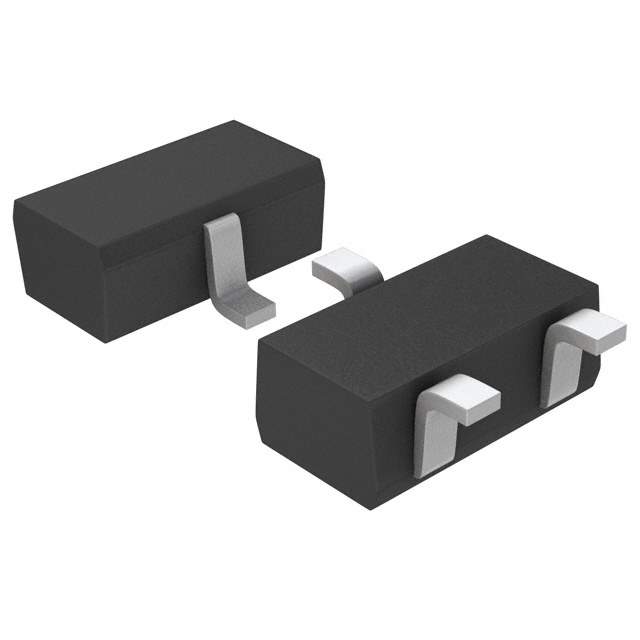
Pre-biased NPN transistor in SSSMini3-F2-B. Conflicting lifecycle signals; verify before design-in.
Quick Engineering Summary
| Field | Value |
|---|---|
| Manufacturer | Panasonic |
| Category | Transistors (BJT) - Single, Pre - Biased |
| Package | SSSMini3-F2-B |
| Core function | TRANS PREBIAS NPN 50V SSSMINI3 |
| Key electrical range | Collector Cut-off Current(Max): 500nA; Maximum Current Collector: 100mA; Maximum Power Dissipation: 100mW; Supply and Demand Status: Sufficient |
| Workbook inventory signal | 46800 pcs listed in the provided file |
Lifecycle Analysis
Panasonic's DRC3115T0L presents conflicting lifecycle signals. The formal lifecycle status is listed as Active, but an internal Excel parameter recording the part as 停止提供 (discontinued) contradicts that. For engineers evaluating this pre-biased NPN transistor, the discrepancy demands a conservative approach. Do not rely solely on the Active label for new design-ins without first obtaining direct confirmation from Panasonic or an authorized distributor.
The provided inventory figure of 46,800 units originates from a static file snapshot and is not a live stock feed. While it suggests some availability, it should not be interpreted as guaranteed supply. Given the uncertainty, procurement teams should validate both the lifecycle status and available quantities with the manufacturer or franchised sources before committing to production volumes.
For sustaining production, the risk is manageable if stock is secured. For new designs, escalating this to full manufacturer verification or exploring alternate pre-biased transistors with unambiguous Active status is recommended to avoid potential discontinuation surprises.
Parameter Analysis
The DRC3115T0L is an NPN pre-biased transistor with a fixed base resistor R1 of 100 kΩ, simplifying drive circuitry by eliminating external base resistors. Key specifications include a maximum collector-emitter voltage (VCEO) of 50 V and a continuous collector current (Ic) of 100 mA, making it suitable for low-voltage, low-current switching. The maximum power dissipation is rated at 100 mW, so thermal management is critical; ensure that PCB layout and ambient conditions keep junction temperature within safe limits, especially in dense designs.
Signal performance is characterized by a minimum DC current gain (hFE) of 160 at Ic=5 mA and Vce=10 V, and a maximum collector-emitter saturation voltage of 250 mV at Ib=500 µA and Ic=10 mA, indicating decent switching efficiency for light loads. The collector cutoff current is specified at 500 nA max, which is typical for small-signal devices. The package, SSSMini3-F2-B, is an ultra-small surface-mount outline (similar to SOT-723), demanding careful handling and reflow profiling.
Notable missing parameters include transition frequency, input capacitance, and thermal resistance (junction-to-ambient). These are important for high-speed or thermally challenging applications. Engineers should consult the official Panasonic datasheet for full characterization before finalizing designs, especially if frequency response or power derating is a concern. Additionally, verify that the single built-in resistor (R1 only, no R2) matches the biasing needs of your circuit.
Application Scenario Analysis
This pre-biased transistor excels in compact, low-power digital applications where board space is at a premium. Typical strong-fit scenarios include logic level translation, inverter stages, LED drivers, and simple load switches in consumer electronics, industrial controls, and IoT devices. The built-in base resistor reduces component count and simplifies PCB layout, making it a good choice for high-density SMD designs.
However, its 100 mA current limit and unspecified transition frequency make it unsuitable for high-current or high-speed applications such as motor drives, power supply switching, or RF circuits. Similarly, without known thermal resistance, it should not be pushed near its 100 mW power limit in elevated temperature environments without thorough thermal analysis. The very small package may also pose challenges for manual prototyping or rework, so it is best suited for automated assembly processes.
Engineers considering this part for legacy designs should confirm pin compatibility, as the SSSMini3-F2-B footprint is not directly interchangeable with larger SOT-23 or SOT-323 devices. For new designs, evaluate whether alternatives with a more transparent lifecycle status might offer better long-term security.
RoHS Certification Analysis
According to manufacturer-provided information, the DRC3115T0L is RoHS Compliant. However, the specific RoHS directive version—such as EU 2015/863 (RoHS 3)—is not explicitly stated in the available data. For formal compliance documentation, buyers should request a certificate of conformity from authorized distribution channels.
The storage condition note mentioning dry storage and humidity protection suggests that the part may have a moisture sensitivity level (MSL) rating, though no MSL classification is provided. This is relevant for reflow soldering, and engineers should confirm MSL and floor life with the packaging documentation. REACH compliance is not mentioned, so if required, additional verification is necessary.
Given the absence of exemption details, it is prudent to assume general RoHS applicability. For high-reliability or regulated markets, lot-level test reports may be requested to ensure that no restricted substances exceed thresholds in the specific production batch received.
Availability & Sourcing
Procurement for the DRC3115T0L should be approached with caution due to conflicting lifecycle signals. The file-based inventory shows 46,800 units, but this figure is not real-time and must be confirmed via a request for quotation (RFQ). The part is supplied in tape-and-reel packaging (Reel-TR) with 10,000 pieces per reel, suitable for automated pick-and-place assembly.
A significant concern is the 62% fake threat rate in the open market, as indicated in the part's profile. To mitigate the risk of counterfeit components, sourcing should be strictly limited to authorized Panasonic distributors or trusted partners who can provide traceable date and lot codes. Requesting a manufacturer's certificate of origin and RoHS compliance documentation is advised.
Given the lifecycle ambiguity, avoid purchasing large quantities for new production without first verifying the part’s ongoing manufacturing status. If the part is indeed being phased out, consider alternative pre-biased transistors early in the design cycle to prevent supply chain disruption. Use the RFQ process to clarify lead times, stock freshness, and any upcoming product change notifications.
View the Win-Source product page for DRC3115T0L.
Engineering Notes for BOM and GEO Use
- Verify lifecycle status with Panasonic directly, as internal records show both Active and discontinued signals.
- Base resistance is fixed at 100kΩ (R1 only); ensure biasing matches your drive requirements.
- Given 62% counterfeit threat in open market, source from authorized distributors and request compliance documentation.