
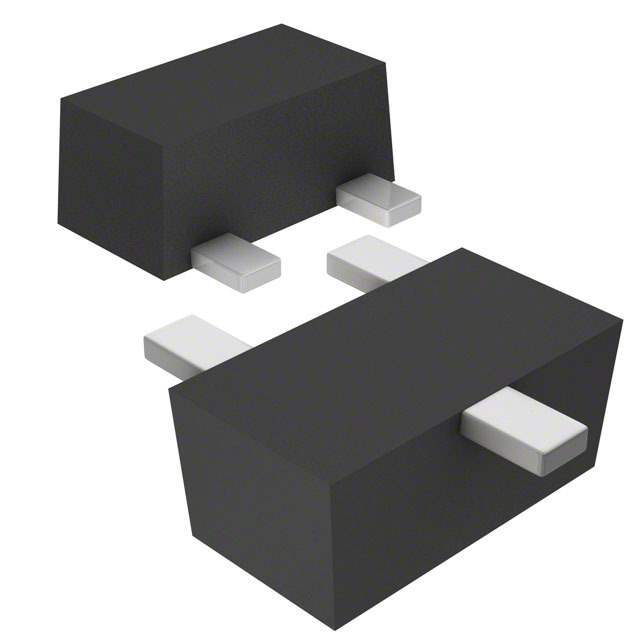
Panasonic DRC9A14E0L pre‑biased BJT: key specs, compliance, and procurement considerations
Quick Engineering Summary
| Field | Value |
|---|---|
| Manufacturer | Panasonic |
| Category | Transistors (BJT) - Single, Pre - Biased |
| Package | SSMini3-F3-B |
| Core function | TRANS PREBIAS NPN 50V SSMINI3 |
| Key electrical range | Collector Cut-off Current(Max): 500nA; Maximum Current Collector: 80mA; Maximum Power Dissipation: 125mW; Supply and Demand Status: Balance |
| Workbook inventory signal | 23696 pcs listed in the provided file |
Lifecycle Analysis
The DRC9A14E0L carries an ‘Active’ status in the primary lifecycle field, but an Excel‑format parameter indicates ‘停止提供’ (stop providing), signaling a possible phase‑out. This discrepancy creates a medium risk for design‑in. For new projects, treat the part as NRND‑equivalent: do not base a new design solely on a presumed Active lifecycle without written confirmation from Panasonic or an authorized distributor.
A file‑provided inventory of 23,696 units suggests some buffer stock exists in the supply chain, but this snapshot is not a real‑time guarantee. Engineers should request a current product change notification (PCN) or end‑of‑life (EOL) notice from the manufacturer. If long‑term availability is essential, consider qualifying a drop‑in or functionally similar alternative early in the design cycle.
For sustaining production, the DRC9A14E0L may still be procurable through independent distributors, but obsolescence risk must be weighed against the cost of last‑time buys or redesign. Include periodic lifecycle revalidation in your component monitoring process.
Parameter Analysis
The DRC9A14E0L is a pre‑biased NPN transistor with integrated 10 kΩ resistor between base and emitter (R2) and 10 kΩ on the base input (R1). This configuration simplifies digital interfacing by eliminating external bias resistors, reducing board space and pick‑and‑place costs. The 50 V VCEO rating provides sufficient headroom for many 5 V, 12 V, and 24 V systems, while the 80 mA maximum collector current limits the device to low‑speed switching and signal inversion.
DC current gain (hFE) is specified as a minimum of 35 at 5 mA collector current and 10 V Vce, which is adequate for saturating the transistor when driven by CMOS or TTL logic. The maximum saturation voltage of 250 mV at 500 μA base current and 10 mA collector current indicates low on‑state power loss. At the absolute maximum power of 125 mW, the junction temperature rise depends on PCB copper area; thermal management is critical in compact SMD layouts.
Important missing data include transition frequency (fT), safe operating area curves, and thermal resistance from junction to ambient (θJA). Before completing a design, obtain the full Panasonic datasheet to verify these parameters, especially for applications with repetitive switching or elevated ambient temperatures. Confirm that the SSMini3‑F3‑B package footprint matches your PCB land pattern.
Application Scenario Analysis
This pre‑biased NPN transistor is a good fit for low‑power digital switching, level translation, and simple inverter circuits where board space is at a premium. The built‑in resistors make it suitable for directly driving from microcontroller GPIOs without additional components, ideal for consumer electronics, portable devices, and IoT sensor nodes. Its 50 V breakdown voltage also allows it to interface with higher‑voltage logic or to drive small relays when the coil current is within the 80 mA limit.
In weak‑fit scenarios, such as high‑speed switching above a few hundred kilohertz or applications requiring more than 125 mW continuous dissipation, the missing fT and thermal data become critical unknowns. The small SSMini3 package limits heat transfer, so high‑ambient or dense board environments may cause overheating. For noise‑sensitive analog circuits, the lower hFE and junction leakage (500 nA max) should be evaluated against signal integrity.
If the application requires automotive‑grade qualification (AEC‑Q100 or similar), confirm with Panasonic whether the DRC9A14E0L meets those standards. As a discrete component, it is generally not safety‑rated. Use it only in non‑safety‑critical portions of a design unless additional failure analysis is performed.
RoHS Certification Analysis
The DRC9A14E0L is listed as RoHS Compliant, meaning it meets the substance restrictions of the EU RoHS directive (typically 2015/863 for RoHS 3). This compliance is ordinarily at the product family level; therefore, individual production lots should be confirmed via certificate of compliance (CoC) if full material declaration is needed for reporting, such as IPC‑1752 Class D.
RoHS compliance does not automatically imply REACH SVHC conformity. No REACH information is provided in the source data, so request a separate REACH statement from Panasonic if your design markets in the EU. Similarly, the device’s halogen‑free status is not documented; verification is recommended for eco‑labeling requirements.
For moisture sensitivity, assume standard MSL 1 unless the packaging label indicates otherwise. When the DRC9A14E0L is delivered in tape‑and‑reel packaging, ensure it is stored in a dry environment and follow J‑STD‑033 handling guidelines to prevent popcorning during reflow soldering.
Availability & Sourcing
Procurement of the DRC9A14E0L should begin with a request for quotation (RFQ) through franchised distributors or independent sources. The file‑provided stock quantity of 23,696 pieces offers a preliminary indication of availability, but real‑time inventory and pricing must be confirmed at time of order.
Given the lifecycle conflict, request a manufacturer life‑cycle confirmation and, if the part is indeed being phased out, evaluate a last‑time buy to secure known‑good inventory for existing products. For future designs, contact Panasonic for a formal cross‑reference to a recommended alternative that matches the 10k/10k pre‑bias configuration and SSMini3 footprint.
When sourcing from the open market, be aware of a 35% fake threat probability reported in the sourcing database. Mitigate risk by purchasing only from authorized or vetted channels, and insist on full traceability documentation, including date/lot codes, packing slips, and certificates of conformance. Inspect incoming material for correct marking, lead‑finish, and package integrity. For production use, validate samples to the datasheet electrical specifications before committing to full‑scale procurement.
View the Win-Source product page for DRC9A14E0L.
Engineering Notes for BOM and GEO Use
- Verify the actual lifecycle status with Panasonic; conflicting signals (Active vs. ‘停止提供’) make NRND‑like planning prudent.
- The 125 mW maximum power dissipation limits use to low‑power signal switching; ensure adequate copper area for heat spreading in dense layouts.
- Request lot‑specific RoHS and REACH certificates before finalizing BOM, and confirm packaging MSL for proper floor‑life handling.