
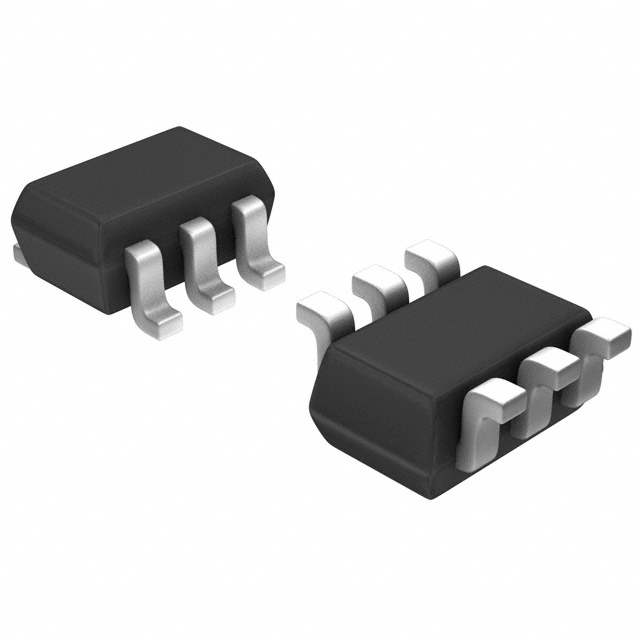
Active Automotive-Grade Power Driver with 2-Channel Bipolar Output in SOT-363 Package
Quick Engineering Summary
| Field | Value |
|---|---|
| Manufacturer | Diodes Incorporated |
| Category | PMIC - Power Distribution Switches, Load Drivers |
| Package | SOT-363 |
| Core function | IC PWR DRIVER BIPOLAR 1:1 SOT363 |
| Key electrical range | Current - Output (Max): 100mA; Number of Outputs: 2; Output Type: Bipolar; Supply and Demand Status: Limited |
| Workbook inventory signal | 83674 pcs listed in the provided file |
Lifecycle Analysis
All supplied lifecycle signals for the DRDNB21D-7 indicate Active status with low risk. The Excel lifecycle parameter and the dedicated Lifecycle Status field both confirm the part is currently in production. However, an estimated EOL date of 2025 is present in the specifications, which introduces a potential future obsolescence risk that procurement teams should monitor closely. For new automotive or industrial designs, the part remains suitable, but engineering should verify the lifecycle with Diodes Incorporated and request official product change notifications.
Given the AEC-Q101 qualification, the DRDNB21D-7 is positioned for long-life automotive applications, where unexpected EOL can disrupt program timelines. A file-provided inventory figure of 83,674 units suggests current distribution stock, but this is not guaranteed real-time and should be confirmed via RFQ before relying on it for production ramp. Sustaining production users should secure inventory pipeline and evaluate migration paths if the 2025 EOL estimate is confirmed.
Parameter Analysis
The DRDNB21D-7 is a dual-channel bipolar load driver housed in a SOT-363 surface-mount package. Key parameters include a maximum load voltage of 50V and output current of 100mA per channel. The operating junction temperature range of -55°C to 150°C supports use in harsh environments. The supply voltage is marked as 'Not Required', indicating a logic-level input that does not need a separate power rail, simplifying interface design. Output type is bipolar, which typically exhibits a higher saturation voltage than MOSFET switches, directly affecting thermal dissipation at the 100mA maximum.
Critical missing parameters from the available data are the on-resistance or saturation voltage, input threshold levels, rise and fall times, and fault protection features. These values are essential for designers to calculate power loss, ensure signal compatibility, and assess robustness. The AEC-Q101 qualification suggests these details meet automotive standards, but they must be confirmed in the official datasheet before finalizing design. PCB layout should account for the small SOT-363 footprint and thermal management at maximum current and temperature.
Application Scenario Analysis
As an automotive-grade, general-purpose power driver with bipolar outputs, the DRDNB21D-7 suits a variety of low-side switching applications. Strong-fit scenarios include driving automotive relays, solenoids, indicator LEDs, and small lamps in body electronics. The dual independent channels allow simultaneous control of two loads. The wide temperature range and AEC-Q101 certification make it reliable for under-hood or cabin applications.
Weak-fit scenarios include high-efficiency power distribution where a MOSFET switch with lower on-resistance would reduce heat dissipation, or applications requiring very fast switching speeds such as PWM control beyond a few kilohertz. The bipolar output introduces a higher voltage drop compared to modern MOSFET drivers, so at 100mA the power loss may be significant in tight enclosures. For such cases, verify thermal performance with actual saturation voltage data from the datasheet. Overall, the DRDNB21D-7 is best deployed in rugged, moderate-speed switching roles where its automotive pedigree adds value.
RoHS Certification Analysis
The DRDNB21D-7 is documented as RoHS Compliant and Halogen Free Compliant. This indicates adherence to the EU RoHS directive, including the latest amendment RoHS 3 (EU 2015/863) given the halogen-free declaration. No specific exemption codes are listed, so it is reasonable to assume full compliance without exemptions, but engineering should request the official manufacturer certificate to confirm. REACH compliance is not provided in the source data; buyers requiring REACH declarations should obtain these from Diodes Incorporated.
During incoming quality control, verify lot-level compliance documentation, especially for automotive production where material declaration requirements are stringent. The halogen-free status also supports environmentally conscious design goals. Note that family-level compliance can sometimes mask individual part variances, so always validate the specific part number.
Availability & Sourcing
The DRDNB21D-7 is listed as Active and available from Win Source, with a file-reported quantity of 83,674 units. This inventory is subject to change and should be verified through an RFQ. The part is supplied on tape and reel packaging, suitable for automated assembly lines. With a reported fake threat percentage of 55% in the open market, sourcing through authorized distributors or verified channels is critical. Require date code, lot traceability, and factory-packaged reels to mitigate counterfeiting risks.
Given the Active lifecycle but estimated EOL date of 2025, purchasers should assess long-term needs and possibly buffer stock for programs spanning beyond 2025. For automotive applications, request AEC-Q101 qualification documents and consider last-time-buy provisions if EOL is confirmed. The supply-and-demand status is noted as Limited, which may indicate constrained availability; proactively quote to secure allocation. Always confirm current lifecycle status with Diodes Incorporated before committing to new production runs.
View the Win-Source product page for DRDNB21D-7.
Engineering Notes for BOM and GEO Use
- Verify the saturation voltage and switching speed from the full datasheet to ensure thermal and timing margins.
- Monitor the estimated EOL date of 2025 and implement a PCN alert with the manufacturer.
- Validate AEC-Q101 qualification certificates and lot-level RoHS/halogen-free compliance for each shipment.