
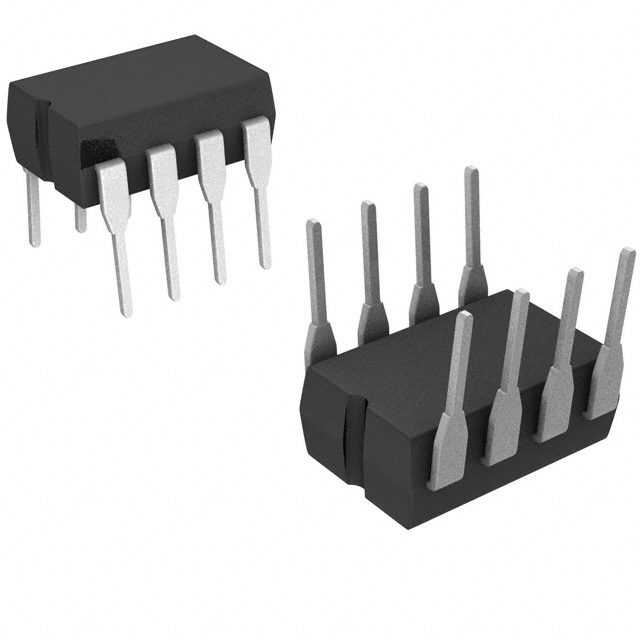
Active dual N-channel low-side power switch with 30A max output, chassis mount 18-Module package
Quick Engineering Summary
| Field | Value |
|---|---|
| Manufacturer | Microchip Technology |
| Category | PMIC - Power Distribution Switches, Load Drivers |
| Package | 18-Module |
| Core function | IC PWR SWITCH N-CHANNEL 1:1 |
| Key electrical range | Current - Output (Max): 30A; Input Type: Inverting, Non-Inverting; Number of Outputs: 2; Output Configuration: Low Side |
| Workbook inventory signal | 9 pcs listed in the provided file |
Lifecycle Analysis
The Microchip DRF1300 is currently listed as Active in the supplied lifecycle data, indicating ongoing production and support from the manufacturer. This status means the component is generally available for new design projects and sustaining builds, with no immediate discontinuation risk. All available lifecycle signals—product status, lifecycle status field, and excel lifecycle parameter—align on Active, giving high confidence for procurement planning.
For new designs, the Active status supports standard qualification processes, but it is advisable to verify the latest lifecycle status directly through Microchip’s product page or authorized distribution channels. While file-based inventory shows a quantity of 9 units, this is not a real-time guarantee and should be treated as indicative. Engineers should plan for lead times and confirm availability with suppliers before committing to production schedules.
Parameter Analysis
The DRF1300’s standout parameter is its maximum output current of 30A per channel, making it suitable for high-power load switching. The typical on-resistance (Rds(on)) of 240mOhm is critical for conduction loss calculations: at 30A, power dissipation per channel could reach approximately (30^2)*0.24 = 216W (assuming no body diode contribution), requiring robust thermal management. The 10V to 15V load voltage range aligns with common industrial power rails, while the low-side output configuration is ideal for grounding the load when the switch is off.
The dual independent channels and flexible input type (inverting or non-inverting) allow versatile control topologies. The chassis-mount 18-Module package is designed for mechanical integration onto a heat sink, but the datasheet should be consulted for thermal resistance values and maximum junction temperature to validate safe operating area.
Key missing parameters from the available data include the operating supply voltage (Vcc), protection features (such as overcurrent, thermal shutdown, undervoltage lockout), switching characteristics (rise/fall times), and operating temperature range. These must be obtained from the official datasheet to complete the design-in evaluation.
Application Scenario Analysis
The DRF1300’s high-current, low-side switching capabilities make it well-suited for driving inductive loads such as solenoids, relays, motor coils, and actuator windings in industrial automation equipment. Its general-purpose switch type and dual outputs enable control of two separate load circuits, which is common in distributed power distribution nodes or automotive body electronics where chassis ground reference is used.
Conversely, applications requiring high-side switching—such as load supply control in battery-powered systems where continuity of ground is essential—would not be a good fit. Similarly, environments demanding ultra-fast switching speeds or precise current regulation might find the DRF1300 lacking if the unlisted switching specifications do not meet the timing requirements. Without temperature range and protection feature data, extreme environment (e.g., high ambient temperature) or safety-critical applications should be approached with caution, pending datasheet verification.
RoHS Certification Analysis
The DRF1300 is marked as RoHS Compliant in the supplied data. This indicates compliance with the EU’s Restriction of Hazardous Substances directive, which typically means the component contains no more than the permitted levels of lead, mercury, cadmium, hexavalent chromium, PBBs, and PBDEs, and may include declarations for phthalates under newer amendments. However, the specific RoHS directive version or any applicable exemptions are not detailed in the provided information.
For procurement, it is important to request a full material declaration or RoHS certificate from the manufacturer or franchised distributor for the specific manufacturing lot. This ensures continued compliance, especially if the part is used in products destined for the EU market or other regions with similar regulations. REACH status is not supplied, so verification of Substances of Very High Concern (SVHC) may be needed separately.
Availability & Sourcing
The DRF1300 is an Active Microchip part, but the accompanying supply-and-demand status is listed as Shortage. File-reported inventory shows only 9 units, underscoring that immediate availability may be constrained. Buyers should request a current quote from authorized distributors to obtain real-time stock levels and lead times. Traceability documentation, including date and lot codes, should be requested to ensure batch consistency.
Given the Active lifecycle, standard procurement with factory lead time is expected once supply normalizes. For urgent needs, negotiating with multiple channels may help secure limited stock. Always verify that the supplier provides full compliance documentation (RoHS certificates, material declarations) and confirm packaging type (tray) to align with assembly processes. For production planning, factor in the shortage status and consider alternate sourcing strategies if long lead times are forecast.
View the Win-Source product page for DRF1300.
Engineering Notes for BOM and GEO Use
- Verify Rds(on) over the full operating temperature range; typical 240mOhm may increase, requiring thermal derating for sustained 30A loads.
- The chassis-mount 18-Module package demands adequate heat sinking; evaluate thermal interface and forced-air cooling in the mechanical design.
- Confirm the inverting/non-inverting input logic levels match the control signals to avoid unintended switching states.