
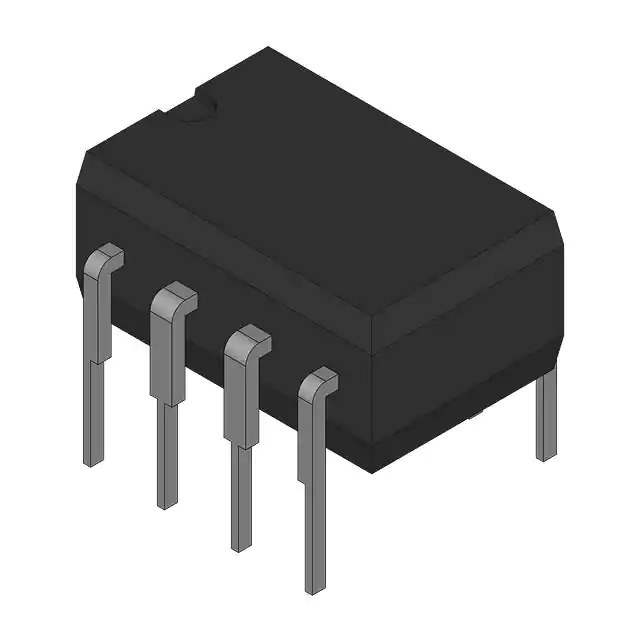
Discontinued xDSL Driver IC from Burr-Brown (TI) – Specifications and Procurement Information
Quick Engineering Summary
| Field | Value |
|---|---|
| Manufacturer | Burr-Brown (TI) |
| Category | Interface - Drivers, Receivers, Transceivers |
| Package | Tube |
| Core function | IC TRANSCEIVER 2/0 8PDIP |
| Key electrical range | Temperature Range - Operating: -40°C ~ 85°C; Voltage - Supply: 4.5V ~ 5.5V |
| Workbook inventory signal | 7400 pcs listed in the provided file |
Lifecycle Analysis
The DRV1100P has a Discontinued lifecycle status from Burr-Brown (TI), meaning the part is no longer in active production. For new designs, this represents high risk because there is no factory support, no guaranteed supply, and no future roadmap. Engineers should not baseline this part in new projects and must immediately transition to alternative components if any are identified.
For sustaining production or repair of legacy equipment, the only viable path is to secure existing stock. The file-provided inventory quantity of 7400 units (if accurate) may offer a temporary buffer, but this figure is not real‑time and does not guarantee availability. Buyers should contact the manufacturer or authorized distributors to confirm whether a last‑time buy was offered and whether any remaining authorized inventory exists.
Without an official replacement or migration guide, the DRV1100P must be treated as end‑of‑life with no forward supply. All procurement should include lifecycle verification and traceability to avoid substandard or counterfeit material entering the supply chain.
Parameter Analysis
The DRV1100P is configured as a 2/0 driver, meaning it has two driver channels and zero receivers, consistent with xDSL line driving applications. Its supply voltage range of 4.5 V to 5.5 V aligns with typical telecom or networking equipment power rails, and the industrial temperature range of –40°C to 85°C allows deployment in uncontrolled environments. The 8‑PDIP through‑hole package and tube packing suggest a design era where manual assembly or socketed prototypes were common.
These parameters are central to fit and reliability. The single‑ended 5 V operation simplifies power supply design but limits compatibility with lower‑voltage ASICs unless level shifting is added. The through‑hole footprint may be incompatible with modern SMT‑only PCB layouts, forcing a board redesign if a substitute is found. The absence of data‑rate specifications, output current capability, or output swing in the present data mandates consulting the original Burr‑Brown datasheet before committing to a design. Critical items to verify include maximum line drive, harmonic distortion, and shutdown features, as these directly affect link performance.
Missing parameters also include propagation delay, power dissipation, and ESD ratings. For procurement teams, the standard package of 89 pcs per tube can affect minimum order quantities and handling costs when sourcing legacy stock.
Application Scenario Analysis
The DRV1100P targets xDSL line driving in applications such as ADSL modems, DSLAM line cards, and bridge taps where two differential drivers are needed to launch signals onto twisted‑pair. The 2/0 configuration maps well to a single channel with differential output, though the lack of receivers limits it to transmit‑only functions unless paired with an external receiver. Industrial temperature range supports outdoor cabinet use.
A strong fit exists in legacy telecom infrastructure still maintained with spare parts; repair depots may need the DRV1100P to keep aging DSLAMs operational. However, the discontinued status makes it a weak fit for any new product development, as no long‑term supply is possible. For modern designs, integrated SoCs or newer driver families from TI (e.g., THS series) would typically replace such a part, but no pin‑to‑pin drop‑in is stated.
Designers should also consider that the DRV1100P’s through‑hole package and 5 V rail may not meet current miniaturization and energy efficiency goals, further limiting its applicability outside of sustainment programs.
RoHS Certification Analysis
The DRV1100P is listed as RoHS compliant, indicating conformity with EU Directive 2011/65/EU and its amendment 2015/863 (RoHS 3). This means the part should not contain lead, mercury, cadmium, hexavalent chromium, PBBs, or PBDEs above threshold limits, and the four phthalates are also restricted. No exemptions are declared, so the compliance is presumed blanket.
However, because the part is discontinued and may have been manufactured years ago, lot‑level verification is recommended. A compliance certificate from Burr‑Brown (TI) or an authorized distributor should be obtained before importing into the EU. REACH status is not provided; RoHS alone does not guarantee REACH compliance, so a separate declaration may be needed for high‑volume or regulated customers.
For legacy equipment, RoHS compliance is critical when replacing failed devices in systems that must remain compliant. Buyers should confirm that stock being sourced has not been contaminated in storage and that documentation matches the lot being delivered.
Availability & Sourcing
As a discontinued part, the DRV1100P carries high sourcing risk. The file‑provided quantity of 7400 units offers a snapshot of possible stock but is not a real‑time guarantee. Any procurement must begin with a request for quote (RFQ) to confirm current availability, date codes, and packaging condition. The standard package of 89 pieces per tube may constrain order sizes.
Counterfeit risk is elevated; the open‑market fake threat is rated at 52%, meaning over half of non‑authorized offerings could be non‑functional or remarked. To mitigate this, source only through authorized TI distributors or rigorously vetted independent partners who provide full traceability, OEM certificates, and visual inspection reports. Date‑code verification is essential to ensure parts haven’t exceeded shelf‑life limits or been improperly stored.
Given the Discontinued lifecycle, buyers should also contact the manufacturer to verify that no last‑time‑buy programs or official stock remain. For urgent repairs, secured inventory may be the only option, but every lot should be sampled and tested before committing to field deployment. Compliance documentation (RoHS, REACH, and certificate of conformance) must accompany each shipment to avoid customs or regulatory delays.
View the Win-Source product page for DRV1100P.
Engineering Notes for BOM and GEO Use
- The DRV1100P is discontinued – use only for legacy repairs and secure stock early to avoid gray-market risks.
- Key missing datasheet parameters (data rate, output current) must be verified from original manufacturer documentation.
- Open-market counterfeit risk is 52% – insist on traceable date/lot codes and compliance certificates from authorized sources.