
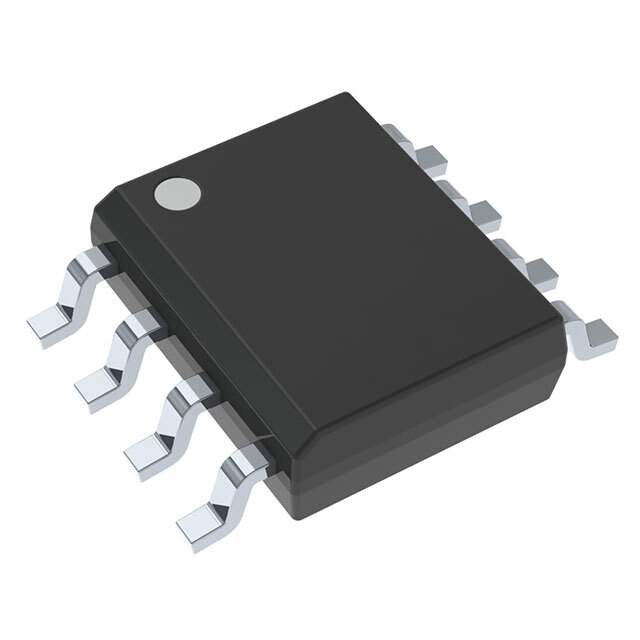
Technical and procurement analysis for the DRV1100U/2K5 integrated circuit.
Quick Engineering Summary
| Field | Value |
|---|---|
| Manufacturer | Rochester Electronics |
| Category | Interface - Drivers, Receivers, Transceivers |
| Package | 8-SOIC |
| Core function | IC TRANSCEIVER 2/0 8SOIC |
| Key electrical range | Operating Temperature Range: -40°C ~ 85°C; Supply and Demand Status: Limited |
| Workbook inventory signal | 1 pcs listed in the provided file |
Lifecycle Analysis
The DRV1100U/2K5 from Rochester Electronics is confirmed End-of-Life (EOL), with a high risk level for procurement. The part status is listed as Obsolete, and all lifecycle signals align. This means the component is no longer manufactured, and only residual aftermarket inventory remains. For new designs, this part is unsuitable—engineers must select an alternative that is in active production. In sustaining or repair applications, the DRV1100U/2K5 may still be sourced through specialized distributors like Rochester Electronics, which often holds legacy stock, but availability is typically very limited and unguaranteed.
File-provided inventory data shows only 1 unit available, which should not be assumed real-time. Procurement teams must verify actual on-hand quantities directly with the supplier. Because no last-time-buy notification is mentioned, organizations should immediately evaluate their bill-of-materials and consider last-time purchases before stock is exhausted. Without a direct replacement announced, a redesign or approved alternate may be required for long-term support.
Parameter Analysis
The DRV1100U/2K5 is an xDSL driver/receiver in an 8-SOIC surface-mount package. Key parameters from the supplied data include a 2/0 driver/receiver configuration, a supply voltage range of 4.5V to 5.5V, and an operating temperature range of -40°C to 85°C. The part is designed for single-supply operation and features a compact footprint suitable for dense line-card designs. These parameters are critical for ensuring the driver meets the power and thermal requirements of typical central-office xDSL line interfaces.
However, the available specifications are incomplete. Crucial performance parameters such as data rate, output swing, propagation delay, distortion, and noise floor are not provided in the source data. Engineers must refer to the original Texas Instruments datasheet for full electrical characteristics, as TI likely originated this part (Rochester Electronics is a franchised aftermarket supplier for TI). Without these data points, design validation and signal integrity analysis are impossible. The datasheet should be cross-checked against application requirements, especially for high-speed VDSL2 profiles where timing and linearity are decisive.
Application Scenario Analysis
This transceiver is purpose-built for xDSL line driving in broadband access equipment. Its primary fit is in central-office line cards, DSLAMs, and remote terminal units serving ADSL, ADSL2+, VDSL, and VDSL2 applications. The 2/0 driver configuration suggests a dual-channel transmitter with no receiver, suitable for amplifying downstream DSL signals over twisted-pair copper. In such deployments, the DRV1100U/2K5 would drive the line transformer through a hybrid network.
Given its EOL status, using this part in new designs is strongly discouraged. It may still appear in legacy equipment repairs or field replacements for existing network infrastructure. In new-build scenarios, designers should consider active alternatives like the THS6203 or similar devices from Texas Instruments. The limited availability also means that large-scale production or OEM manufacturing is not feasible; the part is better suited for MRO (maintenance, repair, and operations) or low-volume sustainment tasks.
RoHS Certification Analysis
The DRV1100U/2K5 is marked as RoHS Compliant according to the supplier data. This indicates conformance with EU Directive 2011/65/EU and its amendment 2015/863 (RoHS 3), which restricts hazardous substances like lead, mercury, and cadmium. While the compliance flag is present, no specific certification or exemption details are included in the source records. For products shipped to the EU, this compliance is mandatory, but note that REACH compliance is not stated separately.
Since RoHS status is often declared at the family or date-code level, procurement teams should request a lot-specific RoHS certificate from the supplier. If the part was manufactured before the RoHS transition date, it may have lead-based finishes that are exempt under certain EOL or military application exceptions, though no such exemption is noted here. Always verify that the certification covers the exact date code and lot before accepting shipment, especially for an obsolete part.
Availability & Sourcing
Sourcing the DRV1100U/2K5 is challenging due to its EOL and obsolete status. The file-provided inventory indicates just 1 piece, and the supply-and-demand status is ‘Limited.’ Rochester Electronics is known for authorized aftermarket distribution of legacy TI parts, but quantities are often small and non-replenishable. Buyers should treat any listed stock as unconfirmed and immediately request a quote to verify actual availability, date codes, and packaging.
Packaging is specified as Bulk, but the original standard quantity per package was 2500 (tape and reel). The presence of counterfeit risk (a 36% fake threat in the open market, as flagged in the data) adds urgency to insisting on full traceability documentation. Require certificates of conformance, RoHS statements, and test reports when purchasing. Given the high risk, for production uses, consider migrating to a direct replacement or redesign. For maintenance, prioritize orders from Rochester’s authorized channel and verify lifecycle status before committing to purchases.
View the Win-Source product page for DRV1100U/2K5.
Engineering Notes for BOM and GEO Use
- Verify original TI datasheet for missing electrical specs (data rate, output swing, propagation delay) before design integration.
- EOL and only 1 unit listed; immediately request a quote and plan for replacement, as stock may vanish.
- Require lot-specific RoHS and authenticity documentation due to 36% fake threat risk; favor authorized aftermarket sources like Rochester.