
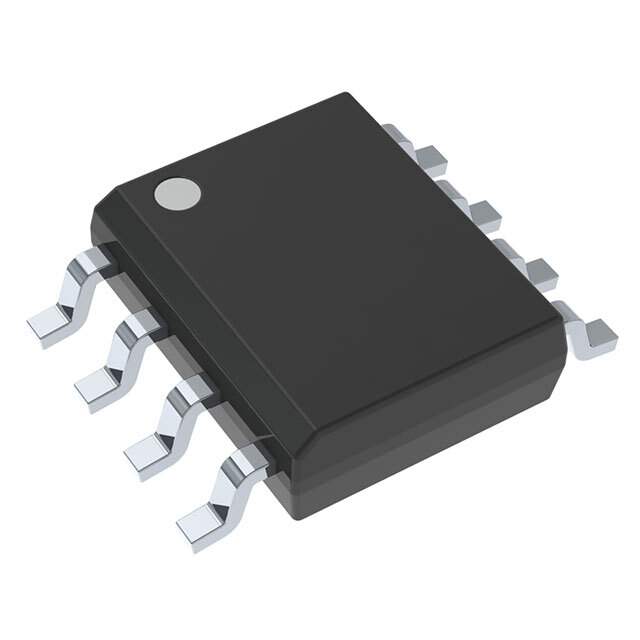
2/0 drivers, 8-SOIC, xDSL protocol. Verify lifecycle and source with compliance checks.
Quick Engineering Summary
| Field | Value |
|---|---|
| Manufacturer | Texas Instruments |
| Category | Interface - Drivers, Receivers, Transceivers |
| Package | 8-SOIC |
| Core function | IC TRANSCEIVER 2/0 8SOIC |
| Key electrical range | Supply and Demand Status: Balance; Supply Voltage - Operating: 4.5 V to 5.5 V; Temperature Range - Operating: -40°C to 85°C |
| Workbook inventory signal | 1 pcs listed in the provided file |
Lifecycle Analysis
The DRV1100U lifecycle presents conflicting signals. Texas Instruments lists its Lifecycle Status as Active, yet a separate Excel lifecycle parameter indicates that it is not recommended for new designs. This discrepancy suggests that while the part remains in production for sustaining customers, it may be in a phase where the manufacturer is discouraging new design-ins. Procurement teams should treat this as NRND (Not Recommended for New Designs) to avoid design-cycle risk. For existing production, the part can still be sourced, but engineering must confirm with TI’s official product page or a direct inquiry to avoid unexpected obsolescence.
The supplied inventory file shows a quantity of 1 unit, which is not a real-time stock level and should not be considered guaranteed availability. Low displayed quantity may reflect limited distribution hold or a single sample unit. Buyers should request a quote to verify current factory lead times and distributor stock. In light of the 46% fake threat rate in the open market, lifecycle verification becomes even more critical to ensure only genuine, traceable parts are procured. If the manufacturer eventually transitions the DRV1100U to EOL, alternative sourcing or redesign planning should begin early.
Parameter Analysis
The DRV1100U is configured as a 2/0 driver, meaning it integrates two line drivers with no receivers, suitable for transmit-only xDSL applications. The supply voltage range of 4.5 V to 5.5 V aligns with typical 5 V system rails, and the -40°C to +85°C industrial temperature range supports rugged deployment. The 8-SOIC SMD package offers a compact footprint for space-constrained boards, with standard pin spacing for automated assembly.
These parameters define the part’s electrical interface and thermal envelope, but engineers should verify several missing specifications from the datasheet before committing to a design. Notably, maximum data rate, output current capability, receiver hysteresis (if any), and ESD protection levels are not provided. The protocol tag “xDSL” indicates compatibility with digital subscriber line standards, but without a detailed timing diagram or line driver output impedance specifications, signal integrity and noise margin calculations require manufacturer documentation. For thermal design, power dissipation at typical switching frequency and recommended PCB layout guidelines are essential for reliability and should be obtained from TI’s datasheet or application notes.
Application Scenario Analysis
The DRV1100U serves primarily as a line driver for xDSL communication links, where it converts digital signals into the analog waveforms required for transmission over twisted-pair copper lines. Its 2-driver configuration suggests a single differential channel, making it suitable for customer premise equipment (CPE) modems, digital subscriber line access multiplexers (DSLAMs), and similar telecom infrastructure. In these applications, the part operates under the 5V rail and industrial temperature range, matching the requirements of central office or outdoor cabinet environments.
However, the lack of receivers limits its use to transmit-only paths; full transceiver functions would require an additional receiver IC. This can be acceptable in systems where separate receive and transmit paths are implemented for noise isolation. Designers working on portable or battery-operated devices should confirm supply current and idle power consumption, as the package and voltage range may not align with low-power expectations. For emerging designs, especially those migrating to VDSL2 or G.fast, the DRV1100U’s maximum data rate and output linearity must be verified against signal bandwidth requirements—missing details in the available data make it necessary to consult TI’s full datasheet for performance curves. In summary, the DRV1100U fits legacy or moderate-speed xDSL transmission designs but is not recommended for new high-speed deployments without thorough evaluation.
RoHS Certification Analysis
The DRV1100U is listed as RoHS Compliant, indicating that it meets the European Union’s Restriction of Hazardous Substances directive. While the specific RoHS revision is not detailed in the source data, typical Texas Instruments products comply with RoHS 3 (EU 2015/863), which includes the ten restricted substances. The provided status likely applies to the current production lots, but compliance can vary by date code and packaging materials; buyers should confirm lot-level RoHS certification when ordering.
No REACH declaration is present in the data, so REACH SVHC compliance should be requested if required for EU market access. Additionally, the part is described as silicon-based with a blue-grey metallic luster, which raises no immediate red flags, but any lead-frame finish (e.g., matte tin) should be verified through the full material declaration. For designs requiring halogen-free or low-halogen materials, explicit documentation from TI is essential. The package (8-SOIC) is surface-mount and typically uses lead-free plating, but the availability of lead-free options should be confirmed if the part is sourced from older stock. In summary, while the baseline RoHS status is positive, full environmental compliance documentation should be obtained for each procurement lot to satisfy regulatory and customer requirements.
Availability & Sourcing
The DRV1100U is available through distribution channels, but with a noted lifecycle conflict that places it in the NRND category, sourcing strategies should prioritize verification and future-proofing. The file-provided inventory shows a quantity of 1 unit, which is not a live stock indicator; interested buyers must submit a request for quote to obtain real-time availability, lead times, and pricing. Packaging is tube/rail, standard for 8-SOIC parts, and the storage condition calls for dry cabinet and humidity protection, ensuring parts remain solderable.
Given the 46% counterfeit risk in the open market, procurement teams should source only from Texas Instruments authorized distributors or partners that provide full traceability, including date and lot codes. Compliance documentation—such as Certificate of Conformance and RoHS test reports—should accompany each shipment. For sustaining production, it is advisable to secure a buffer inventory while evaluating alternative xDSL transceivers that are fully rated for new designs. If the DRV1100U transitions to EOL, last-time buy opportunities may arise, but those should be captured only after confirming manufacturer notices. Ultimately, a direct engagement with Texas Instruments or a franchised distributor will clarify the long-term supply roadmap and help mitigate redesign risk.
View the Win-Source product page for DRV1100U.
Engineering Notes for BOM and GEO Use
- DRV1100U is a 2/0 xDSL line driver in 8-SOIC suitable for transmit-only paths; verify datasheet for data rate and ESD ratings.
- Conflicting lifecycle status: treat as NRND and contact Texas Instruments to confirm long-term supply plans.
- Counterfeit risk at 46% in open market; insist on date/lot code traceability and authorized distribution.