
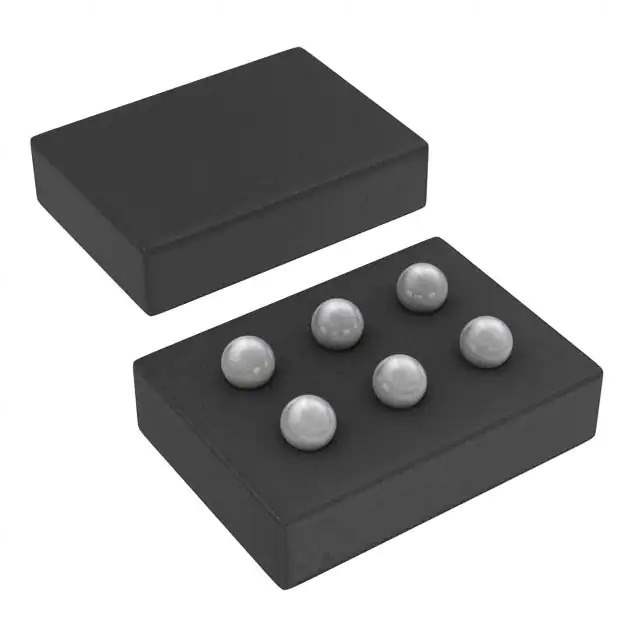
Comprehensive sourcing and engineering analysis for the Texas Instruments DRV201AYMBRB voice coil motor driver IC.
Quick Engineering Summary
| Field | Value |
|---|---|
| Manufacturer | Texas Instruments |
| Category | PMIC - Motor Drivers, Controllers |
| Package | Tape & Reel |
| Core function | IC MTR DRVR 2. |
| Key electrical range | Current - Output: 102.3mA; Output Configuration: Half Bridge; Temperature Range - Operating: -40°C ~ 125°C (TJ); Voltage - Load: 2.5V ~ 4.8V |
| Workbook inventory signal | 3870 pcs listed in the provided file |
Lifecycle Analysis
The lifecycle status for DRV201AYMBRB is Active, with all available signals (Excel param, Product Status, Lifecycle Status) in agreement and no conflicts. This indicates the part is fully supported by Texas Instruments for both new designs and ongoing production.
For engineering and procurement teams, Active status means the component is suitable for new design starts, and standard manufacturer documentation revision checks are recommended to catch any future notification or PCN. The risk level for sourcing interruption is low under normal market conditions.
A file-provided inventory quantity of 3870 units is noted for reference. This figure is not live stock; buyers should verify real‑time availability and request confirmation of date/lot codes before committing to production plans.
Parameter Analysis
Key parameters of the DRV201AYMBRB directly affect integration into camera voice coil motor (VCM) applications. The output current rating of 102.3 mA sets the drive capability for the motor; designers must ensure the VCM load current does not exceed this value during actuator startup or stall. The supply and load voltage range of 2.5 V to 4.8 V matches low‑power imaging rails, and the integrated NMOS/PMOS half‑bridge output configuration simplifies board layout.
The I²C interface allows digital control of focus or stabilization coils, supporting precise, programmable motion. The 6‑PicoStar package (0.8×1.48 mm) is extremely small, enabling compact camera modules but requiring careful PCB footprint design and thermal management. The operating junction temperature range of −40 °C to +125 °C covers consumer and automotive‑adjacent environments.
Notable verification items that are not fully detailed in available data include the I²C maximum clock speed, internal protection features (over‑temperature, under‑voltage lockout), and detailed thermal resistance values. Engineers should consult the official Texas Instruments datasheet to finalize these parameters.
Application Scenario Analysis
The DRV201AYMBRB is purpose‑built for voice coil motor actuation in camera systems, making it a strong fit for autofocus (AF) and optical image stabilization (OIS) functions in smartphones, webcams, and action cameras. The combination of I²C control, low current output, and extremely small footprint directly addresses the space and power constraints of these imaging modules.
This device is a less suitable choice for general motor‑drive applications such as brushless DC (BLDC) motors, stepper motors, or high‑current solenoids. Its output current and half‑bridge architecture are optimized for the linear motion of VCMs, not for continuous rotation or higher‑power loads. Additionally, environments with high electrical noise may require external filtering to maintain I²C signal integrity.
When evaluating the Texas Instruments DRV201AYMBRB for a new design, confirm that the mechanical resonance and back‑EMF characteristics of the target VCM align with the driver’s control capabilities. If the system requires sensorless feedback or advanced diagnostics, check the full datasheet for feature support.
RoHS Certification Analysis
The provided data indicates that the DRV201AYMBRB is RoHS Compliant. This status, along with the REACH Unaffected designation, suggests that the part meets EU environmental directives for hazardous substances. The MSL level of 1 (Unlimited) further indicates that the component has no special moisture sensitivity requirements, which simplifies handling and storage in standard SMT assembly.
It is important to note that the specific RoHS version (e.g., EU 2015/863) is not specified in the available documentation. For high‑volume production, procurement teams should request the manufacturer’s certificate of compliance for each lot to ensure that the parts remain within the required substance thresholds and to account for any updates to the directive.
The absence of explicit exemption information also means that any end‑application exemptions (e.g., medical or military) need to be cross‑checked with Texas Instruments’ latest environmental compliance reports.
Availability & Sourcing
The Texas Instruments DRV201AYMBRB is currently an Active product, with a standard package quantity of 3,000 pieces per Tape & Reel. A file‑provided stock quantity of 3,870 units gives a reference point, but this is not a real‑time inventory guarantee. Buyers should request a quote for current availability and lead time from authorized distribution channels.
When sourcing the DRV201AYMBRB, it is essential to verify date and lot codes, especially in the open market where a 32% fake threat has been noted. Authenticating traceability and requesting full compliance documentation (RoHS, REACH, MSL) will help mitigate counterfeit risk. The MSL 1 rating and small reel packaging suit automated assembly, but confirm that the supplier provides proper moisture‑barrier packaging if the factory environment demands it.
Given the Active lifecycle, standard procurement through franchised distributors remains the safest route. Engineering samples should be ordered well in advance of production builds to validate I²C compatibility and mechanical footprint in the target camera module design.
View the Win-Source product page for DRV201AYMBRB.
Engineering Notes for BOM and GEO Use
- Verify I2C bus speed and addressing configuration against system requirements before integrating the DRV201AYMBRB.
- Account for the 102.3 mA output current rating to avoid overdriving the voice coil motor under peak conditions.
- Review the 6-PicoStar land pattern and thermal dissipation in tight camera module layouts.