
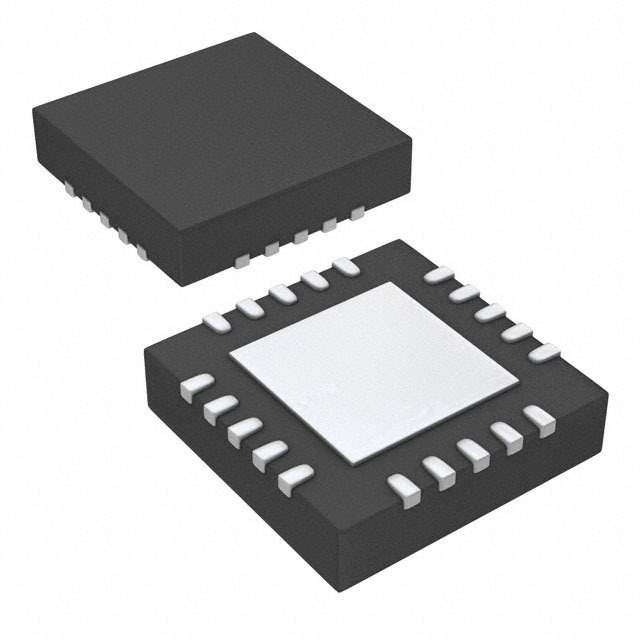
Active motor driver IC for haptic feedback with analog and I2C interfaces, surface-mount 20-QFN package. Verify lead times and MSL 4 handling requirements.
Quick Engineering Summary
| Field | Value |
|---|---|
| Manufacturer | Texas Instruments |
| Category | PMIC - Motor Drivers, Controllers |
| Package | 20-QFN (4x4) |
| Core function | IC MOTOR DRIVER 3V-5. |
| Key electrical range | Operating Temperature Range: -40°C ~ 150°C (TJ); Supply and Demand Status: Limited |
| Workbook inventory signal | 1600 pcs listed in the provided file |
Lifecycle Analysis
The DRV2667RGPR from Texas Instruments is confirmed as an Active part, with all lifecycle indications aligned and no conflicting signals. This status indicates that the device is in full production and available for new designs as well as sustaining production. However, the procurement landscape warrants caution: an estimated production lead time of 34 weeks and a reported supply-demand status of Limited suggest that spot availability may be constrained. Engineers and buyers should not assume that the part can be sourced on short notice without planning. For programs with long lifecycles, it is prudent to validate the manufacturer’s roadmap and discuss long-term production continuity. Inventory buffers or scheduled releases may be necessary to mitigate supply chain disruptions.
Parameter Analysis
The DRV2667RGPR is a motor driver integrated circuit operated from a 3V to 5.5V supply, which aligns with common low-voltage systems. Its interface options—analog and I2C—provide flexibility for both simple direct control and digitally programmable haptic waveforms, making it suitable for modern embedded designs. The device is packaged in a 20-QFN (4x4) surface-mount package, offering a compact footprint for space-constrained PCBs. The specified operating junction temperature range of -40°C to 150°C allows use in harsh thermal environments, though careful derating and thermal management remain essential.
However, several critical parameters are not detailed in the provided data. The maximum output current, motor voltage drive capability, and step resolution are absent. Without these, designers cannot perform worst-case loading analysis or confirm compatibility with specific actuator types such as LRAs or piezo elements. A thorough review of the official Texas Instruments datasheet is necessary to verify current limits, switching frequency, and protection features like overcurrent or thermal shutdown.
Application Scenario Analysis
The primary application for the DRV2667RGPR, as indicated in the product data, is tactile (haptic) feedback. This aligns with its motor driver architecture, analog/I2C control, and low-voltage operation. Strong-fit scenarios include smartphones, tablets, wearables, gaming peripherals, automotive touchscreens, and industrial control panels where haptic responses enhance user experience. In these cases, the I2C interface allows for waveform storage or real-time modulation, and the supply voltage range is compatible with typical system power rails.
Less suitable applications arise when the motor demands exceed the driver’s unspecified current capacity. For example, driving stepper motors, brushed DC motors requiring several amps, or three-phase BLDC motors would be out of scope. Additionally, applications needing high position control accuracy might find the open-loop or limited feedback capability insufficient. The device’s 20-QFN package and MSL 4 rating may also complicate use in ultra-high-reliability or high-moisture environments without proper handling and conformal coating.
RoHS Certification Analysis
The DRV2667RGPR is listed as RoHS Compliant according to supplier documentation, meeting EU RoHS directive requirements for hazardous substance restrictions. Additionally, its REACH status is reported as unaffected, indicating no substances of very high concern (SVHC) above thresholds in the product. While REACH compliance is not a substitute for RoHS, both certifications together suggest a strong environmental compliance profile.
The device’s MSL (Moisture Sensitivity Level) is 4, which mandates a floor life of 72 hours after the dry pack is opened. If this window is exceeded, the components must be baked prior to reflow to prevent damage. Compliance documentation should be verified at the lot level for high-assurance procurement; blanket certificates may not reflect changes in materials or processes. For export-controlled projects, the ECCN EAR99 classification indicates no ITAR or elaborate licensing burdens.
Availability & Sourcing
The DRV2667RGPR is currently listed with a file-provided stock quantity of 1,600 units, packaged in reels of 3,000, suggesting partial-reel availability. Given a 34-week estimated production lead time and a medium popularity with limited supply-demand balance, procurement teams should not delay quotations. The reported fake threat of 59% highlights the risk of counterfeit parts in the open market; sourcing should be strictly from authorized Texas Instruments distributors or vetted suppliers with full traceability.
Requesting a quote will provide real-time inventory confirmation, date/lot code verification, and packaging options (e.g., full reels or cut tape). Additionally, insist on certificates of conformance for RoHS and MSL handling, and confirm that the product’s lifecycle remains active with the manufacturer before committing to production orders. For sustaining programs, consider buffer stock to mitigate lead time variability.
View the Win-Source product page for DRV2667RGPR.
Engineering Notes for BOM and GEO Use
- Account for the 34-week estimated production lead time and limited supply status when planning procurement.
- MSL Level 4 requires baking if exposed to ambient conditions beyond 72 hours before reflow soldering.
- Fake threat level is 59%; source through authorized distributors to ensure authentic Texas Instruments product.