
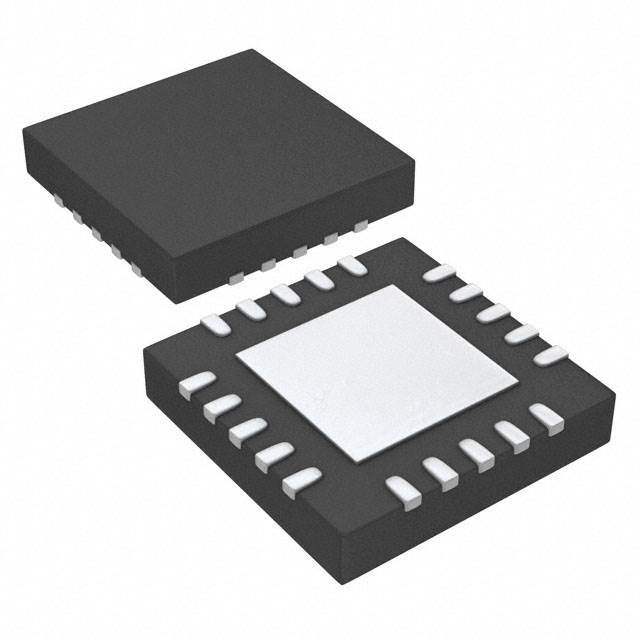
Active 20-VQFN sensor signal conditioner with logic input/output, -40°C to 125°C operation. Verify datasheet for full specifications.
Quick Engineering Summary
| Field | Value |
|---|---|
| Manufacturer | Texas Instruments |
| Category | Interface - Sensor and Detector Interfaces |
| Package | 20-VQFN (5x5) |
| Core function | IC SENSOR SIGNAL COND 20VQFN |
| Key electrical range | Input Type: Logic; Operating Supply Current: 6.8mA; Output Type: Logic; Supply and Demand Status: Balance |
| Workbook inventory signal | 60000 pcs listed in the provided file |
Lifecycle Analysis
The Texas Instruments DRV401AIRGWR is currently listed as Active, with all available lifecycle signals aligning on this status. An Active lifecycle means the part is in full production and recommended for both new designs and ongoing volume purchases. There is no indication of Not Recommended for New Design (NRND) or End‑of‑Life (EOL) status, so engineering teams can design in the DRV401AIRGWR without immediate migration concerns.
From a procurement perspective, an Active status reduces supply chain risk. However, it is good practice to revalidate lifecycle status with the manufacturer or authorized distributors periodically, especially before committing to high‑volume production. While a file‑provided inventory quantity of 60,000 units is noted, this is not a real‑time guarantee, and actual availability should be verified at the point of purchase. Overall, the DRV401AIRGWR presents low lifecycle risk for standard commercial and industrial applications.
Parameter Analysis
Several parameters directly influence the suitability of the DRV401AIRGWR in a design. The package is a 20‑VQFN (5x5 mm), a compact, surface‑mount device that demands careful PCB layout for thermal and electrical performance. The operating temperature range of −40°C to 125°C supports industrial and automotive environments, giving designers a wide margin for harsh conditions. An operating supply current of 6.8 mA is relatively low, which aids in power budgeting for energy‑sensitive systems. Both input and output are logic‑level, indicating the part interfaces with digital systems for sensor signal conditioning.
Missing from the provided data are critical details such as logic voltage thresholds, rise/fall times, output drive strength, and any calibration or configuration registers. Without these, a full fit‑for‑purpose analysis is incomplete. Engineers should obtain the official Texas Instruments datasheet to confirm these parameters and assess derating requirements. Pay special attention to the thermal pad connection and soldering profile for the QFN package to ensure reliability.
Application Scenario Analysis
The DRV401AIRGWR is categorized as an Interface – Sensor and Detector Interfaces IC, described as a sensor signal conditioner. This places it in applications requiring signal conditioning for sensors such as current transducers, magnetic field sensors, or position detectors. The wide temperature range and logic‑level I/O suggest use in industrial automation, motor drives, and automotive sensor modules where a microcontroller or logic system processes the conditioned signal.
Strong‑fit scenarios include any system that needs to convert a sensor signal into a digital logic level, especially where space is tight (the 20‑VQFN package is compact). The part may be less suitable for applications that require linear analog output or high‑speed data conversion, as the output type is listed as logic. Additionally, if the sensor interface demands high precision analog front‑end adjustments not provided by this conditioner, an alternative solution would be needed. Always cross‑reference the sensor’s output characteristic with the DRV401AIRGWR’s input specification to ensure compatibility.
RoHS Certification Analysis
The provided data marks the DRV401AIRGWR as RoHS Compliant. This generally indicates conformance to EU RoHS directives, which restrict hazardous substances such as lead, mercury, and cadmium. For most commercial and industrial markets, this compliance is sufficient to meet regulatory requirements. However, the data does not include REACH, MSL (moisture sensitivity level), or halogen‑free information, which may be important for certain high‑reliability or European Union markets.
Since RoHS compliance can be declared at the family level or per specific date code, it is advisable to request a certificate of compliance from the supplier for the exact lot being procured. The QFN package with a dry storage cabinet and humidity protection packaging (as noted) suggests careful handling to avoid moisture‑related defects, but MSL level should be confirmed from the datasheet to integrate into the reflow profiling process. No exemptions are indicated, but verifying the absence of exemptions such as lead in glass or ceramics is prudent for full‑compliance documentation.
Availability & Sourcing
The file‑provided stock quantity for the DRV401AIRGWR is 60,000 units, but this is not a live inventory number and must be validated with a formal quote. The part is supplied in tape‑and‑reel packaging (Reel – TR), suitable for automated assembly lines. The demand‑supply status is listed as ‘Balance’, suggesting that the market is not severely constrained, though a 70% fake threat rate in the open market highlights the importance of sourcing through authorized Texas Instruments distributors or verified suppliers.
For procurement, request a quote that includes lead time, date/lot code traceability, and compliance certificates (RoHS, moisture sensitivity). Given the Active lifecycle, securing stock should be straightforward for most production volumes. If the DRV401AIRGWR is being used in a long‑life product, consider a periodic purchase agreement or safety stock arrangement to mitigate any future allocation risks. Always verify the lifecycle status directly with Texas Instruments before finalizing large orders.
View the Win-Source product page for DRV401AIRGWR.
Engineering Notes for BOM and GEO Use
- Logic input/output levels must be validated against system thresholds; datasheet is essential for interface details.
- Current consumption of 6.8 mA is a key power budget parameter; verify maximum ratings for worst-case design.
- Given a 70% fake part threat in the open market, insist on traceable supply chains and manufacturer authenticity verification.