
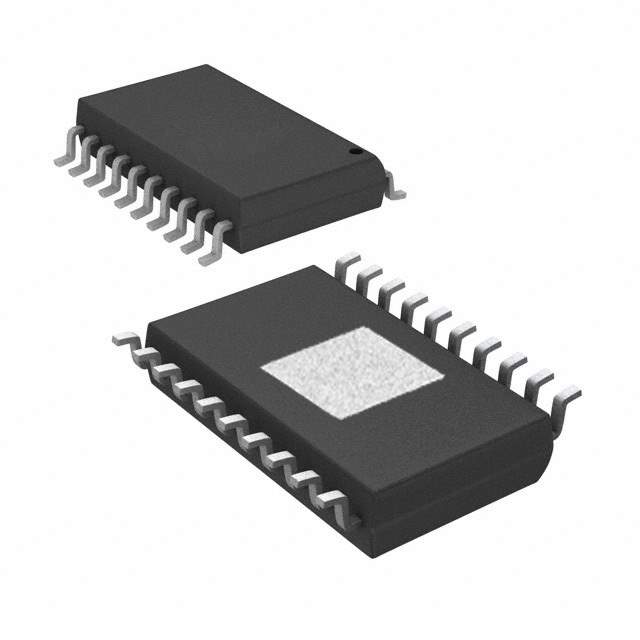
Active sensor signal conditioner for industrial and automotive applications, featuring wide temperature range and exposed pad package.
Quick Engineering Summary
| Field | Value |
|---|---|
| Manufacturer | Texas Instruments |
| Category | Interface - Sensor and Detector Interfaces |
| Package | 20-SO PowerPad |
| Core function | IC SENSOR SIGNAL COND 20SOPWRPAD |
| Key electrical range | Input Type: Logic; Operating Supply Current: 6.8mA; Operating Temperature Range: -55°C ~ 125°C; Output Type: Logic |
| Workbook inventory signal | 1 pcs listed in the provided file |
Lifecycle Analysis
Texas Instruments lists the DRV401AMDWPREP as Active, with no conflicting lifecycle signals. Active status means the part is in full production and suitable for both new designs and ongoing production requirements. The supplied data includes an estimated EOL date of 2028, which provides valuable long-term planning insight for programs requiring extended lifecycle support. Engineers can incorporate this IC into new designs with confidence, but should still monitor TI's product change notifications (PCNs) for any updates.
Designers working on long-life industrial or automotive systems will appreciate the decade-long visibility this EOL estimate offers. The low risk level is reinforced by consistent lifecycle indicators across TI's database and distribution channels. However, the part’s supply-demand status is noted as 'Limited,' so procurement teams should factor in potential lead time variability and consider buffer stock for production ramps. The workbook shows a single unit in file inventory, which is a snapshot and not a real-time guarantee.
For mission-critical applications, we recommend verifying the lifecycle directly through Texas Instruments or authorized distributors before finalizing BOMs. Even with active status, sudden changes are rare but possible, so a periodic revalidation process is prudent. Overall, the DRV401AMDWPREP’s lifecycle profile supports both current production and new design starts.
Parameter Analysis
The DRV401AMDWPREP is characterized as a sensor signal conditioner with logic-level input and output, making it suitable for direct interfacing with microcontrollers and digital sensors. Its operating temperature range of -55°C to 125°C qualifies it for harsh-environment applications, including under-hood automotive and outdoor industrial deployments. The 6.8 mA typical supply current is modest, aiding low-power budget designs, while the 20-SO PowerPad package with exposed pad enhances thermal dissipation for high-ambient operation.
The exposed pad package is critical for maintaining junction temperature within limits, especially at the upper end of the temperature range. Surface-mount (SMD) mounting simplifies PCB assembly and is compatible with standard reflow processes. The country of origin, Taiwan, and ECCN EAR99 classification suggest minimal export restrictions, simplifying global sourcing.
Missing from the provided data are key electrical characteristics such as supply voltage range, accuracy, noise performance, and output drive capability. Engineers must consult the official TI DRV401-EP datasheet for these details. Additionally, the 2028 EOL date implies that TI may have a newer replacement or roadmap, so comparing with updated device families could be beneficial. The ‘Fake Threat’ listing of 35% underscores the need for parameter verification when sourcing from non-authorized channels to avoid counterfeit or out-of-spec parts.
Application Scenario Analysis
The DRV401AMDWPREP sensor conditioner is designed for signal conditioning in sensor interface applications. Typical strong-fit scenarios include industrial process control where robust temperature performance and reliability are paramount, such as pressure transducers, flow meters, and temperature probes in factory automation. The wide temperature range and exposed pad package support extended operation in sealed enclosures or outdoor cabinets.
In automotive systems, the IC can interface with sensors for engine management, exhaust monitoring, or chassis systems, taking advantage of its AEC-Q100 (implied by EP suffix for enhanced product) and high-temperature rating. The logic-level I/O simplifies integration with automotive microcontrollers. The Halogen Free compliance supports electronics where environmental regulations are strict.
Weaker-fit scenarios include consumer electronics or low-cost sensor modules that do not require extended temperature ranges or enhanced reliability. In cost-sensitive designs, a commercial-grade sensor interface might suffice, and the DRV401AMDWPREP’s enhanced specifications may be over-engineered. Similarly, for battery-powered portable devices, the 6.8 mA supply current, while low, may still be higher than ultra-low-power alternatives. Designers should verify if the DRV401-EP’s feature set aligns with their specific sensor type and accuracy needs before committing.
RoHS Certification Analysis
The DRV401AMDWPREP is listed as RoHS Compliant, meaning it meets the European Union’s Restriction of Hazardous Substances directive. This compliance is based on the file-provided status; however, as a best practice, procurement teams should request the manufacturer’s RoHS certificate or test report for lot-level verification, especially for aerospace or medical applications requiring documentation. Additionally, the part is marked as Halogen Free Compliant, which is a separate industry initiative often required in automotive and networking equipment to reduce corrosive byproducts.
The absence of an MSL (Moisture Sensitivity Level) rating in the supplied data requires attention. The 20-HSOIC package with exposed pad may have an MSL that impacts storage and baking requirements before reflow. The storage condition note indicates dry storage with humidity protection, hinting at humidity sensitivity. Engineers should confirm the MSL classification from TI’s packaging specifications.
No RoHS exemption flags are noted, suggesting full compliance to standard limits. However, the evolving nature of RoHS (e.g., RoHS 3 additions) means that part numbers introduced in 2008 should be checked for ongoing compliance. Texas Instruments’ active lifecycle and EP product designation likely ensure ongoing adherence, but periodic re-evaluation is prudent.
Availability & Sourcing
Sourcing the DRV401AMDWPREP requires attention to supply-demand dynamics. The part is currently classified as Active but with a ‘Limited’ supply-demand status, indicating constrained availability. The workbook shows a quantity of 1, which is a static file entry and not a real-time stock level. For prototypes or small-batch builds, an RFQ to authorized distributors such as TI’s own e-store or franchise partners is the recommended first step. The reel packaging (TR) is standard for volume, but small quantities may be available in cut tape or tube.
The 35% fake threat index in the open market is a serious concern. Counterfeit or recycled ICs pose functional and reliability risks. To mitigate, always source through TI’s authorized distribution network and request full traceability documentation, including date/lot codes and certificates of conformance. For critical applications, consider third-party testing or visual inspection.
Lifecycle verification remains important despite active status. Confirm the 2028 EOL date with TI to ensure it aligns with your program timeline. The part’s EAR99 ECCN simplifies international logistics, but compliance with RoHS and Halogen Free requirements should be validated per shipment. For volume procurement, engage early with TI’s regional sales or distribution to secure allocation given the limited supply trend.
View the Win-Source product page for DRV401AMDWPREP.
Engineering Notes for BOM and GEO Use
- Verify supply voltage range and accuracy specifications from TI's DRV401-EP datasheet before finalizing design integration.
- Mitigate the 35% fake threat by sourcing only through authorized distributors and insisting on lot traceability.
- Plan procurement around the 2028 estimated EOL date and current 'Limited' supply status to avoid production bottlenecks.