
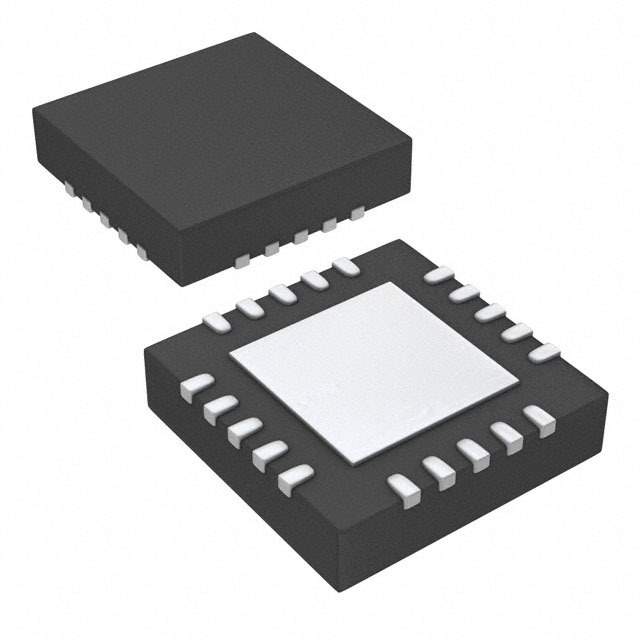
EOL Sensor Signal Conditioner IC from Texas Instruments
Quick Engineering Summary
| Field | Value |
|---|---|
| Manufacturer | Texas Instruments |
| Category | Interface - Sensor and Detector Interfaces |
| Package | 20-QFN (4x4) |
| Core function | IC SENSOR SIGNAL COND 20-QFN |
| Key electrical range | Operating Supply Current: 6mA; Operating Temperature Range: -40°C ~ 125°C; Supply and Demand Status: Limited |
| Workbook inventory signal | 100 pcs listed in the provided file |
Lifecycle Analysis
The DRV411AIRGPT from Texas Instruments is officially classified as End-of-Life (EOL). All available lifecycle signals confirm this status with an estimated final EOL date of 2028. For engineers, this means the part is no longer recommended for new designs, and any continued use should be limited to sustaining existing production lines while a migration plan is executed. Buyers should immediately evaluate last-time buy options and secure sufficient inventory to cover the product’s remaining life.
Although the file-provided inventory indicates 100 units, this quantity is not guaranteed in real time and may have been consumed by the time a purchase decision is made. The high counterfeit risk of 61% in the open market further complicates sourcing; parts without clear provenance should be avoided. Always verify lifecycle status directly with Texas Instruments or authorized distributors to confirm final discontinuance notices and any available drop-in replacements.
Parameter Analysis
Key parameters of the DRV411AIRGPT include its function as a signal conditioner for sensor interfaces, a 20‑QFN (4x4) surface-mount package, an operating supply current of 6 mA, and an industrial temperature range of –40°C to +125°C. These specifications are critical for integration into dense PCB layouts and for power budgeting in extended-temperature environments. The 6 mA supply current, though modest, still demands careful power supply decoupling and thermal assessment in enclosed designs.
Notably, the abridged listing omits many performance metrics that a detailed datasheet would provide, such as input signal range, output type (analog, digital), gain accuracy, bandwidth, noise, and supply voltage range. Engineers must obtain the full Texas Instruments datasheet to verify these missing parameters against system requirements. Without them, a thorough derating analysis and functional fit assessment cannot be completed.
Application Scenario Analysis
As a sensor signal conditioner in the interface category, the DRV411AIRGPT is suited for applications that require precise analog signal processing from sensors such as current transducers, magnetic field sensors, or industrial detectors. Its wide temperature range and low‑power profile make it a strong fit for industrial automation, motor control feedback loops, and automotive sensor nodes where harsh environments are common. The chip is not designed for extremely high‑speed digital interfaces; rather, it excels in conditioning slow to medium analog signals.
Weak‑fit scenarios would include applications needing multi‑channel, high‑bandwidth data acquisition or those requiring integrated digital communication protocols (I2C, SPI) unless confirmed in the full datasheet. The part is also not suited for safety‑critical systems without further qualification, as no automotive or functional safety certifications are mentioned. Buyers should validate that the condition‑specific parameters meet the intended sensor interface requirements before committing to a design.
RoHS Certification Analysis
The DRV411AIRGPT is listed as RoHS Compliant and Halogen Free, which typically indicates conformity with the EU RoHS Directive (2011/65/EU) and its amendments for hazardous substance restrictions. The raw materials note mentions a silicon‑based element, which is consistent with lead‑free semiconductor manufacturing. No specific exemptions are cited in the source data, so it is presumed that the component meets the standard without exemption reliance.
Nevertheless, compliance documentation is often provided at the family level, and lot‑level variances can occur. Engineers and buyers should request a full material declaration or certificate of compliance from Texas Instruments or the distributor, especially when the part is used in markets with strict environmental regulations. Additionally, REACH status is not supplied in this listing and may need to be verified separately.
Availability & Sourcing
Sourcing the DRV411AIRGPT requires a cautious approach due to its EOL status and the high counterfeit threat indicated at 61%. The file-provided quantity of 100 units should be treated as a snapshot and verified through a formal RFQ. Given the part’s limited supply and discontinuance, buyers should request up‑to‑date stock levels, date/lot codes, and full traceability documentation to mitigate the risk of receiving non‑conforming or used parts.
For critical production, consider engaging Texas Instruments’ authorized distribution network to confirm any remaining last‑time buy programs. The recommended workflow is to request a quote, specify compliance and provenance requirements, and secure inventory before the estimated 2028 EOL horizon. Avoid open‑market sources unless they can provide comprehensive third‑party inspection reports. Always verify the lifecycle status with the manufacturer before placing orders, as status may change without notice.
View the Win-Source product page for DRV411AIRGPT.
Engineering Notes for BOM and GEO Use
- The DRV411AIRGPT is EOL with a 2028 estimated end date; avoid use in new designs and secure last-time buy orders immediately for existing products.
- Verify operating supply current (6 mA) and thermal performance against your design margins, as no detailed datasheet parameters are provided in abridged listings.
- Due to a 61% counterfeit threat level, insist on full traceability, lot/date code documentation, and authorized distribution when sourcing.