
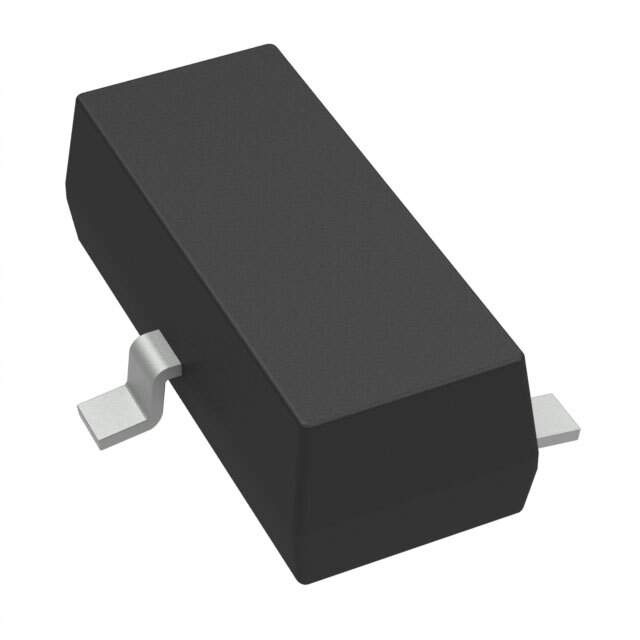
EOL Hall-effect Latch, SOT-23-3, 2.7V–38V, South Pole
Quick Engineering Summary
| Field | Value |
|---|---|
| Manufacturer | Texas Instruments |
| Category | Magnetic Sensors - Switches (Solid State) |
| Package | Not available in supplied data |
| Core function | MAGNETIC SWITCH LATCH SOT23-3 |
| Key electrical range | Current - Output (Max): 30mA; Current - Supply (Max): 2.7mA (Typ); Output Type: Open Drain; Supply and Demand Status: Balance |
| Workbook inventory signal | 85500 pcs listed in the provided file |
Lifecycle Analysis
The DRV5013BCQDBZT is officially End-of-Life (EOL) according to Texas Instruments. All lifecycle signals in the supplied data agree, and the risk level is high. EOL means the part is no longer recommended for new product designs. For sustaining production, careful inventory management is required because the manufacturer may have already closed the last-time-buy window.
File-provided inventory data indicates a workbook quantity of 85,500 units, but this is not real‑time and may reflect aggregated stock across multiple warehouses. Engineers and buyers should treat this as a snapshot only. Before relying on any available stock, request a current inventory confirmation and verify the manufacturer’s discontinuation notice to understand lead‑time limitations.
Given the high counterfeit threat (62 per cent), use authorised distribution channels and insist on traceability documentation. Migration planning is essential: identify an active replacement sensor that matches the magnetic latch performance and wide operating voltage range to avoid production gaps.
Parameter Analysis
Key parameters for the DRV5013BCQDBZT centre on its wide supply voltage range of 2.7 V to 38 V and a robust operating temperature from −40°C to 125°C. This breadth makes it suitable for both 3.3 V/5 V microcontroller interfaces and higher‑voltage industrial or automotive rails without external regulation. The open‑drain output requires a pull‑up resistor, so ensure the voltage on the output pin does not exceed the device’s rating during system design.
The magnetic switching thresholds are defined as 18 mT trip and −18 mT release, with south‑pole polarisation. This latch behaviour holds the output state until the opposite magnetic polarity is applied, which is typical for brushless DC motor commutation and position sensing. Temperature compensation helps keep these thresholds stable over the full operating range, reducing the need for in‑situ calibration.
Important missing data in the provided specifications includes propagation delay, output rise/fall times, and start‑up behaviour. These timing parameters can be critical in high‑speed switching applications. The maximum output sink current is 30 mA, which may constrain the drive of heavy capacitive loads or relays. Designers should consult the complete TI datasheet for mechanical dimensions, PCB layout guidelines, and application curves before finalising layouts.
Application Scenario Analysis
This Hall‑effect latch is optimised for non‑contact magnetic sensing where south‑pole activation and latching are required. Typical strong‑fit applications include brushless DC motor commutation, rotary position sensing, flow meters, and open/close detection in automotive and industrial environments. The wide supply voltage and temperature profile allow direct connection to battery‑powered systems up to 38 V, making it a good fit for power‑tool motor controls or under‑hood automotive sensors.
The open‑drain output is well‑suited to wired‑OR bus configurations or level‑shifting to different voltage domains via a pull‑up resistor. Its temperature‑compensated design reduces drift, which is advantageous for precision position sensing in variable temperature chambers or outdoor equipment.
Weak‑fit scenarios include applications that require north‑pole or omnipolar detection, as this device responds only to a south pole. High‑speed switching environments (e.g., fast‑rotating motors above a few kHz) should be evaluated against the unlisted response times. Additionally, battery‑powered devices with tight energy budgets may find the 2.7 mA typical supply current too high; verify if the actual consumption under your operating conditions meets power targets. Always prototype with the intended magnetic circuit to confirm reliable switching levels.
RoHS Certification Analysis
The DRV5013BCQDBZT carries a RoHS Compliant status in the source data. While this is a positive indicator, the exact RoHS directive (e.g., EU 2015/863 or earlier) is not specified. Because the part is EOL, its original compliance may have been certified under an older version of the regulation. Engineers should request the manufacturer’s Declaration of Conformity to determine whether the device meets current RoHS 3 requirements.
No exemptions are noted in the supplied specifications, but some Hall‑effect sensors may contain lead in high‑temperature solder or other exempt materials. Confirm exemption applicability directly with Texas Instruments if your end product requires full RoHS 3 adherence without exemptions. REACH status is not included; RoHS compliance does not automatically imply REACH SVHC absence, so segregate those requirements in your compliance checklist.
When procuring remaining EOL stock, obtain lot‑specific compliance certificates from the distributor. Counterfeit parts may carry falsified RoHS labels, especially on a part with a 62 per cent fake threat estimate. Traceability back to TI‑authorised sources is the safest approach.
Availability & Sourcing
As an EOL device, the DRV5013BCQDBZT has limited and uncertain market availability. The file‑provided workbook quantity of 85,500 is not a guarantee of live stock; it represents aggregated pipeline data and may include orders already allocated or stock in non‑traceable locations. A formal request for quote (RFQ) is essential to confirm actual inventory, packaging (tape and reel), and date/lot codes.
Given the high counterfeit threat rating of 62 per cent, sourcing from unauthorised vendors is risky. Buyers should require full traceability and consider third‑party testing for visual, electrical, and RoHS verification. The storage condition listed recommends a dry storage cabinet with humidity protection – ensure this is maintained for long‑term inventory.
Procurement teams should also reach out to Texas Instruments directly to understand whether a last‑time‑buy programme is still active. For any new designs, select an active alternative from the DRV501x family or a functionally equivalent magnetic latch sensor. If sustaining legacy equipment is the only requirement, prioritise securing enough units to cover the projected production lifetime and evaluate migration timing carefully.
View the Win-Source product page for DRV5013BCQDBZT.
Engineering Notes for BOM and GEO Use
- Verify EOL status directly with Texas Instruments and confirm any last-time-buy window before committing this part to new production runs.
- Secure lot-specific RoHS certificates and date codes to minimise counterfeit exposure, especially given a reported 62% fake threat in the open market.
- Evaluate active DRV5013 family variants or pin‑compatible replacements for new designs requiring Hall‑latch functionality.