
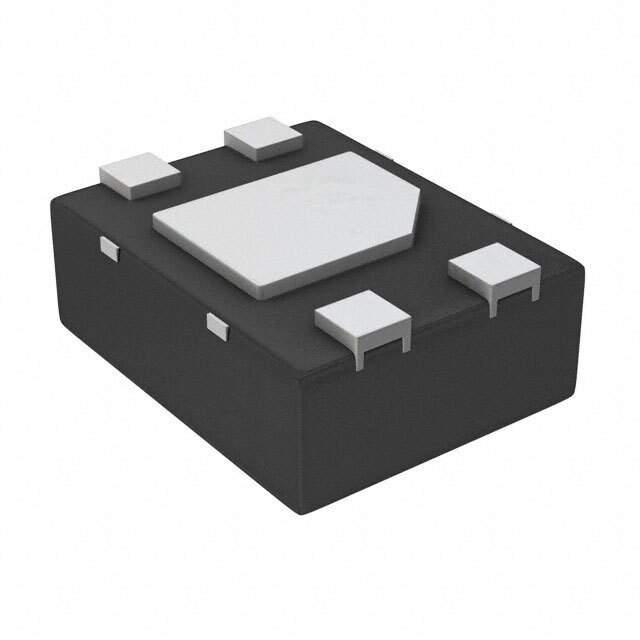
End-of-Life Unipolar Hall-Effect Switch – Last-Time Buy and Migration Considerations
Quick Engineering Summary
| Field | Value |
|---|---|
| Manufacturer | Texas Instruments |
| Category | Magnetic Sensors - Switches (Solid State) |
| Package | Tape & Reel |
| Core function | MAGNETIC SWITCH UNIPOLAR 4X2SON |
| Key electrical range | Current - Output (Max): 5mA; Current - Supply (Max): 3.5µA; Output Type: Push-Pull; Temperature Range - Operating: -40°C ~ 85°C |
| Workbook inventory signal | 91300 pcs listed in the provided file |
Lifecycle Analysis
The DRV5032FDDMRT is classified as End-of-Life (EOL) with all available signals in agreement. This is a clear and irreversible stage of the product lifecycle where semiconductor manufacturers cease taking new orders and eventually stop all production support. For engineering teams, EOL status carries a high procurement risk and should trigger immediate action. New designs must not incorporate this part; the focus shifts entirely to managing existing production commitments or field returns.
Sustaining programs that rely on the DRV5032FDDMRT need to conduct a thorough bill-of-materials health check. The first step is to verify the official discontinuation notice from Texas Instruments, specifically looking for last-time-buy (LTB) dates and final shipment dates. Even if a distributor inventory snapshot shows 91,300 units (as this sourcing data does), those numbers are not live and may be exhausted or reserved. Supply chain teams should cross‑reference authorized distributors and, where necessary, negotiate with independent sources that can provide full traceability and authentication against the risk of counterfeit devices (reported open‑market fake threat of 75%).
Migration planning is critical. TI’s DRV5032 family may offer pin‑compatible or functionally similar successors, but no automatic drop‑in replacements are asserted here. Engineers should compare magnetic operate/release points, supply current, temperature range, and output configuration before locking in an alternate part. If the DRV5032FDDMRT is currently in production equipment, treat every procurement as a strategic buy with mandatory lifecycle revalidation from the manufacturer or an authorized representative.
Parameter Analysis
The DRV5032FDDMRT is a unipolar Hall-effect switch, meaning its output changes state in the presence of a magnetic pole of a specific polarity (both north and south, per the polarization spec) and releases when the field is removed. The listed trip threshold of ±4.8 mT and release of ±3 mT yield a typical hysteresis of approximately 1.8 mT, which is essential for preventing output chatter in the presence of mechanical vibration or magnetic noise. Engineers must confirm that the magnet they select generates sufficient flux density at the sensor face across all operating gaps and temperatures.
Supply voltage spans 1.65 V to 5.5 V, making the device suitable for battery‑powered and low‑voltage logic systems. The maximum supply current of 3.5 µA is outstanding for always‑on sensing, allowing years of operation from a coin cell. The output is push‑pull, so an external pull‑up resistor is not required; the output can source up to 5 mA, which is adequate for most microcontroller GPIO inputs. The operating temperature range of –40 °C to +85 °C covers commercial and light‑industrial environments, but designs operating near the upper limit should apply thermal derating and confirm that the magnetic performance remains within tolerance, as Hall‑effect sensitivity often drifts with temperature.
Several parameters critical for detailed design review are not supplied in this data slice. The datasheet should be consulted for: typical hysteresis curves over temperature, power‑on time, output rise and fall times, response time to a magnetic field change, ESD rating (HBM/CDM), and any magnetic field limits that could damage the sensor. Additionally, the 4‑X2SON package’s thermal resistance and soldering profile recommendations are important for reflow manufacturing. Without these values, qualification for high‑reliability applications is premature.
Application Scenario Analysis
The DRV5032FDDMRT’s combination of low power, small footprint, and unipolar switching suits it to compact, battery‑operated equipment that senses proximity, open/close states, or linear position. Typical strong‑fit scenarios include: detecting the presence of a magnet in portable medical devices, tamper detection in smart meters, cover‑open sensing in laptops or handheld terminals, and contactless activation in consumer electronics where power consumption must be minimized. The wide supply range allows direct connection to a 3 V coin cell or a 5 V rail without regulation.
In industrial and automotive applications, the scenario fit weakens. The 85 °C maximum operating temperature excludes many under‑hood or high‑ambient factory floor applications. The unipolar characteristic means the switch only responds to one magnetic polarity, making it less appropriate for latching systems or rotating shaft sensing that requires alternating poles. Environments with strong magnetic noise or nearby motors may cause spurious triggering unless software debouncing or shielding is implemented, but the device itself lacks built‑in filtering.
Low‑power IoT nodes, wireless sensors for door/window status, and battery‑backed alarm systems are especially well‑aligned. The small 4‑X2SON package (1.1x1.4 mm) and push‑pull output simplify board layout and reduce bill of materials by eliminating external resistors. Nevertheless, because the part is EOL, any new product development should transition to an active‑production equivalent; this analysis only guides qualification of remaining inventory for sustaining existing platforms.
RoHS Certification Analysis
The supplied compliance data for the DRV5032FDDMRT shows RoHS Compliant status and REACH Unaffected status, accompanied by an MSL Level 1 (Unlimited) rating. These designations indicate that Texas Instruments has assessed the device according to the EU RoHS directive (likely 2011/65/EU, or the stricter RoHS 3 2015/863) and found no restricted substances above threshold limits. REACH unaffected further suggests that substances of very high concern (SVHC) are not intentionally added.
MSL 1 is the least restrictive moisture sensitivity level, meaning the device can be stored and processed without special dry‑packing precautions under normal factory conditions. This simplifies handling for contract manufacturers and reduces the risk of moisture‑related reflow damage. However, even with MSL 1, proper ESD (Electrostatic Discharge) controls remain mandatory for a magnetic sensor of this type.
It is important to distinguish between family‑level certification and lot‑level documentation. A “RoHS Compliant” label on a datasheet or distributor website may refer to the product family and does not guarantee that every specific production batch meets all regional regulations, including future amendments. For safety‑critical or export‑controlled applications, procurement should request a Certificate of Compliance (CoC) for each received lot, explicitly listing RoHS and REACH conformance. No exemptions (e.g., lead in glass or high‑temperature solder) are noted in the source data, but this absence should be verified against the full material declaration available from TI.
Availability & Sourcing
Procuring the DRV5032FDDMRT now requires a focused, risk‑managed approach because of its EOL lifecycle. Begin by requesting a formal quote from authorized distributors or trusted independent sources. Any file‑provided quantity (such as the 91,300 units in this data) must be treated as a non‑binding snapshot; actual available stock changes daily. Always require a physical stock confirmation before issuing a purchase order.
Insist on full traceability documentation: date codes, lot codes, country of origin, and evidence that the parts were stored under proper conditions. The package is Tape & Reel with a standard package quantity of 250, so verify that partial reels or full reels match your production batch needs. Given an open‑market fake threat of 75%, authentication becomes crucial—consider third‑party testing or sourcing only through suppliers that provide manufacturer‑certified product.
Sustaining production buyers should negotiate for a one‑time buy that covers projected lifetime requirements, including field service spares. Combine this purchase with an active migration plan to a recommended replacement. For any remaining DRV5032FDDMRT inventory intended for new design verification, treat it as non‑production material only. The sourcing workflow should include: RFQ → stock confirmation → compliance documentation review → sample inspection → migration validation. This structured process minimizes the disruption caused by an EOL semiconductor.
View the Win-Source product page for DRV5032FDDMRT.
Engineering Notes for BOM and GEO Use
- DRV5032FDDMRT is EOL; prioritize qualifying a replacement such as TI’s DRV5032FA or a pin-compatible alternative to prevent production disruptions.
- The ultra-low supply current (3.5µA max) and wide voltage range make it ideal for battery-powered designs, but verify magnetic threshold margins with your magnet selection.
- When sourcing remaining inventory, request date/lot codes, full RoHS documentation, and MSL verification; the file-indicated 91k units are not guaranteed.