
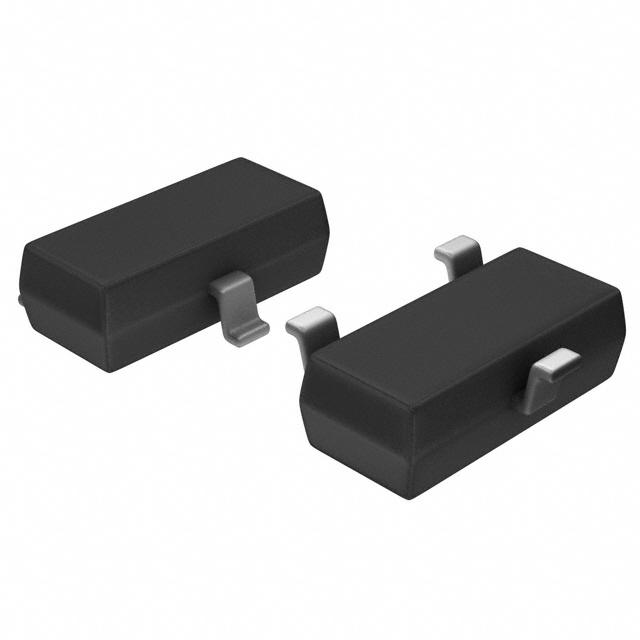
End-of-life automotive-grade analog voltage Hall effect sensor from Texas Instruments. Verify stock and plan migration.
Quick Engineering Summary
| Field | Value |
|---|---|
| Manufacturer | Texas Instruments |
| Category | Magnetic Sensors - Linear, Compass (ICs) |
| Package | SOT-23-3 |
| Core function | SEN HALL EFFT ANLG VOLT SOT23-3 |
| Key electrical range | Current - Output (Max): 2.3mA; Current - Supply (Max): 3.6mA; Output Type: Analog Voltage; Supply and Demand Status: Balance |
| Workbook inventory signal | 6000 pcs listed in the provided file |
Lifecycle Analysis
The DRV5053CAEDBZTQ1 from Texas Instruments carries an official end-of-life (EOL) status, which means the manufacturer has discontinued production and is no longer recommending this part for new designs. For existing applications, sustaining procurement requires active inventory management and verification of available stock. A conflicting specification note lists the status as ‘Active,’ but the primary lifecycle signal from the manufacturer indicates EOL, so engineers should treat the part as deprecated and prioritize migration to a replacement. Given this conflict, it is critical to revalidate the lifecycle status directly with Texas Instruments before committing to new production runs.
According to the provided inventory file, approximately 6000 units are on hand, though this is a static snapshot and not a guarantee of real‑time availability. Buyers should request current stock quotes and consider last‑time‑buy (LTB) opportunities if still available from authorized distribution.
With an EOL status and a 56% fake threat rate in the open market, the procurement risk is high. Relying on unauthorized sources could lead to counterfeit or substandard parts. Engineering teams should accelerate redesign to use an active‑lifecycle alternative and secure sufficient stock for bridge production while the transition is underway.
Parameter Analysis
The DRV5053CAEDBZTQ1 is a single‑axis linear Hall‑effect sensor with an analog voltage output, offering a sensing range of ±35 mT. Its supply voltage range of 2.7 V to 38 V and operating temperature range of −40 °C to 150 °C make it suitable for harsh environments, particularly automotive under‑hood applications where wide‑input tolerance and thermal headroom are critical. The 20 kHz bandwidth supports moderate‑speed magnetic field measurements, and the temperature‑compensated output helps maintain stability without external calibration.
Key missing parameters that designers must verify in TI’s datasheet include the quiescent output voltage, sensitivity (mV/mT), linearity error, and noise density. These directly impact resolution and accuracy in feedback loops such as motor commutation or position sensing. Additionally, the package’s SOT‑23‑3 footprint allows compact layouts, but thermal dissipation from the 3.6 mA max supply current is minimal and unlikely to require special derating.
For integration, engineers should confirm that the analog output swing and output current (2.3 mA max) are compatible with the ADC input stage of the microcontroller. The automotive‑grade qualification implied by the AEC‑Q100 label (not fully confirmed in provided data) should be validated with a certificate if the end application requires formal automotive compliance.
Application Scenario Analysis
Given its analog voltage output and linear magnetic response, the DRV5053CAEDBZTQ1 fits position and displacement sensing where a continuous analog signal is interpreted by an MCU’s ADC. Typical strong‑fit applications include throttle‑position sensors, pedal‑position detection, and linear actuator feedback in automotive and industrial automation systems. The wide supply range and high temperature tolerance also suit under‑hood and powertrain environments.
Weak‑fit scenarios involve high‑precision or high‑dynamic‑range applications requiring digital interfaces (e.g., I²C, SPI) or extremely low noise, as the sensor’s intrinsic noise floor is not specified. Applications demanding fast‑changing fields beyond 20 kHz, such as high‑speed motor commutation with thousands of RPM, may encounter bandwidth limitations. Similarly, use cases requiring multi‑axis sensing would need multiple sensors, increasing cost and board space.
The sensor’s EOL status makes it unsuitable for new platform designs, but it can still be considered for legacy system maintenance if adequate inventory is secured. Designers should evaluate next‑generation TI linear Hall sensors like the DRV5055 or DRV5056 families for drop‑in or similar functionality.
RoHS Certification Analysis
The DRV5053CAEDBZTQ1 is listed as RoHS Compliant, indicating it meets EU Directive 2011/65/EU (RoHS 2) or the more recent RoHS 3 (EU 2015/863) restricting lead, mercury, cadmium, hexavalent chromium, PBB, PBDE, and four phthalates. No exemption details are provided, so compliance is assumed at the component level. Since the manufacturer is a reputable semiconductor company, the RoHS status is typically valid for all production lots.
However, RoHS compliance is a declaration per the manufacturer’s documentation, and buyers should request the EU Declaration of Conformity or a certificate of compliance for the specific date/lot code being purchased. This is especially important for EOL parts that may have been in storage for extended periods, where documentation traceability can become fragmented. For automotive customers, additional environmental requirements such as ELV (End‑of‑Life Vehicles) directives may also apply, though not explicitly covered by the provided data.
Availability & Sourcing
The DRV5053CAEDBZTQ1 is in EOL status, so sourcing requires immediate action. The provided inventory snapshot indicates 6000 units in file, but this static figure should not be taken as live available stock. Buyers must request a quote through authorized distribution channels or brokers specializing in EOL components to verify real‑time availability and secure inventory. Given a 56% fake threat rate in the open market, verification of authenticity is critical: insist on manufacturer date/lot codes, factory‑sealed packaging, and full traceability documentation.
Ideally, purchase from Texas Instruments’ authorized distributors or recognized stockists, even if surplus. For high‑volume production needs, consider engaging with TI directly for a last‑time‑buy program if still open. Simultaneously, initiate migration to a recommended replacement to avoid future supply gaps. Request compliance certificates (RoHS, AEC‑Q100) alongside the quote to streamline incoming inspection.
Standard packaging is reel (TR) for automated assembly, and storage condition notes recommend dry packaging with humidity protection, so inspect for moisture sensitivity prior to reflow. As this is an EOL device, no new wafer production is expected, making each lot potentially the final supply. Negotiate lead times carefully and confirm that the parts are not from a rejected or reclaimed batch.
View the Win-Source product page for DRV5053CAEDBZTQ1.
Engineering Notes for BOM and GEO Use
- Treat the DRV5053CAEDBZTQ1 as end‑of‑life; the ‘Active’ specification field conflicts with official EOL status—reconfirm with TI before use.
- AEC‑Q100 qualification is implied but must be validated with a certificate for automotive compliance; verify quiescent voltage and sensitivity from the datasheet.
- Counterfeit risk is high (56% open‑market threat); source only from authorized channels with full lot traceability and request RoHS/REACH certificates.