
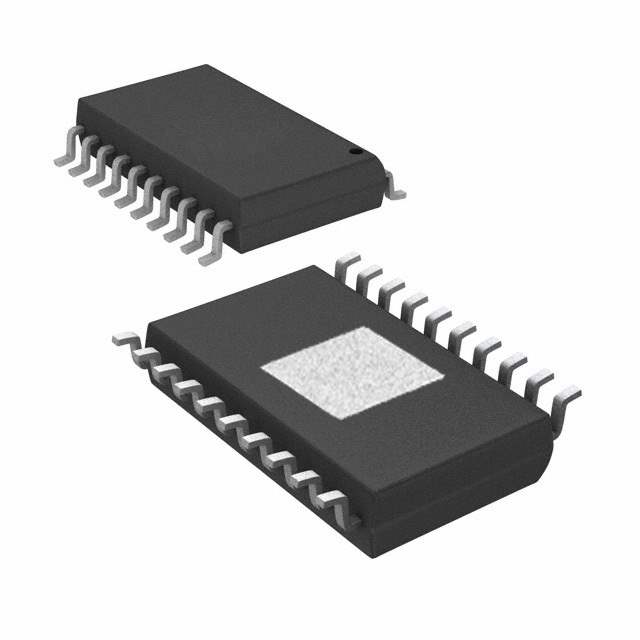
High-efficiency PWM driver for TEC applications; verify lifecycle and limited availability.
Quick Engineering Summary
| Field | Value |
|---|---|
| Manufacturer | Texas Instruments |
| Category | PMIC - Power Management - Specialized |
| Package | 20-SO PowerPad |
| Core function | IC PWM POWER DRVR HI-EFF 20SOPWR |
| Key electrical range | Operating Supply Current: 4.5mA; Supply and Demand Status: Limited; Supply Voltage - Operating: 2.7 V to 5.5 V; Temperature Range - Operating: -40°C to 85°C |
| Workbook inventory signal | 1900 pcs listed in the provided file |
Lifecycle Analysis
The DRV590DWP is officially end-of-life (EOL) according to Texas Instruments. EOL status means the component is no longer recommended for new designs and is likely in limited final production or already discontinued. Engineers and procurement teams should immediately halt any new design-ins and focus on last-time-buy (LTB) opportunities if sustaining production is required. Verify the exact EOL notice and any available last-time-buy dates directly with Texas Instruments to avoid supply disruption.
The supplied inventory file indicates around 1,900 units currently held, but this quantity is not guaranteed real-time availability. Given the high counterfeit risk (71 pct. fake threat in the open market), sourcing from authorized distribution or verified excess stock is critical. Without an active manufacturer supply, the part’s lifecycle risk is high, and allocations may be unpredictable.
For sustaining production, evaluate alternative parts or redesign options as soon as possible. Since the lifecycle signals are all aligned on EOL with no conflicts, the conservative path is to treat this part as unobtainable for future demand and secure remaining inventory only to cover immediate needs.
Parameter Analysis
The DRV590DWP operates from a supply voltage range of 2.7 V to 5.5 V, making it suitable for low-voltage portable or battery-powered thermoelectric cooler (TEC) applications. The typical operating supply current is rated at 4.5 mA, which aids in overall system power budgeting but should be cross-checked against actual load conditions and PWM frequency. The specified operating temperature range of –40°C to 85°C aligns with extended industrial environments.
A key physical specification is the 20-SO PowerPad package, which includes an exposed thermal pad for improved heat dissipation. This is essential for power drivers that may deal with moderate current loads. However, the supplied data lacks critical parameters such as maximum output current, PWM frequency range, and thermal resistance (θJA). These values are necessary for derating analysis and PCB thermal design. Engineers must refer to the original Texas Instruments datasheet for those specifications.
For qualification, verify the output drive capability matches the TEC module requirements. Also confirm that the internal control scheme (likely PWM) provides the necessary efficiency and ripple performance for the intended thermal control loop. Without the full datasheet, it is impossible to guarantee performance in a new design, so treat the part as a legacy solution requiring full re-characterization if adopted from secondary sources.
Application Scenario Analysis
The DRV590DWP is purpose-built for thermoelectric cooler (TEC) control, as indicated by its application listing. TECs are used in optoelectronics, medical instrumentation, and portable cooling systems where precise temperature regulation is needed. This IC’s PWM drive and high-efficiency design make it a strong fit for battery-operated TEC loops, such as in laser diode cooling or point-of-care diagnostic devices.
In contrast, the part is a weak fit for general-purpose motor or actuator driving, as it is specialized for TEC loads and may lack the current capacity or protection features expected in broader motor driver ICs. Additionally, newer designs requiring advanced digital control loops or integrated temperature sensing might find modern, active PMICs more suitable. The high fake threat (71%) suggests that genuine parts for legacy TEC systems are at risk of counterfeiting, making even strong-fit applications challenging to sustain without rigorous traceability.
For existing products still using the DRV590DWP, it may be feasible to maintain production through verified excess stock, but long-term viability requires migration to a recommended alternative from Texas Instruments or a functionally equivalent device. Without an exact replacement specified by the manufacturer, treat any migration as a redesign effort.
RoHS Certification Analysis
The DRV590DWP is marked as RoHS Compliant, which typically means it meets the EU RoHS Directive 2011/65/EU and its amendments, including the latest RoHS 3 (EU 2015/863) restrictions on hazardous substances. Since the part is EOL, this compliance status likely reflects the original manufacturing qualifications and may not account for any subsequent exemption expirations. For procurement, always request a current Certificate of Conformance (CoC) or full material declaration for the specific lot being purchased.
No REACH, halogen-free, or MSL ratings are provided in the available data. While RoHS compliance addresses lead and other restricted substances, REACH SVHC obligations require separate verification. For sensitive applications, verify lead-free soldering compatibility and MSL classification for the PowerPad package to avoid moisture-related assembly defects. Given the part’s age, requesting updated compliance documents from the seller is essential to ensure meeting current environmental regulations.
Availability & Sourcing
Texas Instruments has discontinued the DRV590DWP, making direct manufacturer procurement unavailable. The supplied inventory data indicates approximately 1,900 pieces held in file, but this is not a real-time guarantee and should be confirmed via RFQ. The part is packaged in tube/rail format, suitable for manual or automated assembly, and the recommended storage condition is a dry cabinet with humidity protection to preserve solderability.
Given the 71% fake threat rating and EOL status, sourcing requires stringent countermeasure verification: insist on date/lot codes, full traceability documentation, and authorized distribution pedigree. Request visual inspection and, if possible, third-party testing for authenticity. The limited supply-and-demand status signals that remaining stock may deplete quickly.
To proceed, issue an RFQ to obtain current pricing and availability, and simultaneously validate manufacturer EOL notices to confirm last-time-buy windows. For any volume beyond available stock, begin migration planning to an alternative Texas Instruments device or a functional equivalent. Do not design this part into new products, and treat any purchase as a bridge to a future redesign.
View the Win-Source product page for DRV590DWP.
Engineering Notes for BOM and GEO Use
- Verify last-time-buy dates and EOL notice from Texas Instruments before committing to production volumes.
- Due to 71% fake threat, only source with full traceability documentation and lot-code verification.
- For new designs, migrate to an active TEC driver alternative; this part is unsuitable for new products.