
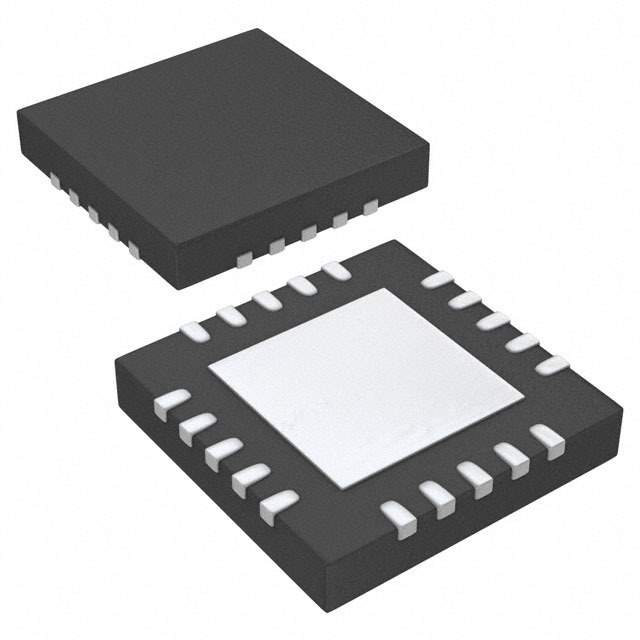
EOL stereo amplifier with class-AB, 1.8V–4.5V supply, protection features, and 20-QFN package.
Quick Engineering Summary
| Field | Value |
|---|---|
| Manufacturer | Texas Instruments |
| Category | Linear - Amplifiers - Audio |
| Package | 20-QFN (4x4) |
| Core function | IC AMP CLASS AB STEREO 20QFN |
| Key electrical range | Output Type: 2-Channel (Stereo); Supply and Demand Status: Balance; Supply Voltage - Operating: 1.8 V to 4.5 V; Temperature Range - Operating: -40°C to 85°C (TA) |
| Workbook inventory signal | 8470 pcs listed in the provided file |
Lifecycle Analysis
DRV600RTJT from Texas Instruments is an End-of-Life (EOL) part, with all supplied lifecycle signals confirming this status. For new designs, this component is not recommended; procurement should be limited to sustaining existing production. Engineers and buyers must verify the manufacturer’s official product discontinuation notice to understand last-time-buy and last-time-ship dates.
The EOL status carries a high risk for long-term availability. The file-provided workbook quantity of 8470 units may represent distributor inventory, but it is not a real-time stock guarantee. Teams should secure sufficient inventory now to cover projected demand and initiate qualification of alternative parts immediately.
Without a formal PCN, the exact timeline for final orders remains unclear. Designers are advised to contact Texas Instruments or authorized distributors for lifecycle documentation and to begin evaluating pin-compatible replacements from the same or competing families.
Parameter Analysis
The DRV600RTJT is a stereo Class AB audio amplifier in a 20-QFN (4x4) package, operating from a 1.8 V to 4.5 V supply. The voltage range makes it suitable for battery-powered and low-voltage systems, but designers must confirm output power delivery under their load conditions, as the source data does not specify maximum output power per channel. The operating temperature range of –40°C to 85°C supports industrial environments.
Integrated features such as depop, short-circuit protection, thermal protection, and shutdown simplify design and improve reliability. However, key performance parameters like total harmonic distortion plus noise (THD+N), power supply rejection ratio (PSRR), and gain settings are absent. For accurate signal integrity analysis, obtain the full datasheet from Texas Instruments.
The 20-WFQFN exposed pad package requires careful PCB layout for thermal management, especially in high ambient temperature applications. Verify the footprint against manufacturer recommendations and ensure adequate copper area for heat dissipation.
Application Scenario Analysis
DRV600RTJT fits portable audio devices, tablet docking stations, automotive head units, and other consumer products that require a space-constrained stereo amplifier with moderate power. Its low voltage operation aligns with battery-driven systems and USB-powered accessories. The built-in protection features simplify end-product compliance with safety requirements.
Because it is an EOL part, using DRV600RTJT in new designs is risky. Strong-fit scenarios are limited to legacy products already incorporating this amplifier, where a redesign would be costly. For new projects, this part is a weak-fit unless no alternative can be qualified in time. Engineers should consider newer TI audio amplifier families that offer similar performance with active lifecycle status.
Application suitability should be validated by prototyping with the actual PCB and load, given the missing electrical spec details in the sourcing data. Thermal performance, EMI behavior, and output stability into capacitive loads must be confirmed in situ.
RoHS Certification Analysis
The DRV600RTJT is marked as RoHS Compliant. This typically covers the EU RoHS Directive 2011/65/EU and its amendment (EU) 2015/863, which restricts lead, mercury, cadmium, and other hazardous substances. The supplied data does not specify any exemptions; common exemptions for lead in solder or ceramic capacitors may or may not apply to this specific part.
While the blanket certification is useful, RoHS compliance can vary by production lot or packaging variant. Procurement teams should request a certificate of compliance (CoC) for each shipment, especially when sourcing from non-franchised distributors. The presence of an MSDS link in the source suggests that material composition information is available upon request.
No mention of REACH or halogen-free status appears in the data; if these are critical to the end product, the manufacturer should be consulted directly. Verify that the part’s lead finish and mold compound meet your company’s environmental policies.
Availability & Sourcing
Texas Instruments DRV600RTJT is obsolete from the manufacturer, so availability depends solely on remaining distributor stock or secondary market sources. The workbook shows a quantity of 8470, but this figure is file-provided and not a real-time inventory level. Contact an authorized distributor for a Request for Quote (RFQ) to confirm current stock, date/lot codes, and packaging condition (reel – TR).
With a 40% fake threat rating in the open market, sourcing from unauthorized channels carries significant risk of counterfeit or recycled components. Insist on traceability documentation, including manufacturer RoHS compliance certificates and full lot code trace back to Texas Instruments. Verify storage conditions if the stock has been held for extended periods.
Given the EOL status, a last-time-buy strategy is essential. Evaluate alternative parts for future builds. For immediate needs, secure supply through trusted partners and consider conducting incoming inspection with parametric testing to ensure authenticity. Direct any lifecycle verification to Texas Instruments or their official distributors.
View the Win-Source product page for DRV600RTJT.
Engineering Notes for BOM and GEO Use
- Verify output power, THD+N, and PSRR using the official datasheet before integration.
- Secure EOL inventory through authorized channels; request last-time-buy and discontinuation documentation from TI.
- Consider migrating to an active TI audio amplifier series such as the TPA or TAS families for new designs.