
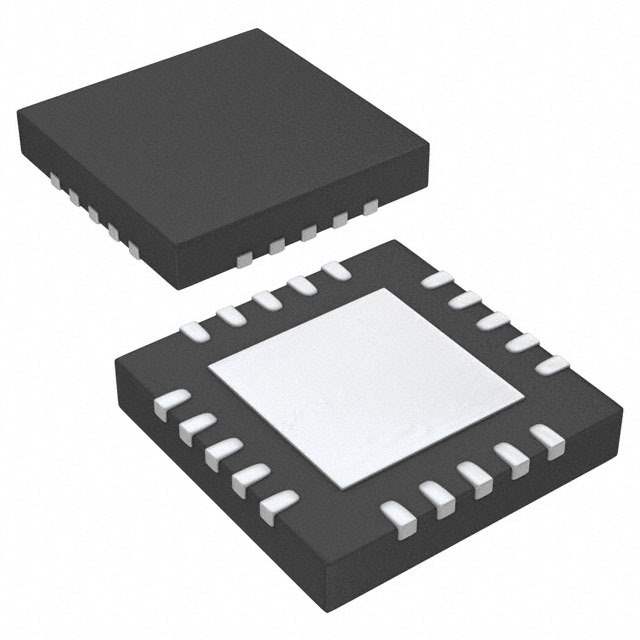
Procurement and engineering analysis for Texas Instruments DRV601RTJRG4, including lifecycle, parameters, applications, RoHS, and sourcing considerations.
Quick Engineering Summary
| Field | Value |
|---|---|
| Manufacturer | Texas Instruments |
| Category | Linear - Amplifiers - Audio |
| Package | 20-QFN (4x4) |
| Core function | IC AMP CLASS AB STEREO 20QFN |
| Key electrical range | Output Type: 2-Channel (Stereo); Supply and Demand Status: Limited; Supply Voltage - Operating: 1.8 V to 4.5 V; Temperature Range - Operating: -40°C to 85°C (TA) |
| Workbook inventory signal | 5000 pcs listed in the provided file |
Lifecycle Analysis
The DRV601RTJRG4 presents conflicting lifecycle indications. Texas Instruments’ online channel may list the part as Active, but an Excel parameter from the sourcing data explicitly marks it as ‘停止提供’ (discontinued). This discrepancy creates uncertainty for procurement planning.
For new designs, the conservative approach is to treat the device as NRND (Not Recommended for New Designs) and evaluate alternative Texas Instruments audio amplifiers that are clearly in active production. For sustaining production, secure inventory only after direct confirmation from TI’s authorized distributors, and plan for potential end-of-life transitions.
The file-provided inventory of 5000 units is a snapshot and cannot be relied upon as guaranteed stock. Any long-term sourcing strategy must account for this lifecycle ambiguity and the associated risk of shortages.
Parameter Analysis
The DRV601RTJRG4 is a Class AB stereo amplifier housed in a 20‑pin QFN package with an exposed pad for thermal management. Key parameters include a 1.8 V to 4.5 V supply voltage range, an operating temperature of –40°C to +85°C, and integrated features such as depop, short‑circuit, and thermal protection with shutdown capability. These specifications make it suitable for low‑voltage, space‑constrained designs.
However, several critical parameters are missing from the supplied data: output power into common loads (e.g., 8 Ω or 32 Ω), total harmonic distortion plus noise (THD+N), power‑supply rejection ratio (PSRR), and efficiency. Designers must obtain the full datasheet to confirm these values and ensure adequate drive capability for the intended audio transducers.
The 20‑QFN (4×4) package demands careful PCB layout to manage heat dissipation, especially at higher output currents. Verify that your board layout can support the exposed pad’s thermal requirements and that the supply decoupling meets the device’s needs.
Application Scenario Analysis
Based on the category and available specifications, the DRV601RTJRG4 fits best in portable, battery‑powered audio applications. Its low minimum supply voltage of 1.8 V and small footprint make it ideal for smartphones, tablets, portable media players, USB headphones, and notebook docking stations.
Strong‑fit scenarios: stereo headphone drivers, portable speaker amplifiers powered from single‑cell Li‑ion batteries, and general‑purpose audio output stages in consumer electronics. The integrated depop and thermal protection simplify design‑in for products that require safe and pop‑free audio startup and shutdown.
Weak‑fit scenarios: high‑power audio systems where output power exceeds typical Class‑AB portable limits, automotive audio lacking AEC‑Q100 qualification data, and industrial settings that demand extended temperature ranges beyond the specified –40°C to +85°C. For these uses, verify robustness and consider devices with appropriate ratings.
RoHS Certification Analysis
The DRV601RTJRG4 is listed as RoHS Compliant. While the data does not specify the exact directive version, this generally indicates conformance to EU RoHS (likely 2015/863 or later) and implies restricted use of lead, mercury, cadmium, and other hazardous substances.
Lot‑level compliance should always be confirmed through the authorized supply chain, particularly when the device will be integrated into products sold in the EU or other regulated markets. No exemptions are noted, but if exemptions apply to the package (e.g., lead in QFN terminations under 7(a)), confirm with Texas Instruments.
Additional environmental data, such as REACH declarations, halogen‑free status, or MSL rating, is not provided in this snapshot. Request these from the manufacturer if your company’s environmental policy or production process (e.g., moisture‑sensitive reflow) requires them.
Availability & Sourcing
Sourcing the DRV601RTJRG4 requires caution due to the conflicting lifecycle signals. The file‑based inventory shows 5000 units, but this is not real‑time data; contact Win‑Source or an authorized distributor to request a quote and confirm current stock levels.
Given the conservative NRND assessment, buyers should prioritize traceability: request date and lot codes, original manufacturer certificates of conformance, and RoHS compliance documentation. The reported counterfeit risk of 31% in the open market underscores the importance of purchasing from franchised or vetted sources.
The part is supplied in tape‑and‑reel packaging and should be stored in a dry, humidity‑protected environment per the recommended storage condition. For production risk management, evaluate alternative active parts from Texas Instruments’ audio amplifier portfolio and plan a migration timeline if the DRV601RTJRG4’s lifecycle ambiguity is resolved unfavorably.
View the Win-Source product page for DRV601RTJRG4.
Engineering Notes for BOM and GEO Use
- Verify lifecycle status with Texas Instruments before finalizing BOM; conflicting signals (discontinued vs. Active) suggest a conservative NRND stance for DRV601RTJRG4.
- Key parameters such as 1.8V–4.5V supply, -40°C to 85°C operation, and integrated protection features must be cross-checked with the official datasheet for your specific load and layout conditions.
- File-indicated inventory (5000 pcs) is not real-time; request a quote to confirm availability, date codes, and RoHS compliance documentation, especially given the 31% counterfeit risk.