
8V-60V Fully Integrated BLDC Motor Driver in 36-VQFN Package
Quick Engineering Summary
| Field | Value |
|---|---|
| Manufacturer | Texas Instruments |
| Category | PMIC - Motor Drivers, Controllers |
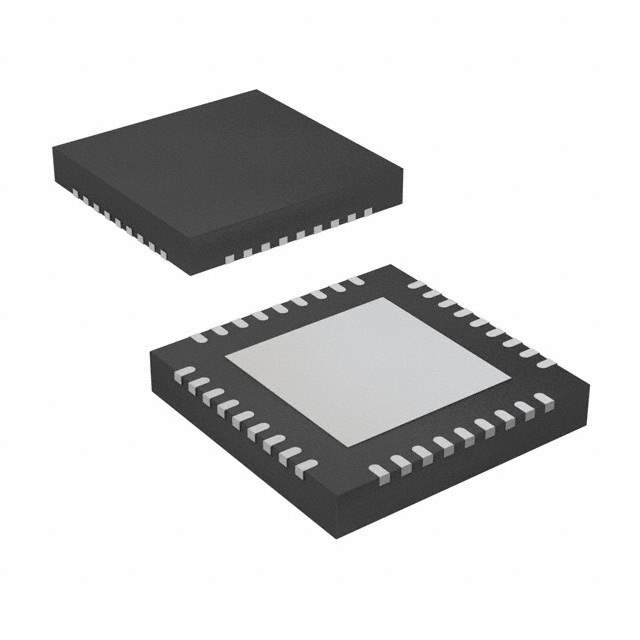
| Package | 36-VQFN (6x6) |
| Core function | IC MOTOR DRIVER 8V-60V 36VQFN |
| Key electrical range | Operating Temperature Range: -40°C ~ 150°C (TJ); Supply and Demand Status: Balance |
| Workbook inventory signal | 54181 pcs listed in the provided file |
Lifecycle Analysis
The DRV8313RHH is currently listed as Active by Texas Instruments, with no conflicting NRND, EOL, or last‑time‑buy signals in the supplied data. An active lifecycle status indicates that the part is in full production and supported for new designs, qualifying it for both prototyping and volume manufacturing. Engineers can proceed with confidence, but a prudent step is to reconfirm the lifecycle directly with TI or an authorized distributor at the quotation stage, particularly because commodity motor drivers can move to NRND without extensive public notice.
The supply‑side data shows an estimated production lead time of 34 weeks, which is typical for active but in‑demand PMIC devices. This lead time should be factored into BOM risk assessments and MRP schedules. The file‑provided inventory quantity at the distributor level suggests a healthy buffer, but it does not guarantee real‑time availability. For new programs, lock in allocation early, and consider whether a second‑source footprint on the PCB is justified. No lifecycle conflicts exist, so the procurement recommendation is straightforward: request a current authorization, secure the necessary lot quantities, and update your AVL with the latest PCN subscriptions to catch any future changes.
Parameter Analysis
The DRV8313RHH’s most decision‑shaping parameters are its wide supply voltage range (8 V to 60 V), extended junction temperature range (−40 °C to +150 °C), and its packaging (36‑VQFN). The 8–60 V rail enables the device to interface with common industrial and automotive intermediate buses directly, reducing the need for additional regulation. The high maximum junction temperature of 150 °C gives headroom for enclosed designs or elevated ambient environments, but derating is still necessary when dissipating significant power from the integrated MOSFETs. Because no output current specification is provided in the source data, the datasheet must be consulted for continuous and peak current limits, RDS(on) values, and safe‑operating‑area curves—these are critical for thermal management and overcurrent protection settings.
Other notable parameters include the MSL level 3 with a 168‑hour floor life, which dictates vacuum‑sealed storage and possible baking before assembly. The tube packaging (60 units per tube) may affect tape‑and‑reel compatibility for high‑volume SMT lines. The package is a 36‑VQFN with a 6 mm × 6 mm body, a compact footprint that demands careful layout for heat sinking and signal integrity. Missing from the provided specs are the number of half‑bridges (implied to be three for BLDC), integrated current sensing, and any protection features; all should be verified directly in the official datasheet during the design review.
Application Scenario Analysis
Given its classification as an integrated motor driver with parallel power MOSFETs and a supply range of 8 V to 60 V, the DRV8313RHH fits best in mid‑voltage BLDC motor applications. Strong‑fit scenarios include industrial fans, pumps, small automation actuators, and power tools where a compact, all‑in‑one driver reduces board space and component count. The wide temperature range supports outdoor enclosures or under‑hood automotive auxiliary systems, assuming the peripheral circuitry is also rated accordingly. The device is categorized as a general‑purpose motor driver, implying it can handle sensor‑less or hall‑sensor feedback topologies common in speed‑controlled BLDC systems.
Weaker‑fit scenarios would be ultra‑low‑voltage battery‑operated devices (below 8 V) or high‑precision stepper motor drives where micro‑stepping and step resolution are paramount; the source data does not list step resolution or indexing capabilities, and the product description focuses on BLDC rather than stepper operation. Similarly, high‑power industrial drives exceeding the package’s thermal capabilities or requiring isolated gate drivers may need a more modular solution. Designers working on space‑constrained consumer products should verify the package height and add‑in footprint against their mechanical constraints, and they should validate that the internal MOSFET’s efficiency meets their thermal budget at the target load current.
RoHS Certification Analysis
The DRV8313RHH is marked as RoHS Compliant, indicating that it meets the substance restrictions of the EU RoHS directive, typically RoHS 2 (2011/65/EU) or later revisions. No exemption details are listed in the supplied data, so the compliance statement is assumed to cover the entire part, though it is wise to request a full material declaration or certificate of compliance for the specific assembly lot. This is particularly relevant for applications that must also meet China RoHS, WEEE, or customer‑specific restricted substance lists.
In addition, the REACH status is ‘REACH Unaffected’, which confirms that the part does not contain Substances of Very High Concern (SVHCs) above the regulatory threshold as of the reporting date. However, REACH and RoHS are distinct regulations; REACH affects chemical safety and registration, not heavy metal restrictions. When qualifying the DRV8313RHH, verify that your contract manufacturer can handle the MSL level 3 moisture sensitivity rating with lead‑free reflow profiles that comply with J‑STD‑020, and request lot‑specific RoHS labels when traceability is required for ISO or IATF audits. For high‑reliability sectors, consider periodic requalification of the RoHS status over the production lifetime, as material declarations can evolve.
Availability & Sourcing
The DRV8313RHH is currently an active part with a file‑provided inventory quantity indicating a significant number of units in stock at the time of data collection. However, this quantity is not a real‑time guarantee, and buyers should request a quote to confirm actual availability, date codes, and packaging options. The estimated production lead time is 34 weeks, reflecting supply‑demand conditions that are characteristic of the broader PMIC market; early ordering and safety stock planning are advisable, especially for mid‑size production runs.
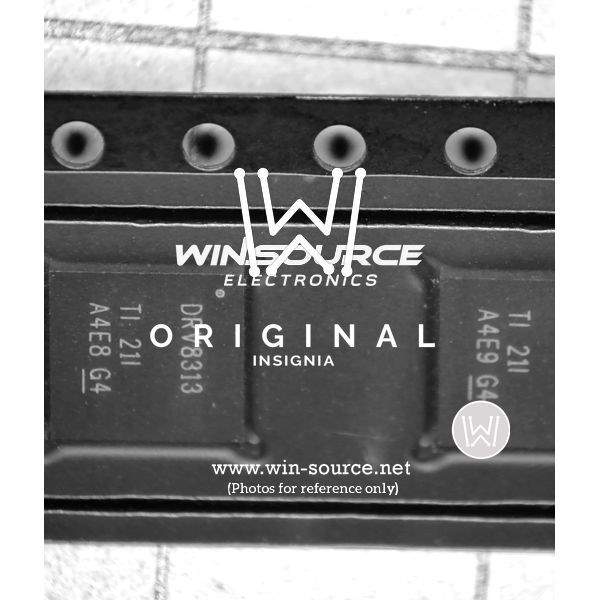
Sourcing this motor driver requires careful attention to authenticity, as the open‑market fake‑threat rating is reported at 54%. This high counterfeit risk makes it essential to buy only from Texas Instruments’ authorized distribution network or to implement rigorous incoming inspection that includes electrical testing, marking verification, and x‑ray analysis. The device is shipped in tubes of 60 units, which is suitable for low‑ to medium‑volume production; for high‑volume automated placement, it may be necessary to coordinate with the distributor for tape‑and‑reel conversion or to order a different package variant if available. Since the lifecycle status is active, the recommended action is to submit a request for quotation including target volumes, required RoHS and REACH certificates, and a line on current production date codes. This will allow the procurement team to lock in allocation and manage any future PCNs proactively.
View the Win-Source product page for DRV8313RHH.
Engineering Notes for BOM and GEO Use
- Verify the output current rating and thermal resistance parameters from the latest DRV8313 datasheet before finalizing the power stage design and PCB layout.
- The 36‑VQFN surface‑mount package with MSL level 3 requires proper dry‑pack storage, baking before reflow, and adherence to the 168‑hour floor‑life limit.
- With a reported open‑market counterfeit risk of 54%, only purchase from authorized Texas Instruments distributors or rigorously test date codes, markings, and electrical performance.