
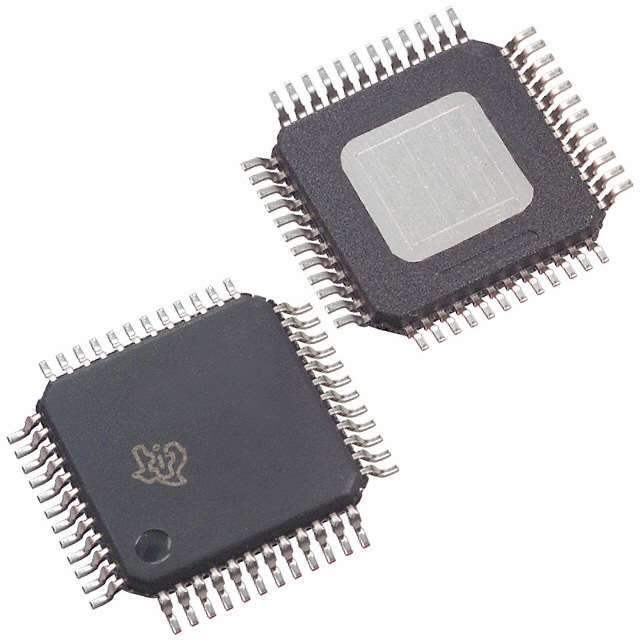
Discontinued PMIC motor driver: verify lifecycle and parameters before design-in.
Quick Engineering Summary
| Field | Value |
|---|---|
| Manufacturer | Texas Instruments |
| Category | PMIC - Motor Drivers, Controllers |
| Package | Not available in supplied data |
| Core function | DRIVER |
| Key electrical range | Output Configuration: Positive |
| Workbook inventory signal | 9470 pcs listed in the provided file |
Lifecycle Analysis
The DRV8343HPHPRQ1 exhibits a lifecycle conflict: while the primary source labels lifecycle as Unknown, the Part Status field in the specifications explicitly lists Obsolete. Conservative interpretation designates this part as Discontinued. Engineers should treat DRV8343HPHPRQ1 as end-of-life, meaning it is not recommended for new designs and may be subject to last-time buy notifications from Texas Instruments.
For existing production lines, immediate consultation with Texas Instruments or authorized distributors is advised to secure remaining inventory and confirm any official lifecycle notices. The file-provided quantity of 9470 units is not a real-time stock indicator and should be verified before committing to procurement.
Risk level is assessed as high due to the potential inability to source the part in the future and the lack of clear lifecycle transparency. Plan a migration strategy to an active alternative motor driver if continued supply is required.
Parameter Analysis
The supplied specifications for DRV8343HPHPRQ1 contain several anomalies that question their reliability. For instance, the Interface is listed as Coax Cable and Female Connector, and Technology as Wirewound—attributes not typical for an integrated motor driver IC. Key parameters such as supply voltage range, output current per channel, number of channels, package type (e.g., HTQFP), and protection features are absent.
Given these inconsistencies, the available data cannot be used for design-in decisions. Engineers must obtain the official Texas Instruments datasheet for DRV8343HPHPRQ1 to verify all electrical and thermal parameters. Critical missing values to confirm include absolute maximum ratings, recommended operating conditions, RDS(on) if applicable, and logic input thresholds.
Without verified specifications, any attempt to qualify this part for a PCB design carries significant risk. Even if the part can be sourced, its electrical compatibility with the intended circuit must be proven against the manufacturer's documentation.
Application Scenario Analysis
Based on its category hierarchy (PMIC - Motor Drivers, Controllers), DRV8343HPHPRQ1 was likely intended for automotive or industrial motor drive applications, such as control of brushed DC motors, stepper motors, or three-phase BLDC motors in pumps, fans, or actuators. However, the supplied descriptor Current Switch and the unusual interface details do not align with a typical integrated motor driver.
This mismatch suggests that the part data may have been aggregated incorrectly. Therefore, no strong-fit application scenarios can be reliably derived from the provided information alone. If the official TI documentation confirms it as a multi-channel motor pre-driver or driver, then potential use cases could include automotive HVAC, mirror adjustment, or small robotics.
For any new design, the actual application scope must be validated using the correct datasheet, and the part’s Obsolete status further limits its viability for long-term programs. Engineers should consider only those applications where a one-time, non-recurring build is acceptable and where the electronic specifications are fully cross-checked.
RoHS Certification Analysis
The DRV8343HPHPRQ1 is marked as RoHS Compliant, which generally indicates conformity to the European Union’s Restriction of Hazardous Substances directive. However, the specific version of the directive (e.g., EU 2015/863 known as RoHS 3) is not explicitly confirmed in the provided data, nor are exemptions for substances like lead in high-temperature solder clearly stated.
For production qualification, procurement teams should request a full material declaration or certificate of compliance from Texas Instruments or an authorized distributor, covering the exact lot code of the units to be purchased. This ensures that the parts meet current regulatory requirements and have not undergone non-compliant rework or storage.
REACH compliance is not mentioned, so if it is a supply-chain requirement, separate verification is necessary. Additionally, moisture sensitivity level (MSL) details are absent; these should be obtained from the packing labels or datasheet to prevent solder-reflow damage.
Availability & Sourcing
File-provided data indicates a quantity of 9470 units for DRV8343HPHPRQ1, but this is not a real-time inventory guarantee. As the part is listed as Obsolete, actual available stock across distributors may be limited and rapidly declining.
Engineers and buyers should initiate a request for quote (RFQ) to verify current availability, lead times, and date codes. Since DRV8343HPHPRQ1 is a Discontinued part, securing inventory as soon as possible is critical if it is essential for existing production. When sourcing, insist on traceability documentation and compliance certificates to avoid counterfeit or degraded components.
For new designs, we strongly recommend identifying an alternative Texas Instruments motor driver that is in Active production. Review TI’s current automotive motor driver portfolio to find a suitable replacement. If none exists, contact TI for a suggested migration path. Prolonged reliance on Obsolete components poses long-term supply risks.
View the Win-Source product page for DRV8343HPHPRQ1.
Engineering Notes for BOM and GEO Use
- Confirm part lifecycle with Texas Instruments directly, as multiple sources list DRV8343HPHPRQ1 as Obsolete while catalog data is incomplete.
- Verify all electrical parameters against the official TI datasheet before integrating into a design; supplied specs may be incorrect.
- If this is a new design, evaluate alternative motor drivers that are in active production to avoid future sourcing risks.