
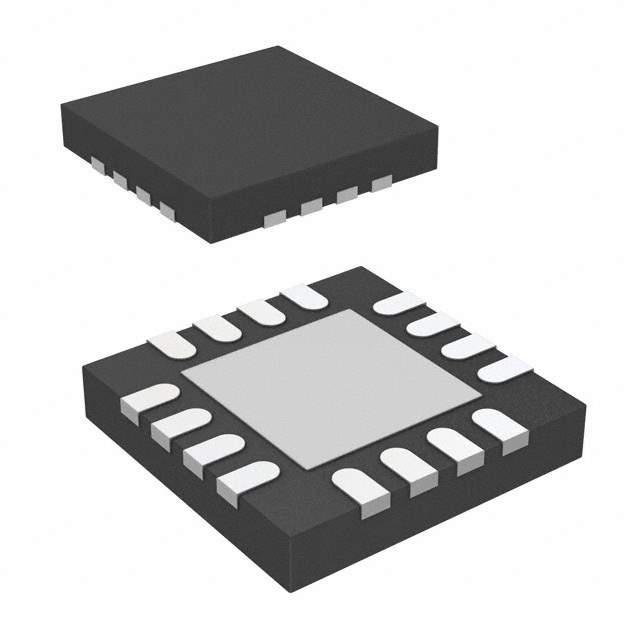
EOL DRV8801RTYT bipolar stepper/brushed DC motor driver with 2.8A output, 8-38V supply, 16-QFN package.
Quick Engineering Summary
| Field | Value |
|---|---|
| Manufacturer | Texas Instruments |
| Category | PMIC - Motor Drivers, Controllers |
| Package | 16-QFN (3x4) |
| Core function | IC MTR DRVR BIPOLAR 8-38V 16QFN |
| Key electrical range | Output Current: 2.8A; Supply and Demand Status: Balance; Supply Voltage - Operating: 8 V to 38 V; Temperature Range - Operating: -40°C to 150°C (TJ) |
| Workbook inventory signal | 16000 pcs listed in the provided file |
Lifecycle Analysis
The DRV8801RTYT from Texas Instruments is at End-of-Life (EOL), indicating the manufacturer has ceased production and no new orders are being accepted. This status carries high procurement risk for new designs; the part should not be selected for new projects unless legacy compatibility is unavoidable. For sustaining production, immediate action is necessary to secure available inventory and plan a migration strategy. The reported 16,000 units in supplier storage as of the file date may deplete quickly given the EOL announcement, so engineers and buyers should not rely on long-term availability without verified allocation.
All lifecycle signals within the provided data align, so no conflicting lifecycle statuses exist. However, any EOL part requires extra diligence: confirm the official manufacturer notice (PDN/EOL) directly with Texas Instruments, and coordinate with design teams to identify pin-compatible or functionally equivalent replacements for future builds. Even if current demand is covered, sudden obsolescence risk remains high.
Parameter Analysis
Key operating parameters for the DRV8801RTYT include a wide supply voltage range of 8V to 38V, making it suitable for industrial and automotive 12V/24V systems with adequate headroom. The driver delivers up to 2.8A continuous output current, which is substantial for a small 16-QFN (3x4mm) package but will require careful PCB copper area and thermal vias to manage junction temperature up to its 150°C rating. Motor support spans both brushed DC and bipolar stepper configurations, and the device integrates the full control and power stage, simplifying design.
Missing from the available specs are critical details like logic supply voltage, interface type (e.g., PWM, phase/enable, SPI), current regulation method, microstepping resolution, and protection features such as overcurrent or overtemperature shutdown. These parameters must be verified from the official datasheet before finalizing a design or sourcing decision. The DMOS output stage implies low Rds(on) and efficient switching, but actual resistance values and thermal impedance are not provided here.
Application Scenario Analysis
The DRV8801RTYT’s general-purpose motor driver capability fits a range of applications including industrial automation, small robotics, point-of-sale printers, and medical pumps that require a reliable brushed DC or bipolar stepper motor drive. Its 8–38V operating range aligns with standard 12V and 24V distributed power architectures, and the -40°C to 150°C junction temperature range supports demanding environments when properly heatsinked.
Potential weak-fit scenarios include battery-operated handheld devices where the minimum 8V supply may exceed a single-cell Li-ion voltage, or high-precision positioning systems that demand advanced microstepping and closed-loop control not evident from the basic specs. Designers should also assess whether the fully integrated power stage meets EMI and efficiency targets for their specific application, as switching losses can become significant at higher voltages and currents. The DMOS technology generally provides good efficiency, but system-level validation is advised.
RoHS Certification Analysis
The DRV8801RTYT is marked as RoHS Compliant per the supplier’s data sheet. However, the exact RoHS directive version (e.g., EU 2015/863 or earlier) is not specified, and no REACH, MSL, or halogen-free information is provided. While Texas Instruments typically aligns with current RoHS exemptions for semiconductor packaging, purchasing teams should request a Certificate of Compliance (CoC) or full material declaration for the specific date/lot code before accepting delivery.
In legacy designs, recertification may be required if the original compliance was under older RoHS versions. RoHS compliance at the family level does not guarantee that every production lot remains compliant, especially after an EOL announcement when inventory may come from older stock. For exports to the EU, it’s prudent to verify that no restricted substances exceed thresholds under RoHS 3.
Availability & Sourcing
With the DRV8801RTYT declared End-of-Life, availability is limited to existing distributor and broker stock. The source workbook indicates 16,000 units on file, but this quantity is not a real-time guarantee and may include non-franchised or mixed-condition inventory. Buyers should treat any available stock as a last-time-buy opportunity and validate lot codes, date codes, and traceability before purchase.
For ongoing production needs, immediately engage with Texas Instruments to review the EOL notice and transition to a recommended replacement. If no direct replacement exists, evaluate pin-compatible devices or board revisions. Given a reported 37% counterfeit threat in the open market, sourcing from unauthorized channels carries significant risk; insist on full visual inspection, X-ray, and electrical testing when procuring from non-franchised sources. Contact Win Source or your preferred distributor to request a quote and confirm current availability, specifying packaging (reel/TR) and storage conditions (dry pack) to ensure component integrity.
View the Win-Source product page for DRV8801RTYT.
Engineering Notes for BOM and GEO Use
- Verify remaining stock with authorized distributors and consider last-time buy before inventory depletes.
- Confirm RoHS compliance at the lot level and request full material declarations for legacy designs.
- Cross-check the DMOS output stage and thermal performance under worst-case conditions to avoid field failures.