
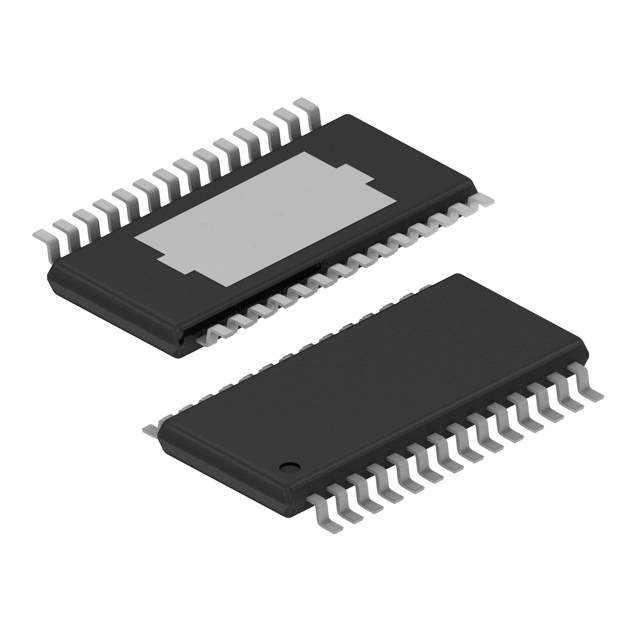

Bipolar stepper motor driver in 28-HTSSOP package with integrated power stage. End-of-life sourcing recommendations.
Quick Engineering Summary
| Field | Value |
|---|---|
| Manufacturer | Texas Instruments |
| Category | PMIC - Motor Drivers, Controllers |
| Package | 28-HTSSOP |
| Core function | IC MTR DRV BIPLR 3-5. |
| Key electrical range | Output Current: 1.9A; Supply and Demand Status: Balance; Supply Voltage - Operating: 3 V to 5.5 V; Temperature Range - Operating: -40°C to 150°C (TJ) |
| Workbook inventory signal | 30000 pcs listed in the provided file |
Lifecycle Analysis
The DRV8811PWP from Texas Instruments is at end-of-life (EOL) status. All available lifecycle signals confirm this classification, indicating that the part is no longer manufactured and will not be available for new designs. Procurement should be limited to sustaining existing production only.
EOL components carry high risk because supply is finite and often concentrated in non-authorised channels. The file-provided quantity of approximately 30,000 units is not a real‑time guarantee; it reflects a snapshot and may deplete quickly. Buyers should immediately verify current availability and consider purchasing all remaining stock required for the lifetime of their product.
Before committing, confirm the manufacturer’s official discontinuation notice, any last‑time‑buy window, and recommended migration paths. Texas Instruments may offer pin‑compatible alternatives or updated driver families. Without manufacturer‑supplied alternate part numbers, this guide does not suggest direct replacements.
Parameter Analysis
Key parameters drawn from the supplied data influence design‑in and procurement decisions. The DRV8811PWP outputs a maximum current of 1.9 A, making it suitable for small to medium bipolar stepper motors. It operates from a 3 V to 5.5 V logic supply, while the motor load voltage spans 8 V to 38 V. This wide load range accommodates various motor ratings but demands careful thermal management at higher voltages and currents.
The 28‑HTSSOP package (PowerPAD) suggests the need for PCB heatsinking. The device supports step resolutions from full step to 1/8 microstepping, which is modest compared to newer drivers but sufficient for many industrial positioning tasks. The operating junction temperature range (-40°C to +150°C) indicates robustness for industrial environments.
Missing datasheet details must be verified before design reuse: RDS(on), current regulation accuracy, decay modes, fault protection (over‑current, thermal shutdown), and dead‑time control. These parameters directly affect performance and reliability, especially when replacing an existing driver or qualifying remaining stock.
Application Scenario Analysis
The DRV8811PWP is a general‑purpose bipolar stepper driver typically found in printers, office automation, robotics, and industrial process control. Its integrated power stage reduces BOM count and simplifies PCB layout for medium‑power motion systems.
Strong‑fit scenarios include replacement or sustaining production of legacy designs where the exact 1.9 A, 8–38 V rating matches the motor requirements and microstepping down to 1/8 is adequate. Industrial equipment operating over extended temperature ranges also benefits from the specified -40°C to 150°C junction range.
Weak‑fit or avoid scenarios: new designs should not proceed with an EOL part. Applications requiring higher microstepping resolution, lower RDS(on) for efficiency, or advanced diagnostics (stall detection, silent stepping) are better served by TI’s current DRV8xxx families. Battery‑powered devices with strict power‑up sequencing or sleep‑mode requirements may also need a newer device, as the DRV8811PWP datasheet lacks detailed quiescent current data in the supplied source.
RoHS Certification Analysis
The DRV8811PWP is listed as RoHS Compliant. In the absence of a specific directive reference, assume compliance to the latest EU RoHS directive (2015/863) unless a manufacturer certificate proves otherwise. No exemptions are noted in the source data, but certain HTSSOP packages may contain lead in exemption‑covered areas; this should be confirmed with Texas Instruments.
Because the part is EOL, the stock available today may include older date codes originally manufactured under earlier RoHS regimes. A lot‑level certificate of compliance (CoC) is strongly recommended for any EU‑bound shipments. Additionally, REACH SVHC declarations are not provided in the dataset; engineers needing full‑material disclosures must request them from the distributor or manufacturer.
Family‑level RoHS statements are common, but they do not guarantee that every production lot is compliant. For mission‑critical or high‑volume applications, request a lab analysis report if traceability is uncertain.
Availability & Sourcing
As an EOL component, the DRV8811PWP must be sourced with extra caution. The file shows a workbook quantity of 30,000 units, but this figure is not a real‑time stock level and may include consigned or committed inventory. Always request a formal quotation to confirm actual on‑hand quantities.
When sourcing, prioritize authorized Texas Instruments distributors or certified excess‑inventory brokers. Verify date/lot codes and require tamper‑evident packaging (e.g., original reels in dry storage). The high open‑market fake threat (71%) demands rigorous incoming inspection, including X‑ray, decapsulation, or electrical testing on samples.
Given EOL, secure total lifetime‑buy quantities in one procurement cycle to avoid future shortages. Request compliance documents (RoHS CoC, REACH statement, counter‑counterfeit reports) upfront. For long‑term production, evaluate TI’s current DRV882x or DRV842x families as potential migration paths, but only after manufacturer‑provided migration guides are available.
View the Win-Source product page for DRV8811PWP.
Engineering Notes for BOM and GEO Use
- Verify the DRV8811PWP EOL status directly with Texas Instruments before committing to new production.
- The high fake threat in the open market (71%) requires authorized sourcing and rigorous incoming inspection.
- Confirm RoHS compliance at lot level if required for EU market; REACH status is not indicated in available data.