
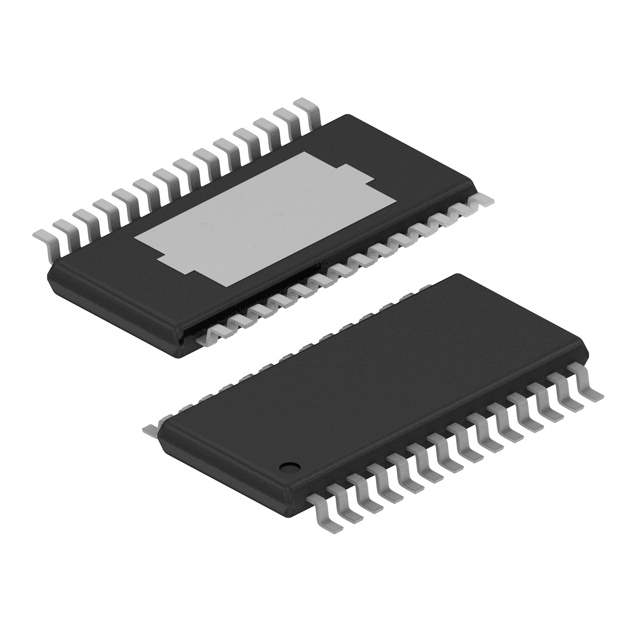
EOL Brushed DC Motor Driver with Integrated MOSFETs in 28-HTSSOP Package
Quick Engineering Summary
| Field | Value |
|---|---|
| Manufacturer | Texas Instruments |
| Category | PMIC - Motor Drivers, Controllers |
| Package | 28-HTSSOP |
| Core function | IC MOTOR DRVR 8. |
| Key electrical range | Output Current: 3.5A; Supply and Demand Status: Limited; Supply Voltage - Operating: 8.2 V to 45 V; Temperature Range - Operating: -40°C to 150°C (TJ) |
| Workbook inventory signal | 30000 pcs listed in the provided file |
Lifecycle Analysis
Texas Instruments DRV8840PWP is an End-of-Life (EOL) motor driver, as indicated by the manufacturer lifecycle status and supplied Excel data. EOL status means Texas Instruments has discontinued production, and no new orders will be accepted beyond the final order date. For new designs, this part should not be considered; engineering teams should evaluate alternative active products from Texas Instruments or other suppliers.
A conflicting 'Status' field in the source data shows 'Active,' but this is inconsistent with the stronger EOL signals. Procurement should conservatively treat the part as EOL to avoid supply disruptions. Any remaining inventory may be available through distributors, but availability is not guaranteed.
Engineers and buyers must verify the final purchase notice from Texas Instruments and secure sufficient inventory for existing product lifecycles before the part becomes unavailable. The 30,000-unit workbook quantity is a file-based snapshot and does not reflect real-time market availability.
Parameter Analysis
The DRV8840PWP is a fully integrated brushed DC motor driver with a control and power stage. Key parameters include a supply voltage range of 8.2 V to 45 V, an output current rating of 3.5 A, and an operating junction temperature range of -40°C to 150°C. The 28-pin HTSSOP package with SMD mounting enables compact PCB design, suitable for space-constrained applications.
Critical parameters for design-in include the on-resistance of the integrated MOSFETs, current regulation accuracy, and thermal shutdown behavior, but these are not specified in the supplied data. Engineers must consult the original datasheet to obtain detailed electrical characteristics, timing diagrams, and protection features like overcurrent, undervoltage lockout, and thermal warning thresholds.
Without full parametric data, qualification for new designs is risky. For sustaining existing products, match these missing specifications against the original design requirements to ensure supply continuity. The driver's general-purpose designation suggests broad applicability, but actual performance margins should be verified.
Application Scenario Analysis
The DRV8840PWP targets general-purpose brushed DC motor control applications. Typical usage includes industrial automation actuators, automotive subsystems like mirror or seat adjustment motors, consumer appliances, and small robotics requiring moderate current drive up to 3.5 A and supply voltages up to 45 V.
Given its integrated power stage and simple control interface, it is a strong fit for single or dual half-bridge configurations in low- to medium-power motor drives. However, it is not suitable for stepper motors (no microstepping mentioned) or brushless DC motors, which require different commutation logic.
Because the part is EOL, it is most appropriate for maintenance, repair, and overhaul (MRO) of existing equipment rather than new product development. Engineers designing new systems should select an active, fully specified replacement from Texas Instruments' current motor driver portfolio to ensure long-term support.
RoHS Certification Analysis
The DRV8840PWP is listed as RoHS Compliant according to the supplied data. No details are provided on the specific RoHS standard version, such as EU 2015/863, or on exemptions. For an EOL part, this compliance status is typically based on the original manufacturing period and may not reflect subsequent regulatory changes.
When sourcing this part, buyers should request a current certificate of compliance from the distributor to ensure that the lot being purchased meets RoHS requirements. Additionally, no REACH or halogen-free declarations are provided, so if these are necessary for end-market access, they must be verified with the supplier.
Given the part's discontinued status, environmental compliance documentation may be limited. It is advisable to perform incoming inspection and possibly chemical analysis if this component is critical for RoHS-regulated products.
Availability & Sourcing
Texas Instruments DRV8840PWP is discontinued, so availability is inherently limited. The workbook indicates a quantity of 30,000 units, but this figure is a file-based estimate and does not represent live inventory. Buyers should immediately request a quote from authorized distributors or specialized EOL component sources to confirm current stock levels and secure parts for production.
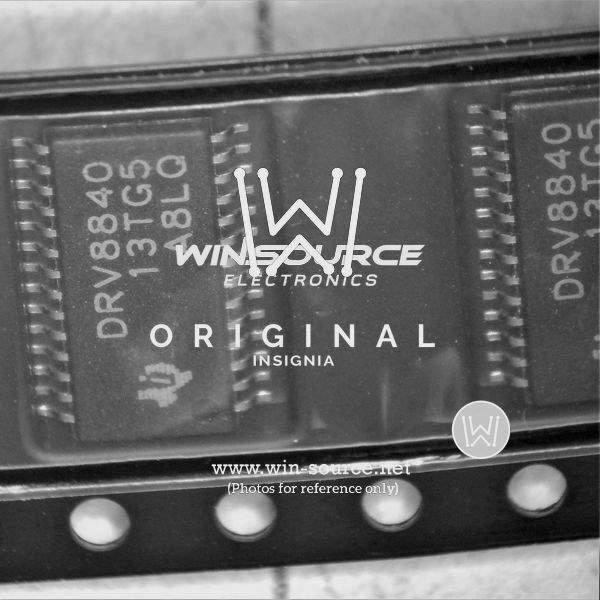
Because the part carries a high fake threat of 66% in the open market, sourcing from non-authorized channels is risky. Counterfeit components may not meet electrical or reliability specifications. Emphasize traceability: request date/lot code documentation, full manufacturer packaging (original reel or tube), and certificates of conformance.
For users with ongoing requirements, evaluate last-time buy opportunities directly from Texas Instruments or authorized partners. If no inventory is available, consider redesign with a recommended drop-in or functional equivalent, though no such alternative is provided in the supplied data. Contact Texas Instruments support for migration guidance.
View the Win-Source product page for DRV8840PWP.
Engineering Notes for BOM and GEO Use
- Verify final order date and secure last-time buy inventory before the part becomes unobtainable.
- The 66% fake threat rating demands careful supply chain authentication and testing of incoming stock.
- Consult the full Texas Instruments datasheet for missing electrical parameters before using in critical designs.