
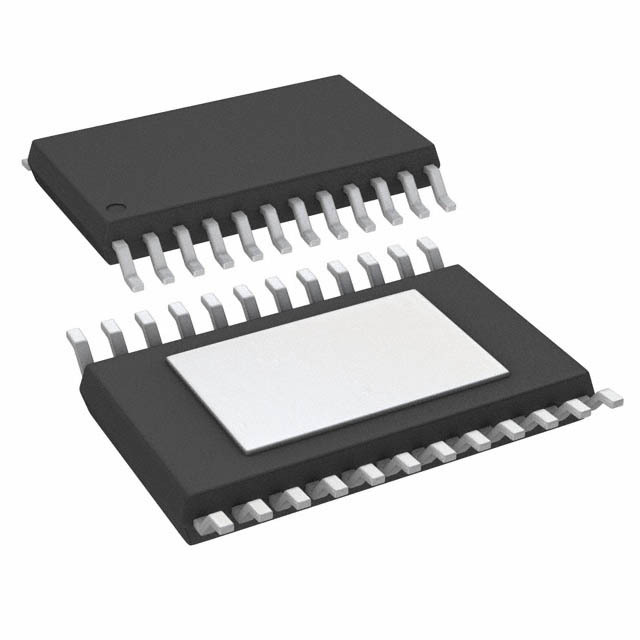
Obsolete bipolar stepper driver, 1A, integrated MOSFETs, 24-HTSSOP, from Texas Instruments
Quick Engineering Summary
| Field | Value |
|---|---|
| Manufacturer | Texas Instruments |
| Category | PMIC - Motor Drivers, Controllers |
| Package | 24-PowerTSSOP (0.173", 4.40mm Width) |
| Core function | IC MTR DRV BIPLR 0-5. |
| Key electrical range | Current - Output: 1A; Operating Temperature: -40°C ~ 150°C (TJ); Output Configuration: Half Bridge (4); Voltage - Load: 8V ~ 37V |
| Workbook inventory signal | 50000 pcs listed in the provided file |
Lifecycle Analysis
The DRV8884PWP from Texas Instruments is marked as Obsolete in the supplied specifications, indicating the manufacturer has discontinued this part number. This status means the component is not recommended for new designs and procurement should be limited to sustaining existing products. No lifecycle signal was provided from direct manufacturer sources, but the Obsolete marking overrides that uncertainty. Engineers should verify the official product change notification (PCN) or end-of-life (EOL) announcement from Texas Instruments to understand the timeline and any last-time-buy opportunities. The file-provided inventory quantity of 50000 units does not guarantee real-time availability; it is a static snapshot and must be confirmed with the supplier. For any new production, consider migrating to an active alternative from TI's DRV88xx series or similar from other vendors. Risk is high because the part is no longer manufactured, and future supply depends entirely on remaining distributor stock or the gray market.
Parameter Analysis
Key parameters for the DRV8884PWP define its suitability for bipolar stepper motor control. The output current rating is 1A, which sets the torque capability for the motor; thermal design must ensure junction temperature stays within the -40°C to 150°C TJ range. The load voltage range of 8V to 37V allows use with a variety of DC supplies, while the logic supply voltage of 0V to 5.3V accommodates standard microcontrollers. The step resolution is configurable from full-step down to 1/16 microstepping, enabling smooth motion profiles. The device integrates control and power stage (Power MOSFETs) in a half-bridge (4) configuration, essential for driving a bipolar stepper. The 24-HTSSOP package provides a compact surface-mount footprint with exposed pad for heat dissipation.
Missing from the provided data are details like on-resistance (Rds(on)), microstepping current control method, protection features (overcurrent, thermal shutdown), and motor supply UVLO. These must be checked in the official datasheet to ensure design robustness. The logic interface indicates simple step/direction control, but the exact pinout and timing are design-critical.
Application Scenario Analysis
The DRV8884PWP is a general-purpose bipolar stepper motor driver, making it suitable for a range of office automation, industrial, and consumer applications where low-to-medium power stepper motors are used. Typical strong-fit scenarios include 3D printer extruder drives, textile machines, small CNC routers, and medical analyzers that operate within the 8-37V, 1A envelope. The integrated design reduces external component count, which is beneficial for space-constrained boards.
However, because the part is obsolete, it is a weak fit for any new product development. Designers should only consider this driver for repairs or legacy equipment that cannot be redesigned. For new designs, an active alternative with similar specifications, such as from Texas Instruments' newer DRV8xxx family, should be evaluated. Applications requiring higher current, advanced diagnostics, or SPI interfaces would require a different part anyway.
RoHS Certification Analysis
The DRV8884PWP is declared RoHS Compliant according to the supplied data. This typically means it meets the EU Restriction of Hazardous Substances Directive, likely RoHS 3 (2015/863) given TI's standards, but the exact certification level should be verified with the manufacturer's compliance documentation. No exemptions are specified, so standard exemptions for lead in solder finishes or internal die attach may apply; always request the full material declaration.
REACH compliance is not indicated in the data, and it is not a substitute for RoHS. If your application requires REACH or halogen-free status, obtain confirmation from Texas Instruments. Since the part is obsolete, ensure the specific date/lot codes you receive were produced before any regulatory changes. Lot-level certification may be necessary for sensitive markets such as automotive or medical.
Availability & Sourcing
Sourcing the DRV8884PWP requires careful verification because it is an obsolete part. The file-provided quantity of 50000 units should be treated as a potential indicator, not a live inventory. Procurement should initiate a request for quote (RFQ) to check current stock levels, date codes, and authenticity. Given the discontinued status, available stock may be limited to remaining distribution channels or the aftermarket.
For legacy production, secure sufficient inventory to cover the product's remaining life, and consider evaluating a drop-in replacement if possible. Texas Instruments may have a replacement or upgrade path documented. Always request traceability documentation and RoHS compliance certificates for the specific lot. Packaging is tube, which is standard but verify for automated assembly. Buyers should also check for any distributor specific return policies on obsolete parts. The high risk associated with discontinued components necessitates a thorough supplier qualification process.
View the Win-Source product page for DRV8884PWP.
Engineering Notes for BOM and GEO Use
- Part Status is Obsolete, confirming discontinuation; verify directly with TI for any remaining stock or last-time-buy opportunities.
- As a fully integrated bipolar stepper driver with 1A peak, it suits legacy systems requiring simple logic control.
- RoHS compliance is claimed, but request lot-level certification and check for potential exemptions in your application.